A new Organization for Economic Cooperation and Development (OECD) report released on Tuesday shows that Israel invests below the average on education compared to other member countries.
The “Education at a Glance” report reveals that Israel spends about 6 percent less per elementary-school child, 24 percent less per high school student and 41 percent per post-high school student than the OECD average.
Spending on preschool education was found to be just 20 percent of the OECD average, although some of the disparity is believed to be due to participation of a substantial number of students in private schools or home schooling.
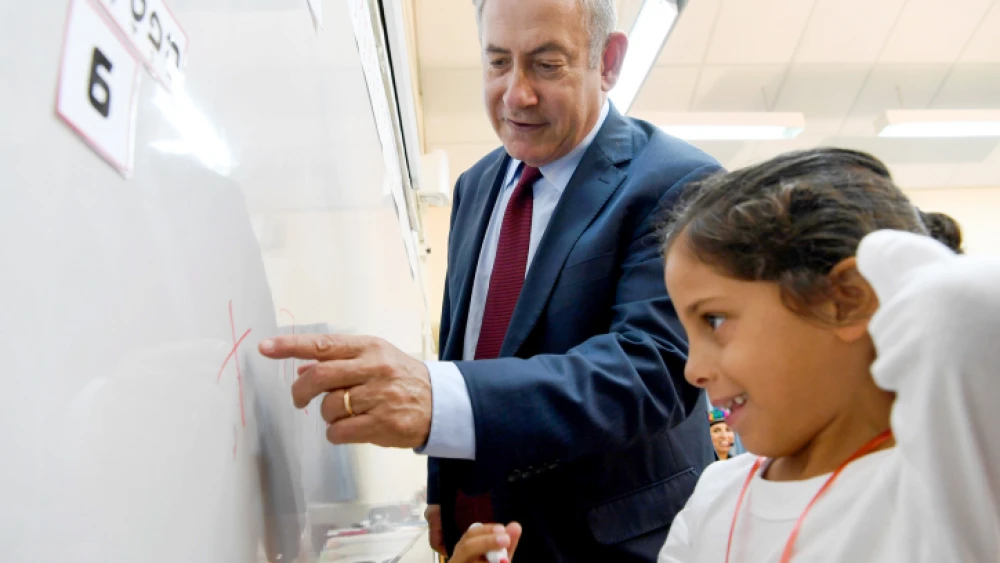
The number of students per classroom was second to highest in the OECD, with 25 to 29 students per classroom compared to 21 to 23 in the rest of the OECD.
Though work hours and salaries for teachers have increased in recent years, teaching time for students is lower than the OECD average, with starting teacher salaries lower than the average Israeli wage and slower to progress than in other countries.
The study noted that the public investment in early-childhood education increased by 12 percent between 2004 and 2015, as compared to just 5 percent across the OECD. Between 2010 and 2015, spending in Israel on educational institutions from elementary through university increased a whopping 35 percent, compared to a mere 4 percent on average across OECD countries.
Israel does spend 6 percent of its gross domestic product on education, compared to 5 percent in the rest of the OECD.