


Anti-Jewish hate crimes and bias incidents accounted for the majority of reported cases in Skokie, Ill., in 2025, according to a new annual report from the Chicago suburb’s police department
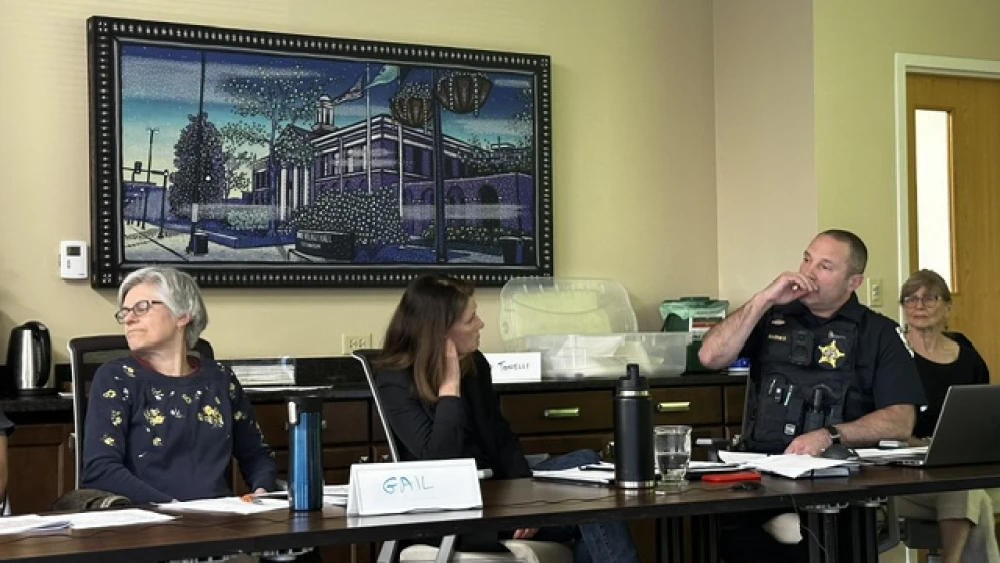
Jesse Barnes, chief of the Skokie Police Department, presented the report at the village’s Human Relations Commission on Wednesday. The department received 15 reports of alleged hate or bias incidents in 2025, including seven classified as hate crimes under Illinois law, according to the report.
Of the 15 reported incidents, eight targeted Jews, as did five of the seven hate crime incidents, according to the report.
More than 25% of the population of Skokie is reportedly Jewish.
“We believe that safety is in true partnership with the community,” Barnes told JNS. “We work closely with them for their specific needs. There’s much that goes into a security-layered approach, and as far as I’m concerned, you can never have too many layers.”
“We remind people that we can’t be everywhere all the time,” he said. “We need them to partner with us to make the community safer.”
Among the anti-Jewish hate crimes summarized in the report were incidents involving Israeli hostage signs and Israeli flags. In one incident, a man on an electric bicycle rode through a victim’s yard and over signs that displayed messages about remembering U.S. and Israeli hostages.
In another, “the suspect exited his vehicle, removed a small knife from his pocket, approached the Israel flag display on the victim’s residence and intentionally cut the flag causing damage.”
Anti-Jewish incidents also included incidents in which people were targeted based on their religious identity.
In one incident, “a group of juveniles were playing basketball at the park when the victims approached and asked to join the game,” per the report. “Members of the group asked if the girls were Jewish. The group then directed antisemitic remarks towards the victims and pursued them with gel blasters, causing the victims to flee the area.”
Susan Haggard, president of the Chicago Jewish Alliance, told JNS that “we believe there have been instances where local agencies have taken antisemitic incidents seriously and acted appropriately.”
“At the same time, there have also been moments where members of the Jewish community were left frustrated by a lack of clarity, communication, visible follow up or a broader understanding of how these incidents impact community safety and trust,” she said. “Because some of the individuals involved may be minors, we have limited information regarding charges or prosecutions.”
“That lack of transparency is part of the concern,” Haggard told JNS. “Residents want to understand how these cases are being handled, whether broader patterns of antisemitic behavior are being recognized and whether antisemitic conduct is being treated with the seriousness it deserves.”
Barnes told JNS that police officers “strive to be as transparent as we can,” while balancing privacy protections for juveniles involved in these incidents.
“Stakeholders directly impacted by these incidents always get more information from the detectives that are working with them directly than community members,” he noted.
This is the second year that the police department has presented this data, according to Barnes.
Overall, the number of bias-based incidents in 2025 was down from 2024, while hate crimes were up, according to the report.



