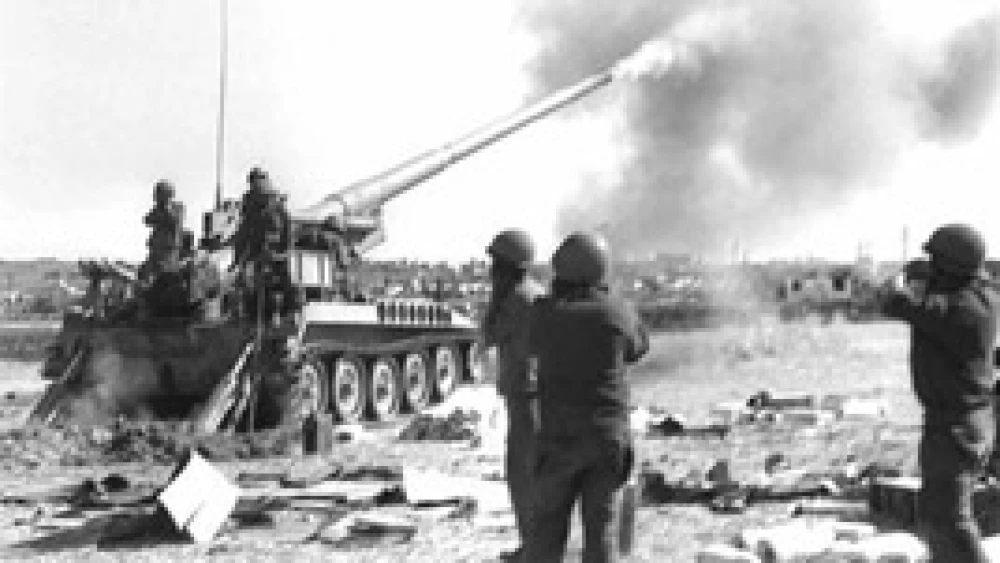
In honor of the 48th anniversary of the Yom Kippur War, the Israel State Archives (ISA) has announced the release of newly declassified documentation of the government’s conduct ahead of and during the 19-day conflict.
The material now open to the public “makes it possible to follow the inter-governmental dynamics and consultations held by Prime Minister Golda Meir ... and to delve into the exchanges, arguments and relations between the heads of state that led to the heavy fighting ... to teach us a lot about the historical event that affects the State of Israel to this day,” the ISA said in a statement.
According to the ISA, the material includes 14 transcripts of government meetings, 21 transcripts of policy-security consultations (dubbed “Golda’s kitchen Cabinet”) and 26 excerpts from the diary of Prime Minister’s Office director general Eli Mizrahi. The journal, in illegible handwriting, was only deciphered and typed up a year after the war, and was not presented to the Agranat Commission of Inquiry into the failings of the failures that led to the Israel Defense Forces not being prepared for the surprise simultaneous attacks by Egypt in the south and Syria in the north on Oct. 6, 1973.
The joint invasion took place on the Day of Atonement, the holiest day of the Jewish calendar, when much of the country was fasting and in synagogue.
“The Yom Kippur War proved how dangerous complacency and arrogance can be,” said Israeli Prime Minister Naftali Bennett at the Mount Herzl military cemetery last month, at an event marking the war. “It taught us a lesson in humility, but also the importance of being prepared and organized.”
Addressing the same gathering of politicians and bereaved families, Israeli President Isaac Herzog called the war “a national event that taught us about inflexibility and arrogance.”
“We must do our utmost so that a surprise like that does not happen again; we must always be prepared for war, as well as never miss an opportunity for peace,” added.