


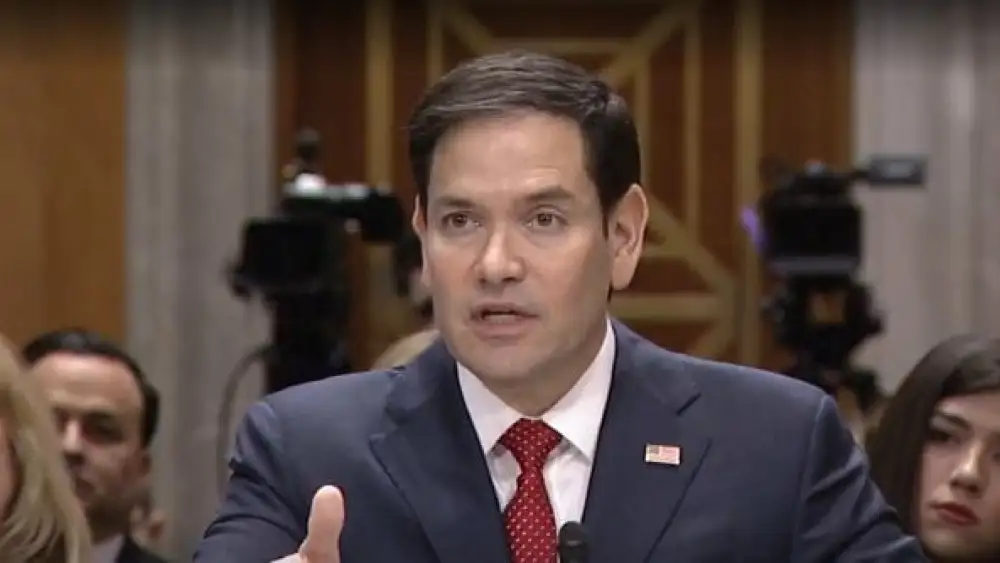
At a confirmation hearing on Wednesday, Florida Sen. Marco Rubio said that as state secretary he’d belong to “perhaps the most pro-Israel administration in American history,” pushing Israeli-Saudi normalization and lifting sanctions from Jews in Judea and Samaria, among other actions.
The emerging ceasefire agreement between Israel and Hamas, Rubio said, was “a foundation to build upon” in working toward peace between Israel and Palestinians and normalization of Israeli-Saudi ties as an extension of the Abraham Accords.
“We’re still going to have some issues with [United Arab Emirates] and with Saudi Arabia, but we also have to be pragmatic enough to understand what an enormous achievement it would be if, in fact, you not just get a ceasefire but that leads to the opportunity of a Saudi-Israeli partnership and joint recognition,” Rubio, President-elect Donald Trump’s pick for state secretary, said in response to question about the accords by Sen. Jacky Rosen (D-Nev.)
In 2020, during Trump’s first term, Israel entered the Abraham Accords with the United Arab Emirates, Bahrain, Morocco and Sudan.
“There are opportunities now in the Middle East that did not exist 90 days ago,” said Rubio. “There are now factors at play in the Middle East that I think we can build upon and may open the door to extraordinary and historic opportunities, not just to provide for Israel’s security but ultimately begin to confront some of these other factors,” he added.
Rubio said “yes” after he was asked during the hearing before the Senate Foreign Relations Committee whether under him, the Department of State would lift sanctions on Israelis living in Judea and Samaria, which the Biden administration extended this week by an executive order. Rubio did not say when this would happen.
The sanctions, first imposed in February, concern 17 individuals and 16 entities that are alleged to have perpetrated or orchestrated violent acts against Palestinians. The sanctioned parties have denied the allegations.
The International Criminal Court’s allegations of genocide against Israel had created a false “moral equivalency” between Hamas and the Jewish state, Rubio said in response to another question.
“I think the ICC, if they don’t drop this, will find its credibility globally badly damaged and I think the United States should be very concerned, because I believe this is a test run for applying it to American service members and American leaders in the future,” he said.
He also advocated a tougher line on Iran.
“Any concessions we make to the Iranian regime we should anticipate that they will use, as they have used in the past, to rebuild their weapons and to try to restart their sponsorship of Hezbollah and other related entities around the region because they seek to become the dominant regional power. That’s their stated goal and it’s been clear by the actions that they’ve taken,” said Rubio.
To come up for a vote in the Senate, nominees must first be confirmed in the Senate committees before which they appear. Senate confirmation vote dates have not yet been announced.



