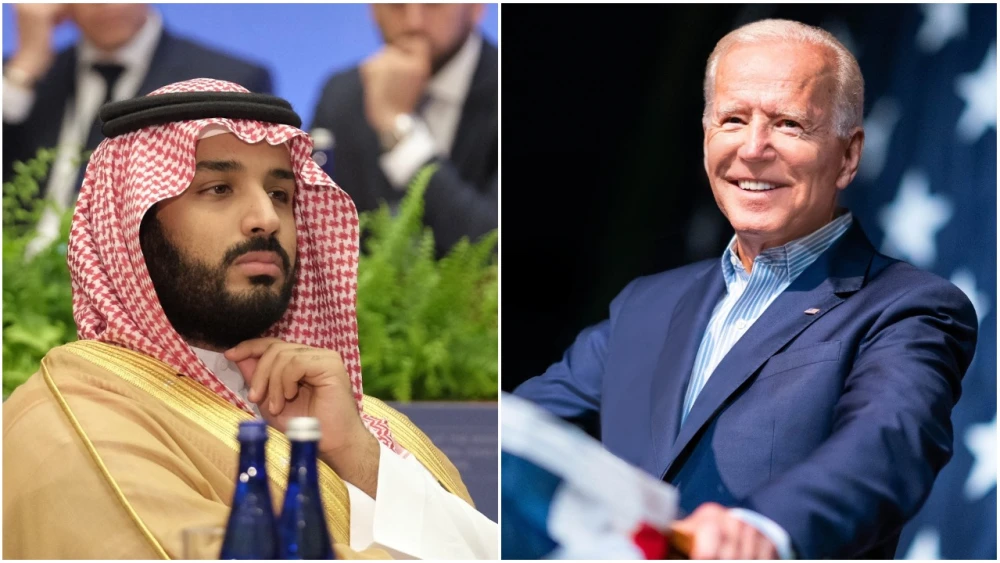
The Saudis and Emiratis shared intelligence with the United States and Israel to help counter Iran’s April 14 attack, The Wall Street Journal reported on Monday, citing U.S. and Israeli officials.
Arab governments were initially cautious about sharing the information due to fears about directly involving themselves in the conflict and opening themselves up to Iranian reprisal. However, according to the report, Riyadh and Abu Dhabi decided to move forward after talks with the Americans.
Amman also agreed to allow the Americans and other countries to fly warplanes through its airspace to intercept Iranian missiles and drones, and to assist in shooting them down, the sources said.
“Two days before the attack, Iranian officials briefed counterparts from Saudi Arabia and other Gulf countries on the outlines and timing of their plan for the large-scale strikes on Israel so that those countries could safeguard airspace, the officials said. The information was passed along to the U.S., giving Washington and Israel crucial advance warning,” according to the Journal.
“With an Iranian attack all but certain, the White House ordered the Pentagon to reposition aircraft and missile-defense resources to the region and took the lead in coordinating defensive measures between Israel and Arab governments, according to the senior Israeli official,” the article continued.
“The challenge was to bring all those countries around Israel” at a time when Israel is isolated in the region, the official said. “It was a diplomatic issue.”
The combined Iranian attack on Israel, comprising 170 UAVs, 30 cruise missiles and 120 ballistic missiles—more than 300 aerial threats in total—was successfully intercepted by Israel and partner militaries.