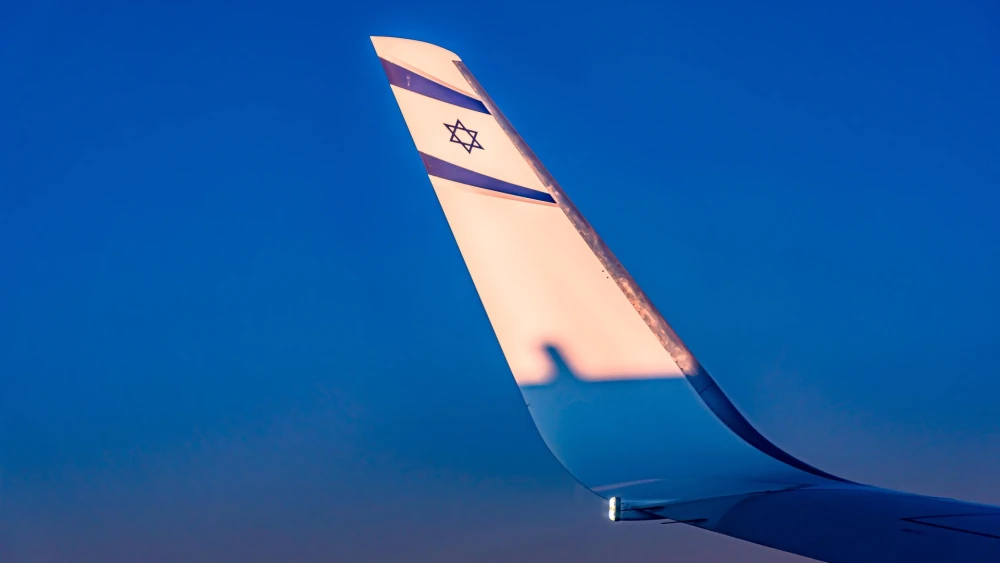

El Al’s last commercial flight from Tehran departed 47 years ago, on Feb. 10, 1979, as the Islamic Revolution engulfed Iran. Its last flights from democratic Toronto and Brussels left in October 2022—barely three and a half years ago. Yet in today’s airline geopolitics, a resumption of direct Tel Aviv-Tehran service now looks more probable than El Al’s return to either Toronto Pearson or Brussels Airport.
Consider the facts. In 2022, El Al suspended its long-running routes to Toronto, Brussels and Warsaw, citing post-COVID economics, pilot shortages and network optimization. Warsaw has since returned to the schedule. Brussels and Toronto have not.
Meanwhile, El Al has launched one of the most aggressive worldwide route-and-fleet expansions in its history, including a record 55 weekly flights to North America this summer—all to the United States, none to Canada. Arkia, Israel’s second major carrier, has followed suit: regular Tel Aviv-New York service (now up to six times weekly), major capacity increases to Bangkok, Hanoi and Phuket, and explicit plans for further North American growth.
Conspicuously absent from every financial briefing, schedule update and press release: any mention of Canada. Not one flight.
Toronto’s Jewish and Israeli-Canadian Diaspora community—the second-largest in North America after New York and the world’s fourth largest—has noticed. A petition urging El Al to restore direct service has gathered thousands of signatures and impassioned pleas about family ties, business travel and cultural connections.
The airline’s silence has been deafening. So has the contrast with Brussels, where El Al still sells tickets on codeshare partners, but refuses to operate its own aircraft and crews. This is the same Brussels Airport devastated by ISIS suicide bombings in March 2016 that killed 16 people in the departure hall and injured hundreds more, and where Belgium’s national terrorism threat level remains stuck at 3 (“Serious”), meaning an attack is officially assessed as possible and likely. Belgium explicitly identifies Israeli interests as under particular risk.
El Al’s official explanation for bypassing both cities remains “commercial.” But that doesn’t entirely ring true. Both airports sit in jurisdictions where baggage handlers, ground crews and related unions have taken highly public, hostile positions toward Israel. In Brussels, unions representing ground-service workers openly called last summer for members to refuse to handle any flights to Tel Aviv “until the genocide in Gaza ends.”
In Toronto, the rhetoric is subtler but no less pointed: Unifor, which represents Greater Toronto Airports Authority employees and workers at certain ground-handling contractors at Pearson, has issued repeated statements endorsing an arms embargo on Israel and describing the Gaza campaign in language indistinguishable from strident pro-Palestine activism.
These are not fringe locals; they are the very unions whose members would load bags, fuel aircraft and service El Al planes on the ramp.
Adding to the chill is the broader political atmosphere: former Prime Minister Justin Trudeau (on whose watch El Al departed) and his Liberal successor, Mark Carney, have both taken overtly hostile stances toward Israel, repeatedly condemning its military operations, pushing for unilateral recognition of a Palestinian state and floating arms-embargo talk—signals that can only embolden union activists and human-rights complainants at the airport.
El Al’s legendary security model—armed undercover marshals on every international flight, intensive pre-boarding interviews and behavioral profiling—has always been non-negotiable. Yet in Canada and Belgium, that model now collides with human-rights legislation, anti-discrimination codes and official anti-Islamophobia policies.
Canadian tribunals and European courts have already scrutinized airlines for perceived religious or ethnic profiling. El Al operated freely in Toronto for four decades; today, the legal and union environment makes the same intensive scrutiny of Muslim or Arab passengers far riskier. The airline may simply have concluded that the operational friction—potential complaints, work-to-rule slowdowns or worse—outweighs any revenue.
If regime change soon ends Iran’s theocracy, the politics could reverse dramatically. A post-theocratic Iran would likely credit Israel and Prime Minister Benjamin Netanyahu (affectionately dubbed “Uncle Bibi” by many Iranians) for helping bring about its freedom. Warm relations that once existed under the shah, and which persist today, would resume, along with El Al flights.
Until the unions in Brussels and Toronto decide that servicing Israeli aircraft is no longer an ideological battlefield, and until El Al can be confident it would not be operating in hostile territory in Canada or Belgium, the world’s most secure airline will continue to keep its 787s and 777s pointed elsewhere. And that includes Tehran if Israel succeeds in its stated desire to help Iranians in their quest to overthrow the current Iranian regime.