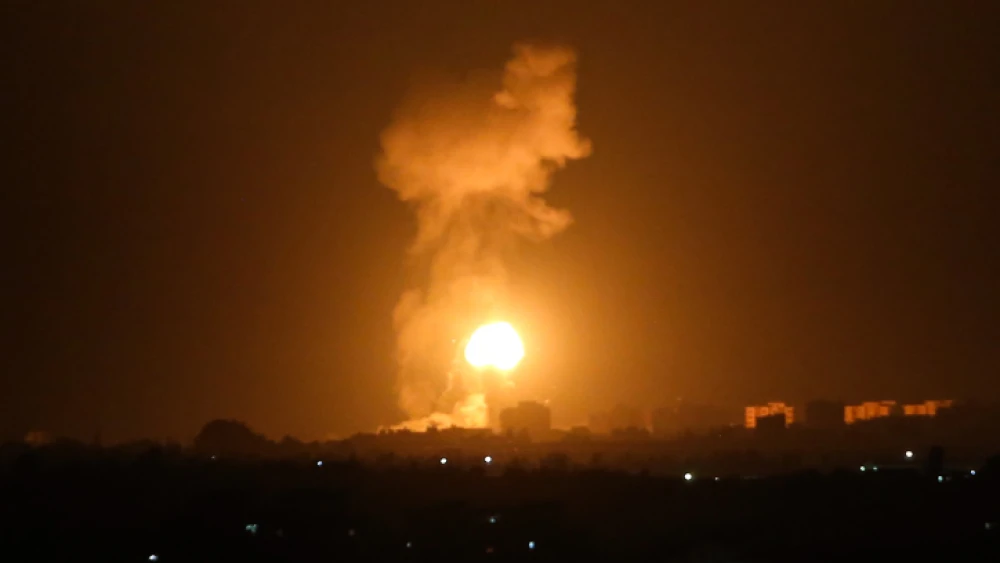
The Israeli Air Force struck a Hamas military post in southern Gaza early Sunday morning, in response to a rocket fired into Israel from the Strip late Saturday night, the Israel Defense Forces reported.
“Terror has consequences,” the IDF later tweeted.
The rocket, which the IDF said landed in an open field, was launched as riots continued along the border fence, as well as in Jerusalem.
The above incidents came on the heels of the resumption on Thursday of incendiary balloon attacks from Gaza into Israeli communities along the border, with Israeli firefighters having to battle the blazes in fields surrounding Kibbutz Kissufim.
Gaza-based terrorists fired multiple projectiles at Israel late last month, a day after launching a 36-rocket barrage at the Jewish state in the worst flareup in months.
Rockets fired at Sderot and Kibbutz Nirim in southern Israel triggered sirens, sending residents scrambling for bomb shelters. Israel’s Iron Dome air-defense system intercepted the rocket headed for Sderot; the second one landed in an open area near the security fence, according to the IDF. A third projectile failed to cross the border, detonating inside the Gaza Strip.