Israel’s preemptive strike on Hezbollah targets in Southern Lebanon early Sunday morning thwarted an imminent attack by the Iranian proxy, said Israeli Prime Minister Benjamin Netanyahu.
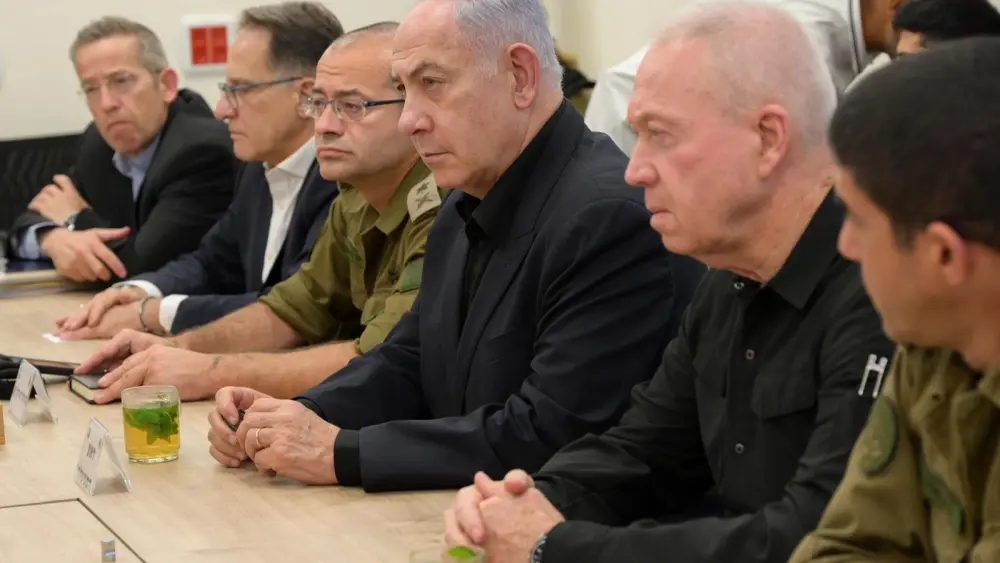
“This morning we identified Hezbollah preparations to attack Israel. In consensus with the defense minister and the IDF chief of staff, we directed the IDF to initiate action to eliminate the threat,” said Netanyahu at the start of a Security Cabinet meeting at Israel Defense Forces headquarters in Tel Aviv.
“Since then, the IDF has been taking strong action to foil threats. It has eliminated thousands of rockets that were aimed at northern Israel. It is thwarting many other threats and is taking very strong action—both defensively and offensively,” he added.
“We are determined to do everything possible to defend our country, to return the residents of the north safely to their homes and to continue to uphold a simple rule: Whoever harms us, we harm them,” he concluded.
Early Sunday morning, approximately 100 Israeli Air Force fighter jets, directed by IDF intelligence, destroyed thousands of Hezbollah rocket launchers in Southern Lebanon, according to the military.
“Most of these launchers were aimed toward northern Israel and some were aimed toward central Israel. More than 40 launch areas in Lebanon were struck,” said the IDF.
Over 100 projectiles have been fired at Israelis since this morning.
— Israel Defense Forces (@IDF) August 23, 2024
This is Hezbollah’s goal—destroying homes and targeting our civilians.
We will continue operating to ensure all of our civilians are safe and protected against terrorism. pic.twitter.com/Z1NWWchIUP
The IDF estimated that the preemptive strike prevented the launch of as many as 6,000 rockets and drones at Israel.
Hezbollah subsequently launched more than 150 projectiles into Israel. According to Lebanon’s Hezbollah-affiliated Al-Mayadeen outlet, the terror group launched some 320 missiles and drones during the early morning attack.
The Iranian proxy released a statement according to which the launches were “stage one” of its retaliation for Israel’s assassination in Beirut last month of Hezbollah’s No. 2 commander, Fuad Shukr.
“In a self-defense act to remove these threats, the IDF is striking terror targets in Lebanon, from which Hezbollah was planning to launch their attacks on Israeli civilians.”
— Israel Defense Forces (@IDF) August 25, 2024
Listen to an update from IDF Spokesperson, RAdm. Daniel Hagari, regarding Hezbollah’s plans to attack… pic.twitter.com/fKvbUVSmbT
IDF spokesman Rear Adm. Daniel Hagari warned the pubic on Sunday morning that Israel’s “defense is not hermetic, continue to act responsibly” and heed the directions of the military’s Home Front Command.
Since Oct. 8, Hezbollah has launched more than 6,700 rockets, missiles and explosive UAVs at northern Israel, from which tens of thousands of Israelis have been displaced.