Newsletter
Newsletter Support JNS

Austrian Jews see dip in antisemitic speech as physical attacks rise

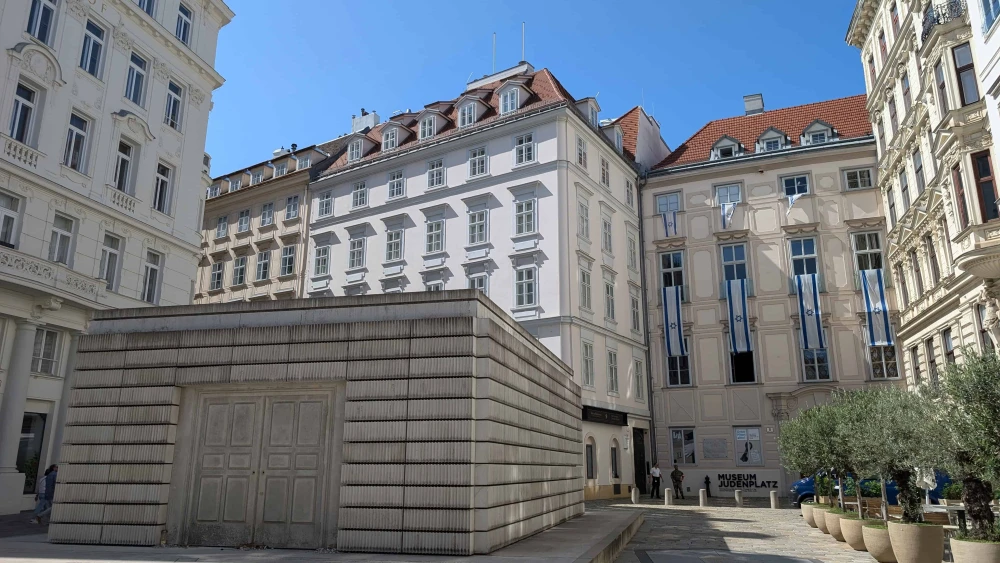
Judenplatz, the town square in Vienna's Innere Stadt that was the center of Jewish life in the Middle Ages. The Memorial to the Austrian Jewish Victims of the Shoah is seen in the Vienna, Austria, Aug. 25, 2024. Photo by Michal Eliasy Marks.
Judenplatz, the town square in Vienna’s Innere Stadt that was the center of Jewish life in the Middle Ages. The Memorial to the Austrian Jewish Victims of the Shoah is seen in the Vienna, Austria, Aug. 25, 2024. Photo by Michal Eliasy Marks.

In the first half of 2026, Austria’s main Jewish group, the Jewish Community of Vienna (IKG) documented a slight decrease in overall antisemitic incidents and a rise in physical attacks, compared with the same period last year. The group released the report last week.

Physical attacks rose to 12 from five in the first half of 2026. Threats rose from eight to 18. Israel-related incidents made up more than 75% of recorded cases.

IKG recorded 671 antisemitic incidents in Austria in the first half of 2026, compared with 726 in the first half of 2025.

IKG President Oskar Deutsch said in a statement about the report: “The state of emergency has become everyday life.” The European Jewish Congress called the figures “deeply alarming,” adding that “Jewish communities must not be forced to accept constant threats, violence and extensive security measures as normal.”

Canaan Lidor is an experienced journalist and international correspondent for JNS, covering Europe, Australia and global Jewish affairs.
The tech entrepreneur said repeated attempts to annihilate the Jewish state have reinforced its vigilance against extremists.
“There is not, and there will not be, a Palestinian state,” the Israeli prime minister pledged. He also called for the corruption trial against him to be dropped.
Metropolitan Police are treating the assaults as a hate crime following swift intervention by Shomrim volunteers.
“The State of Israel, for us as Orthodox Jews, is the beginning of the flowering of the redemption of our people,” Rabbi Elie Buechler told JNS. “If that’s not their perspective, that’s OK too.”