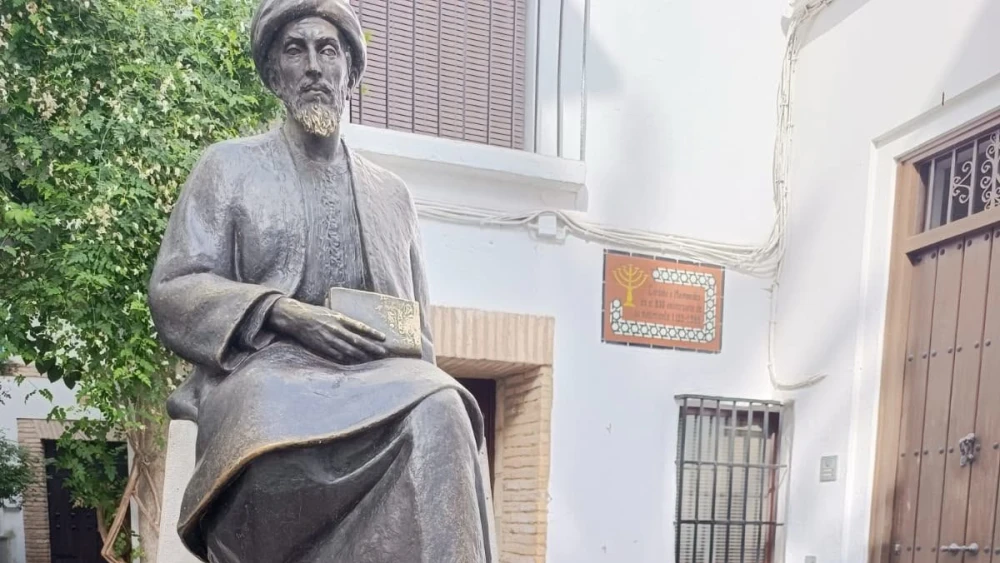
Following the drawing of a swastika this week on a statue of the Jewish philosopher Maimonides in his native city of Cordoba in Spain, a local Zionist group said the incident encapsulated the country’s antisemitism problem.
Así amaneció el monumento al sabio judío Maimónides en su ciudad natal, Córdoba.
— Acción y Comunicación sobre Oriente Medio - ACOM (@ACOM_es) August 2, 2026
Es necesario insistir: España no es un país antisemita. Pero en España, como en el resto del mundo, los extremos se juntan.
El islamismo que en España tiene una influencia marroquí muy importante,… pic.twitter.com/wB8dX0igft
“The Islamism that in Spain has a very important Moroccan influence, joins forces with the neo-Nazi far-right,” the Action and Communication on the Middle East (ACOM) group wrote in a statement about the incident. “All of this is fueled, promoted and protected by Pedro Sánchez’s leftist government, as radically anti-Spanish as it is antisemitic,” the statement added.
Spain is one of several European Union member countries that have intervened in South Africa’s 2023 lawsuit accusing Israel of genocide in Gaza, widely understood as an endorsement of the disputed suit. Sánchez, the prime minister, last year called Israel a “genocidal state.” Jerusalem has accused Madrid of fomenting the surge in antisemitic hatred.
Maimonides, also known by the Hebrew acronym Rambam or Rabbi Moses ben Maimon, was a 12th-century philosopher, physician and rabbinic scholar. In addition to Spain, he also lived in Morocco and died in Egypt in 1204.