


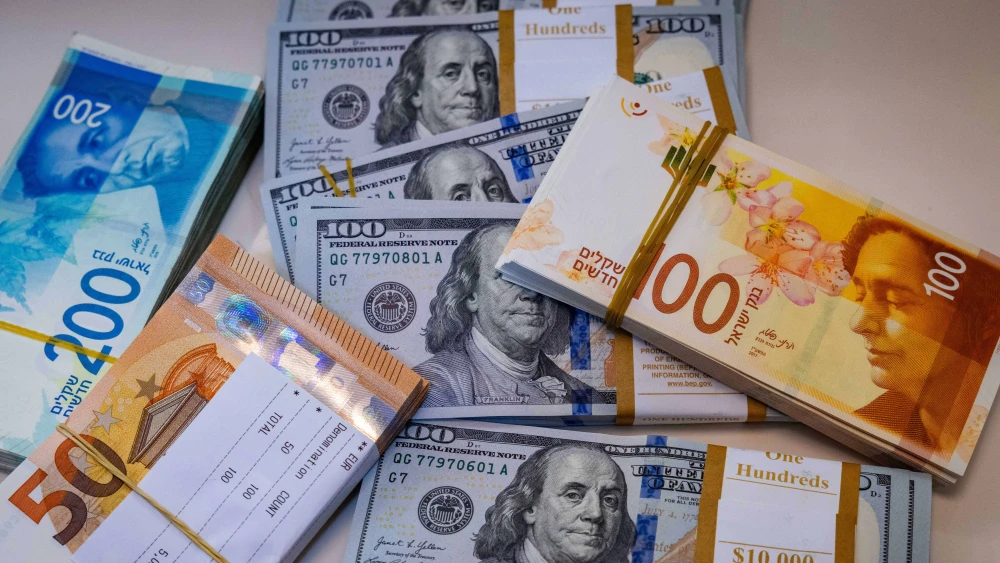
The U.S. dollar continued to weaken against the shekel on Thursday, falling to an exchange rate not seen since the early ’90s of 2.83 per greenback.
The euro and pound also weakened against the shekel, dropping to NIS 3.28 and NIS 3.79, respectively.
According to broadcaster Channel 12, the Bank of Israel is weighing the possibility of acting to prevent the dollar from falling further.
The BoI intervened in the past in similar situations by purchasing large amounts of dollars to protect Israel’s exporters.
Although importers and consumers can purchase products from abroad at less expense in light of the shekel’s strengthening, Israel’s exporters and the high-tech industry are feeling pressure.
High-tech firms whose income is mostly in dollars are experiencing squeezes in profits due to the currency’s weakening, having to pay their employees in shekels.
Meanwhile, Israeli Finance Minister Bezalel Smotrich sent a letter to local business leaders, asking them to lower prices “immediately so that the strengthening of the shekel is felt by consumers,” Channel 12 reported.
“It is unacceptable for you to turn to the government demanding assistance packages during times of crisis, yet when there is economic prosperity in the markets, withhold its benefits from citizens,” the letter read.
Smotrich urged them “to convene importers and businesses today in order to bring about immediate price reductions,” appealing directly to food importers, according to the report.


