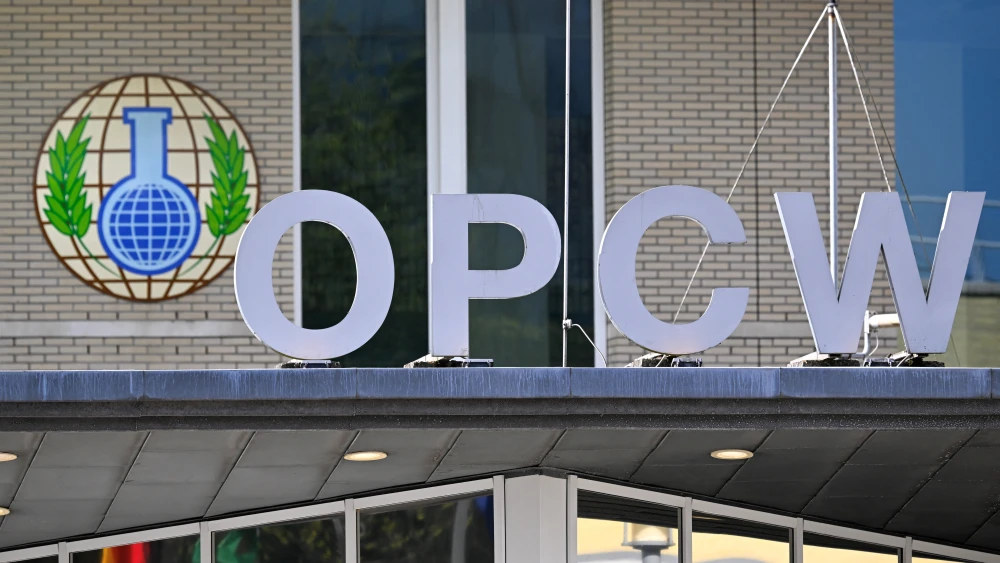
Dozens of previously undeclared remnants of former Syrian President Bashar Assad’s chemical weapons program have been discovered in the country in the past few weeks, the Organization for the Prohibition of Chemical Weapons confirmed on Wednesday.
In its monthly report for May, the OPCW said Syria’s Sunni Islamist government, which ousted Assad in late 2024, had granted inspectors access to “high-priority undeclared locations” since the start of the month.
“Dozens of undeclared chemical munitions such as aerial bombs and rockets … have been found at several of these undeclared locations,” the report stated.
A Syrian official had told Reuters on Tuesday that the discoveries included raw materials and munitions similar to those used in deadly gas attacks during the Arab Republic’s 2011-2024 civil war.
Mohamad Katoub, Damascus’s permanent representative to the OPCW, told the wire agency that Syrian authorities arrested 18 suspects for alleged involvement in the chemical weapons program, including senior military, political and technical officials.
The names of the suspects were not made public because the probe was ongoing, Katoub said, adding that several had served as major generals in Assad’s military. At least four were on U.S., European or U.K. sanctions lists, he added.
When Assad’s Syria became a member of the OPCW in 2013, it declared that chemical weapons were present at 26 locations, but the watchdog has said it has reason to believe the country harbored an additional 100 sites.
The joint OPCW-U.N. mission for the destruction of Syria’s chemical weapons arsenal, which ended in 2014, was widely criticized against the background of Damascus’s continued use of sarin and other deadly chemical agents against its civilian population.
Addressing the OPCW in The Hague last year, Syrian Foreign Minister Asaad al-Shaibani called on the international community to help Syria destroy its chemical weapons stockpiles.
Syria’s new rulers are committed to destroying “any remains of the chemical weapons program developed under the Assad regime—to put an end to this painful legacy, to bring justice to victims and to ensure that the compliance with international law is a solid one,” he declared.