The future of the Abraham Accords and their potential expansion after the Oct. 7, 2023, Hamas onslaught on Israel was discussed by an expert panel at the JNS 2026 International Policy Summit on June 22.
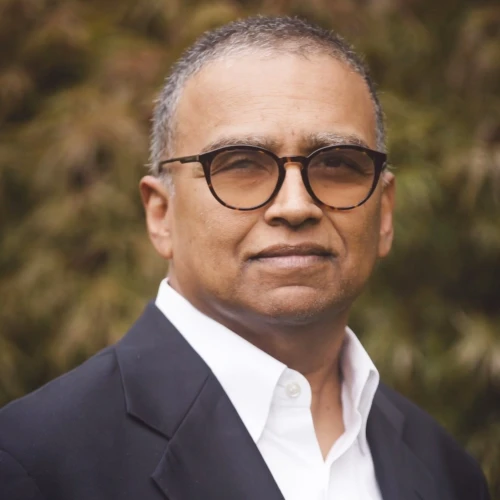
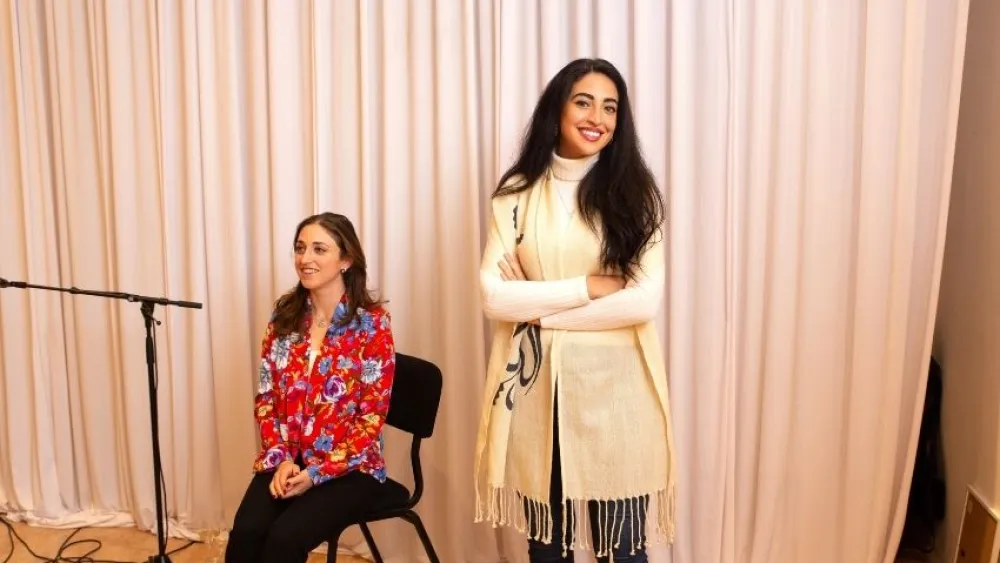
The panel, moderated by Fleur Hassan-Nahoum, co-host of JNS TV’s “The Quad,” featured Dan Feferman, co-founder and co-editor-in-chief of MiddleEast24; Asher Fredman, director for Israel at the Abraham Accords Peace Institute and executive director of the Misgav Institute for National Security; and Chama Mechtaly, founder of the Emma Lazarus Institute.
Hassan-Nahoum highlighted the resilience of the Abraham Accords despite years of regional conflict, pointing to increased trade between Israel and its Abraham Accords partners.
“Dubai has now replaced Istanbul as the main connecting airport for Israel, which is incredible,” Hassan-Nahoum said.
Feferman, who recently traveled to Abu Dhabi, said the mood there behind closed doors remained supportive of Israel, particularly after Iranian ballistic missiles targeted the United Arab Emirates.
“They see Iran and understand who has been attacking them and who has been coming to their defense,” he said.
Feferman emphasized that the UAE is not structured to withstand prolonged conflict, given its reliance on tourism and foreign investment. “We need to be a little more sensitive to that. We are used to this, but they are not. They get who the good guys are and who the bad guys are, and they see the Abraham Accords as a long-term investment,” he added.
Fredman said the Abraham Accords are entering a new phase. The first phase, he said, focused on bilateral relationships and proved remarkably resilient, particularly in trade and tourism, with Dubai remaining one of the most popular destinations for travelers departing from Ben-Gurion International Airport.
“It’s time to move forward and realize the potential of the Abraham Accords 2.0,” Fredman said, pointing to opportunities for joint air defense initiatives, collaborative research and artificial intelligence cooperation.
Discussing the next phase of the accords, Fredman noted that in January 2026, U.S. Central Command announced the establishment of a Middle East Air Defense Cell in Qatar, bringing together Abraham Accords partners (Qatar is not one—A.B.) to coordinate regional air defense efforts. He also cited U.S. President Donald Trump’s signing of legislation in February creating an Abraham Accords-focused research and development framework among participating countries.
Major legacy media
Mechtaly said she views the Abraham Accords as a framework that emerged after decades of Islamist extremism threatened the sovereignty of Arab states and as a mechanism to preserve that sovereignty while countering extremist threats.
“The Abraham Accords are attacked every single day by major legacy media that minimize them and delegitimize them. After the ceasefire in Gaza, the propaganda campaign waged by the Muslim Brotherhood started to turn on the UAE, painting them as genocidal and as the new Israel of the Middle East,” she said.
“People need to be really conscious and cautious about the fact that war evolves and peace should evolve with it,” she added.
Mechtaly argued that the accords require greater institutional depth and a stronger security architecture to remain sustainable and fulfill the vision behind them.
“That means creating new curriculum in schools, cultural centers, exhibitions, getting students to study together, and involving new media to focus on the stories of the new Middle East,” she said.
Mechtaly told attendees that the principles of the Abraham Accords should not be confined to the Middle East and could also benefit Western societies.
Saudi Arabia has long been viewed as the most significant potential addition to the Abraham Accords. Feferman said that after Iran was weakened during Israel’s “Operation Rising Lion” in June 2025, many observers believed Riyadh was closer than ever to joining.
“When they do join, it will be the end of the Arab-Israeli conflict. However, they went back to the old playbook. They went back to co-opting radicals abroad, trying to pass some reforms at home and back-channel diplomacy,” he said.
What is needed now, Feferman argued, is stronger U.S. leadership, greater investment in security and cultural infrastructure, and educational initiatives designed to strengthen support for the Abraham Accords and encourage Saudi participation.
“This is the way forward,” he said. “The old language of the Middle East needs to be withdrawn and a new language of integration, moderation and a new mindset of Abraham Accords 2.0 needs to take place.”
While normalization with Gulf states may remain challenging in the near term, Feferman suggested that progress could come more quickly with countries outside the region, such as Indonesia.