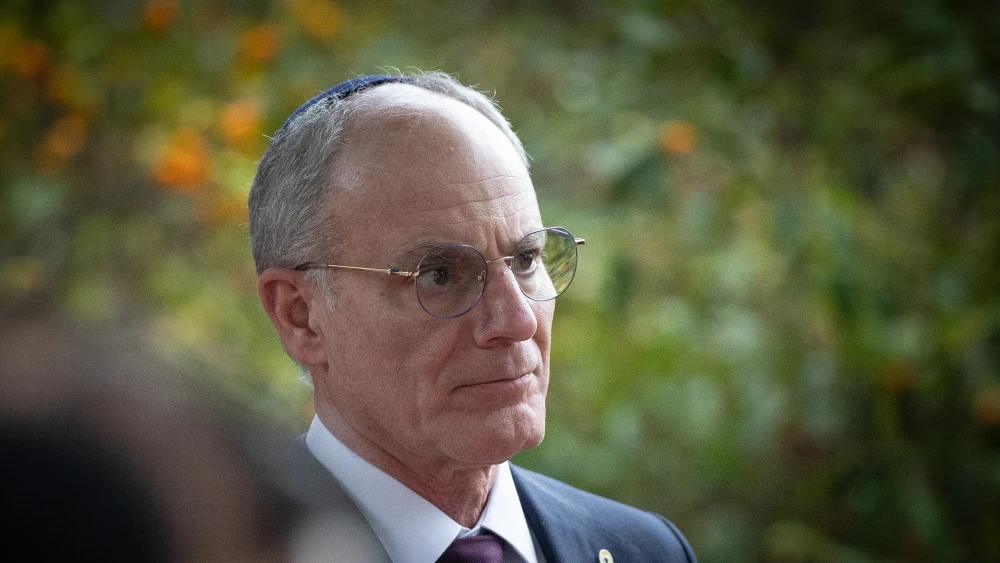
As the fifth round of U.S.-brokered political and security talks between Israel and Lebanon began on Tuesday, Yechiel Leiter, Israeli ambassador to the United States, voiced concern that the Trump administration was allowing Tehran to fold the Lebanon issue into U.S.-Iran negotiations, potentially undermining momentum between Jerusalem and Beirut.
“Four rounds ago, we all got on the same train. We sat in the same car and traveled to the same destination, with the United States serving as the locomotive,” Leiter wrote. “The train was heading in a very clear direction: full peace between the countries, Iran and its malign influence out of Lebanon, the dismantling of Hezbollah, and peace and security for Lebanon and Israel.”
The current trajectory, he said, has become “a train wreck,” adding that “we need clarity.”
Leiter said he supported U.S. President Donald Trump’s “vision of ensuring that Iran no longer has nuclear capabilities, ballistic missiles, or the ability to funnel money to its proxies to threaten its neighbors and establish regional hegemony.”
However, he warned that a newly proposed U.S.-Iran deconfliction mechanism for Lebanon could shift the focus away from the core issue. He said he fears “that the concept of ‘deconfliction’ is misplaced.”
“Israel is not in conflict with Lebanon,” Leiter said. “All that is needed is coordination with Lebanon.”
The ambassador said the biggest issue is Hezbollah, the Iran-backed terror proxy that has long controlled southern Lebanon, adding that the new developments have created “a danger that Hezbollah has received a boost. It certainly feels stronger and bolder.”
He questioned whether Hezbollah’s dismantlement remains the foundation of the negotiations, saying: “For us, it must remain so.”
Leiter also asked whether the ceasefire Israel agreed to still depends on Hezbollah moving north of the strategic Litani River and away from Israel’s border, and whether funds made available to Iran through the U.S.-Iran understanding could be prevented from reaching Hezbollah.
“If we cannot guarantee that, then all the words we agree on here will make no difference, because Hezbollah will simply rebuild itself,“ Leiter wrote.