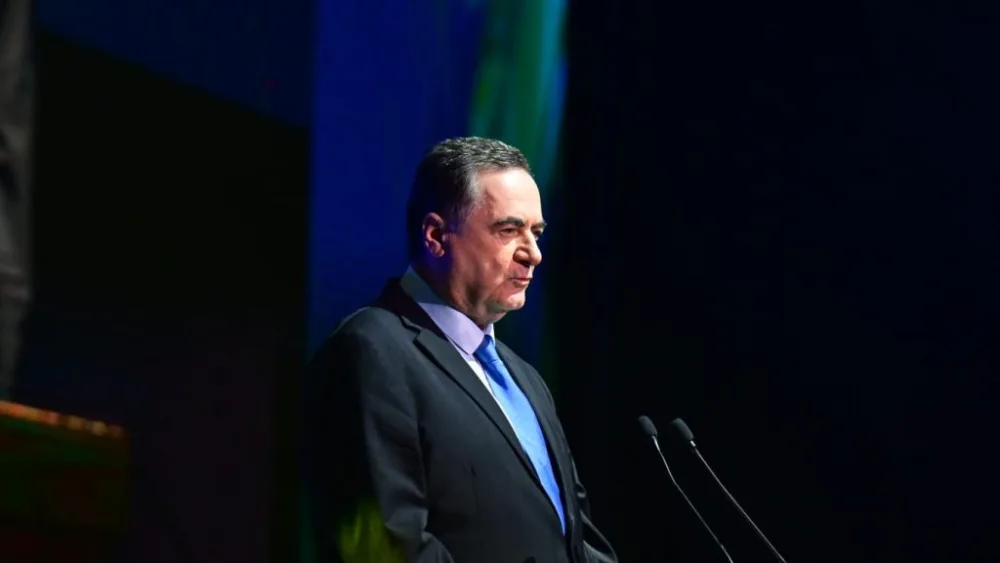
Israeli Defense Minister Israel Katz said on Saturday that the Israel Defense Forces will remain in Lebanon until Hezbollah is disarmed throughout the country, hailing the framework signed with Beirut as a “historic” achievement.
The deal “could, for the first time in decades, shape a new and safer reality along the northern border and in Lebanon, and strengthen the security of Israel’s citizens over the long term,” Katz said in a Hebrew statement.
The agreement “reflects the achievements of the IDF and the courage of our soldiers, who are fighting for the security of the residents of the north, as well as the steadfastness and bravery shown by the residents of the north,” according to Katz.
“The key principle established in the framework is that there will be no Israeli redeployment from Southern Lebanon, no withdrawal whatsoever, as long as the Hezbollah terrorist organization has not been disarmed throughout Lebanon, and the safety of northern residents is guaranteed,” he continued.
Katz said Jerusalem would maintain its security zone, including the strategic Beaufort Ridge, while preserving the IDF’s freedom to thwart Hezbollah’s attempts to harm Israeli soldiers and citizens. The IDF has been instructed to prepare for a “prolonged stay” in Lebanon, he noted.
“The agreement also constitutes a strategic blow to the Iranian axis. Iran tried to force Israel to withdraw from Lebanon through threats and pressure on the United States, and failed,” Katz continued, adding that the framework shows that “Lebanon’s future will no longer be dictated by Iran and Hezbollah.”
“The test will be the implementation of the agreement, and many challenges still lie ahead,” he said. “We will act decisively to ensure that all commitments are implemented in practice.”
If the Islamic Republic attempts to attack the Jewish state to prevent the implementation of the framework, “we will act against it with great force,” vowed Katz.
“We promised security for the residents of the north—that is what we have done, and that is what we will continue to do,” he concluded.
Israeli Prime Minister Benjamin Netanyahu on Saturday touted the understandings with Lebanon as a “historic accomplishment” that could help end the war with Hezbollah and eventually lead to peace with Beirut.
“Lebanon, Israel and the United States are essentially saying to Iran: This is none of your business. You have no status here. You have no involvement and no role, not you, not Hezbollah and not any terrorist organization,” Netanyahu told reporters at a press conference on Saturday night.
“Under these understandings, the United States and Lebanon have recognized Israel’s right to maintain the security zone inside Lebanon for as long as it is required for our security,” he added.
Hezbollah renewed its rocket and drone attacks from Southern Lebanon on Israel on March 2, following the targeted killing of Iranian Supreme Leader Ali Khamenei on the first day of “Operation Roaring Lion” on Feb. 28.
In response, Jerusalem launched a broad aerial campaign against Hezbollah targets and expanded military operations in Lebanon aimed at preventing cross-border attacks on Israeli communities.
Following the resumption of hostilities, Lebanese President Joseph Aoun vowed to do “the impossible” to stop cross-border hostilities between Israel and Hezbollah, and moved to outlaw the Iranian proxy.
Israeli and Lebanese officials subsequently held five rounds of historic direct talks at the U.S. State Department, resulting in the framework of understandings that was reached on Friday and is conditioned on Hezbollah withdrawing from the south.