


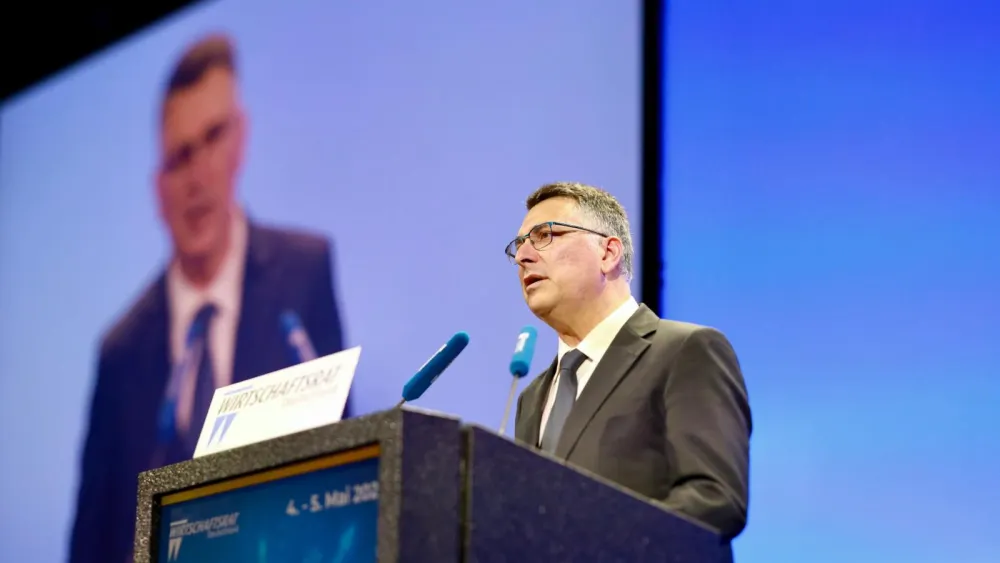
Any peace agreement with Lebanon would depend on the full disarmament of the Iranian-backed Hezbollah terrorist group, Israeli Foreign Minister Gideon Sa’ar said on Sunday.
“On Friday, in Washington, Israel signed a framework agreement which reflects our desire for peace with Lebanon,” Sa’ar told reporters in Jerusalem, speaking at a press conference alongside his counterpart from South Sudan, Minister of Foreign Affairs and International Cooperation James Pitia Morgan.
“Peace must be built on security, and security on our northern border, which can only be achieved by the disarmament of Hezbollah,” he said. “This is a shared interest for both Israel and Lebanon.”
Sa’ar in his remarks accused Hezbollah and its Iranian patron of undermining Lebanon’s sovereignty, saying the terrorist proxy had effectively occupied the country for decades.
“The ones who are violating Lebanon’s sovereignty are Iran and Hezbollah,” he said. “Peace is tied to freeing Lebanon from the de facto Iranian occupation under which it has lived for decades.”
Sa’ar said the Israel Defense Forces would remain in a security zone in Southern Lebanon as long as Hezbollah continues to pose a threat to the Jewish state.
“Our only ambition is to live in peace and security,” Jerusalem’s top diplomat added.
Israel and Lebanon signed a framework agreement on Friday aimed at removing Hezbollah from Southern Lebanon and laying the groundwork for broader political cooperation between the two countries.
The U.S.-brokered agreement lays out two pilot zones recommended by the IDF, where the Lebanese Armed Forces would deploy and disarm the Iranian proxy.
Hezbollah renewed its rocket and drone attacks from Southern Lebanon on Israel on March 2, following the targeted killing in Tehran of Iranian Supreme Leader Ali Khamenei on the first day of “Operation Roaring Lion” on Feb. 28.
In response, Jerusalem launched a broad aerial campaign against Hezbollah targets and expanded military operations in Lebanon aimed at preventing cross-border attacks on Israeli communities.
Following the resumption of hostilities, Lebanese President Joseph Aoun vowed to do “the impossible” to stop cross-border hostilities between Israel and Hezbollah, and moved to outlaw the Iranian proxy.
Israeli and Lebanese officials subsequently held five rounds of direct talks at the U.S. State Department in Washington, resulting in the framework of understandings that was reached on Friday and is conditioned on Hezbollah withdrawing from the south.



