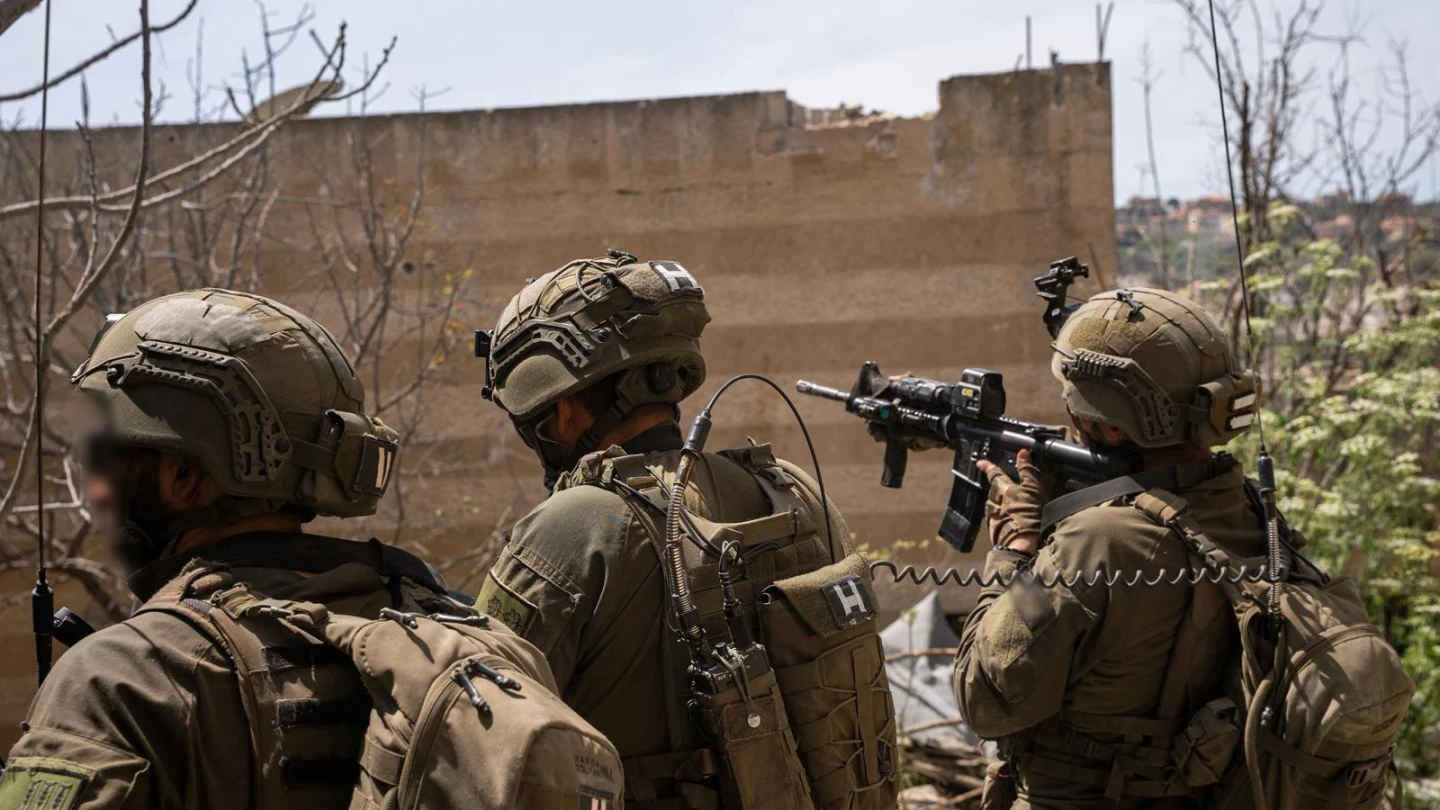
A new nationwide survey found that most Israelis support maintaining defensible borders and security zones in Gaza, Lebanon, Syria and the Jordan Valley, along with a military presence in strategically vital areas.
“The findings reveal broad public support for preserving Israel’s territorial security assets and deep skepticism toward alternatives based on international guarantees or territorial withdrawals,” according to the Jerusalem Center for Security and Foreign Affairs (JCFA), which commissioned the poll.
Sixty-four percent of Israelis support a permanent military buffer zone in the Gaza Strip, while another 11% support a temporary arrangement. Seventy-three percent support maintaining a security zone in Southern Lebanon up to the Litani River. Only 14% oppose such a policy.

“The Israeli public has drawn a clear lesson from Oct. 7 and the security developments of recent years: national security cannot be based on hopes, international guarantees, or assumptions that have proven inadequate,” said JCFA President Dan Diker, referring to the Hamas-led invasion of southern Israel on Oct. 7, 2023.
“Most Israelis now understand that defensible borders, strategic depth, buffer zones, and an Israeli security presence in vital areas are indispensable components of national defense,” he added.
Regarding Syria, 60% of Israelis support maintaining Israel’s security presence in areas secured following the fall of the Assad regime. (The IDF seized control of parts of southern Syria after the regime’s fall in Dec. 2024.)
In Judea and Samaria, 57% of Israelis said Israel must keep a permanent military presence in the Jordan Valley, which they see as a non-negotiable demand irrespective of any future political deal. Only 11% said Israel could relinquish its presence.
International security guarantees are viewed with deep skepticism. Sixty-five percent of Israelis don’t trust international forces as a replacement for Israel’s military along their borders. Of those, 40% say Israel can only rely on its own forces to defend itself. Another 25% cite past failures by international forces.
Sixty-one percent of Israelis oppose any agreement that would require a full withdrawal from Judea and Samaria without Israeli-controlled buffer zones or security mechanisms. Just 27% support such a plan.
Forty-eight percent of Israelis now view the Oslo Accords as a strategic mistake. Under the 1993 deal, Israel handed over parts of Judea, Samaria and the Gaza Strip to the Palestinian Liberation Organization (PLO)-controlled Palestinian Authority.
Fifty-six percent said that Israel’s 2005 disengagement from Gaza was a strategic mistake.
The findings reflect a serious reevaluation on the part of Israelis of earlier territorial withdrawals and security assumptions.
The survey was conducted by Lazar Research using a representative sample of 503 Jewish and Arab Israeli adults. The survey found that 54% of Israelis believe Israel’s borders are not secure after Oct. 7, 2023. Only 42% view the borders as adequately protected.