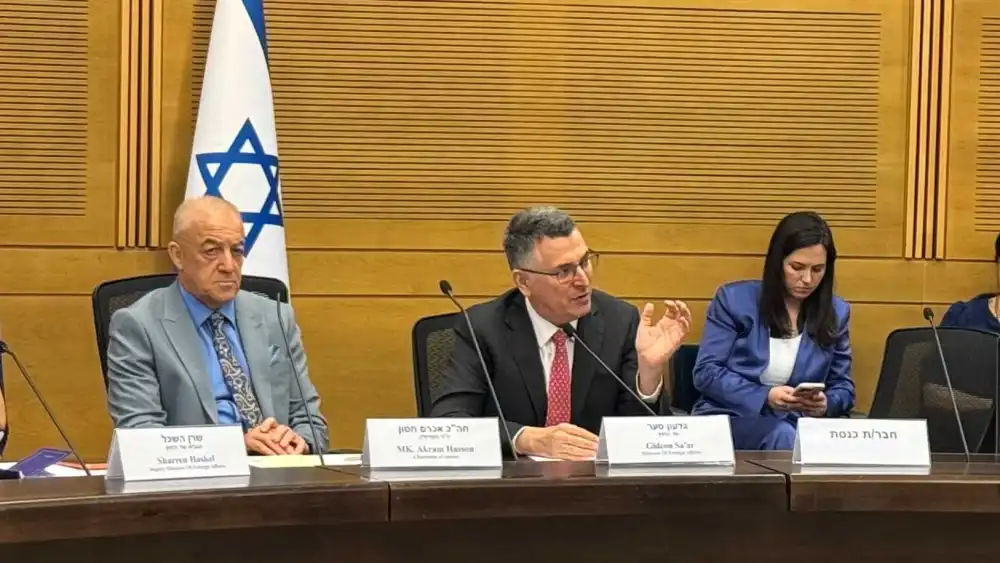
Peace between Israel and Lebanon “is possible,” Foreign Minister Gideon Sa’ar said on Monday at a Knesset Caucus for Peace Between Israel and Lebanon event in Jerusalem, held to discuss the U.S.-brokered framework agreement.
“Our goal is to achieve peace and normalization with Lebanon. ... The condition for this is security on our border and for our citizens. The path to this is ending the Iranian occupation of Lebanon by Hezbollah,” Israel’s foreign minister stressed.
The caucus event was attended by faith leaders from all communities, ambassadors and consuls, former members of the South Lebanon Army, and other figures engaged in the issue.
Sa’ar went on to say that the Israeli-Lebanese agreement brokered by the Trump administration and signed in Washington on Friday, “signals a shared aspiration between the two countries, Israel and Lebanon.
“Unfortunately, Lebanon is under a de facto Iranian occupation implemented through Hezbollah, which is Iran’s proxy. This occupation is what led Hezbollah to launch its attack on Israel on March 2. The terrorist organization received instructions from Iran to join the war, contrary to the wishes and interests of the people of Lebanon and contrary to the wishes of the Lebanese government,” he added.
Prime Minister Benjamin Netanyahu on Saturday touted the framework of understandings reached with Lebanon as a “historic accomplishment” that could help end the war with Hezbollah and eventually lead to peace with Beirut.
“Lebanon, Israel and the United States are essentially saying to Iran: This is none of your business. You have no status here. You have no involvement and no role, not you, not Hezbollah and not any terrorist organization,” Netanyahu told reporters at a press conference after Shabbat ended in Israel.