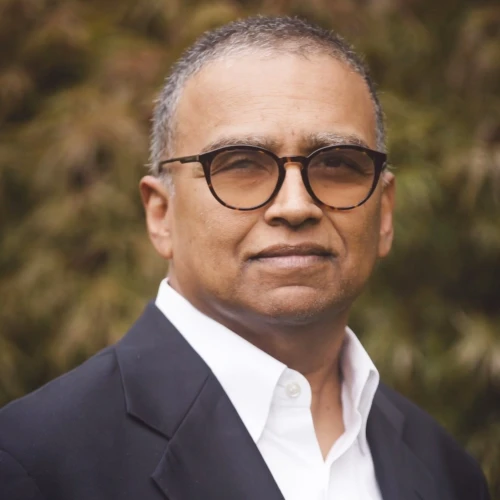
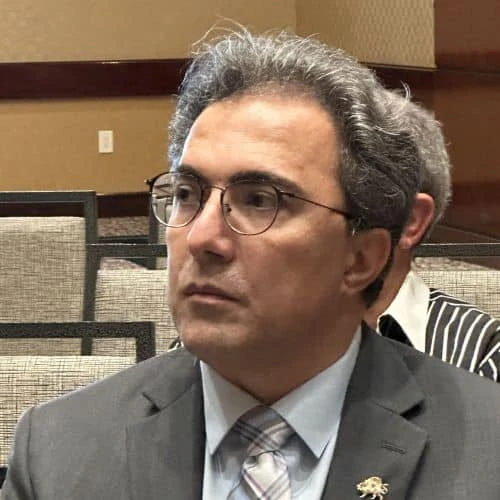
Several preeminent legal experts participated Monday in a forum at the Jerusalem News Syndicate International Policy Summit titled “International Legal Issues: UN, ICC, ICJ Forum,” where they presented diverse opinions on how to counter the extreme bias against Israel at these institutions.
The three entities were discussed separately, although the common theme was their anti-Israel agenda. The lawyers, led by moderator and JNS Summit chairman Richard D. Heideman, a highly acclaimed attorney in Washington, D.C., who represents American victims of terror and their families, spoke passionately about their determination to fight the situation that endangers Israeli citizens and the Jewish state and noted several successes along the way.
“The International Criminal Court, in my view, presents a strategic threat to the State of Israel,” international lawyer Ron Soffer said, noting that it employs a questionable interpretation of international law.
Alan Baker, an Israeli expert in international law and former ambassador to Canada, was heavily involved in the negotiations and drafting of the International Criminal Court. Even though it was Israel and Jewish international lawyers who came up with the initial vision of an international court after the Holocaust, they realized that “nothing good would come out of this court.”
Prof. Eugene Kontorovich, an Israeli legal scholar, said the “most dangerous thing we can do is believe that elaborating the legal problems with ICC’s proceedings is going to get us anywhere. We can have the cleverest legal arguments. It will not help.”
Rather, he said, “the most important thing that can be done is sanctions by the United States.”
U.S. President Donald Trump has imposed sanctions, he said, albeit very limited, targeted sanctions on the court.
“The ICC, it must be said, is not just a threat to Israel; it is also a threat to the United States.” Kontorovich added. “The United States needs to understand that if the ICC is still in existence when President Trump moves [out of] office, the drama now surrounding Netanyahu is going to shift to America.”
Barrister Jonathan Turner, executive director of UKLFI Charitable Trust, which advances legal education on Israel and antisemitism and provides legal support to victims of antisemitism, believes it is worthwhile to challenge the activities of the ICC within the court itself.
“If you don’t challenge them, then they go completely unanswered,” he said.
Yael Vias Gvirsman, founder and lead counsel of October 7 Justice – Without Borders, said she felt privileged to represent hundreds of direct victims of the Oct. 7 atrocities before different courts around the world, including the ICC.
“We all feel very frustrated,” said Nitsana Darshan-Leitner, an Israeli attorney and human rights activist. “The ICC has no jurisdiction over Israel, and the PA is not a state,” she said, so “how do they dare issue arrest warrants against leaders of a democratic state when all it wanted to do was defend itself against a vicious, cruel terror organization that massacred us on October 7.”
On behalf of the Israeli hostages, Shurat HaDin-Israeli Law Center, the organization that she founded in 2002, filed a 20-million-shekel lawsuit against ICC Chief Prosecutor Karim Khan. The case is ongoing.
‘A legal Oct. 7’
“The ongoing genocide case against Israel at the International Court of Justice is what I would call a legal Oct. 7,” Kontorovich said.
“Unlike the ICC, where we are not members and there is no basis for jurisdiction, Israel has, in fact, given jurisdiction to the ICJ under the Genocide Convention to hear cases involving genocide,” he said, mistakenly believing “it would never be so cold as to pull Israel into such a case. But nonetheless, there is a basis for jurisdiction in a treaty that Israel signed. This treaty will be used in every war Israel ever fights to give the ICJ a permanent platform for investigating.”
“And the investigation is the worst part. The fact that this is going to go on for another three years is not a good thing. It’s a cloud of potential genocide hanging over Israel’s head.”
Turner’s approach to the International Court of Justice is the same as toward the ICC.
“We can say until we’re blue in the face that its advisory opinions are not binding. We can say until we’re blue in the face that they didn’t hear the evidence. They didn’t hear the facts. They didn’t take them into account. We can point out that the judges are biased, but the world will not listen.”
The only chance is to show up in court and present the evidence, he said. Otherwise, “we have no hope at all.”
According to Vias Gvirsman, “If we want to respect ourselves, we have a good case, let’s bring it to the court.”
Here the moderator interjected with his own comments about the ICJ.
“Let’s remember that it was in 2003, during the Second Intifada, when the UN General Assembly referred to the International Court of Justice the initial question on the legal consequences of Israel’s construction of what is famously referred to as the ‘Apartheid Wall.’ We renamed it the terrorism prevention security fence when we filed a brief in that matter.
“This was filed by an NGO, the Foundation for Defense of Democracies. The reason I mention this is that we pleaded with the Israeli government to file more than an affidavit contesting jurisdiction and to address the substantive issue of Israel’s right and obligation to defend her people, meaning fencing out the terrorists, showing the facts as to why it was essential as a result of the Second Intifada to build this barrier. We pleaded with the Israeli leadership working on this, the lawyers, saying it would come to haunt us.
“Their answer was that it was only going to be an advisory opinion. And I remember saying that an advisory opinion morphs over decades and eventually is accepted by courts around the world, and then it becomes part of international law.
“So, when you hear everybody saying Israel was in violation of international law, one of their bases is the decision of the International Court of Justice in 2004 in the advisory opinion giving the advice that Israel was in violation of international law.
“The moral of the story is: We have to battle straightforward, stand up proudly and use every legal tool available to us.”
Fighting United Nations bias
International human rights lawyer Hillel Neuer, executive director of UN Watch, agreed on the importance of “showing up and making the case.”
“The United Nations, despite its obsession, its pathological obsession, with demonizing the world’s only Jewish state, is a global podium. In general, there is no magic bullet on how to confront this global demonization. And being at the UN offers opportunities,” he said, citing several examples of his activism at the world body.
Joseph H. Tipograph, attorney at Heideman Nudelman & Kalik, PC, representing victims of terror, reminded the audience that UNRWA “is the opposite of what it says it is,” noting that rather than taking people out of refugee protection, specifically in Palestinian areas, it makes the refugee status permanent “not just to the individual, but to their children and their children’s children...and it perpetuates this not just through his status; it perpetuates it through its education.”
“Oct. 7 was not just a terror attack. It was the incarnation of the Right of Return that UNRWA has been teaching in its schools,” he said.
Tipograph’s law firm filed a suit against the United Nations Relief and Works Agency in a U.S. district court.
“U.S. District Court is not the ICJ. It’s not the ICC,” Tipograph said. “It is not a biased tribunal. It is a fact-finding court of evidence. And that is where we are going on the offense as opposed to the defense. And we are doing so with great passion.”
Darshan-Leitner said that after Oct. 7, Shurat HaDin called representatives of the United Nations Children’s Fund (UNICEF) in the U.S., Australia and England, saying they wanted to contribute for the benefit of children in the war zone. The response was enthusiastic until they said they wanted to help Israeli children. UNICEF replied that it has no such fund for Israeli children but only for the children in Gaza.
“If these organizations betray their duty, they have to be found accountable,” she said. “It’s not only the terrorists who pull the trigger. We have to go after those who enable the terrorists, those who cover for them, those who are aiding and abetting them. We have to make sure, specifically after Oct. 7, that there is a very high price for Jewish blood.”