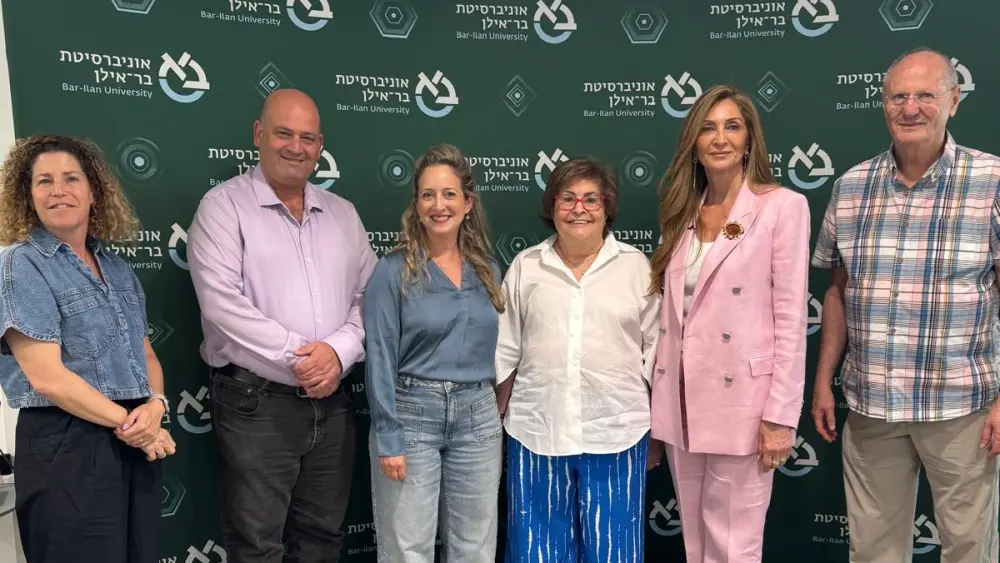
Forty-six Israel Defense Forces soldiers wounded in the Swords of Iron war completed a semester of academic studies at Bar-Ilan University’s Hashalom Project, a rehabilitation initiative that combines higher education with physical and emotional recovery.
The participants were recognized at a closing ceremony on Wednesday attended by university leaders, faculty members and representatives of the program’s philanthropic partners. The event included remarks by Bar-Ilan University Senior Executive Vice President and CEO Zohar Yinon, a panel discussion with faculty members and the presentation of certificates.
The Hashalom Project, established by Bar-Ilan University’s Sunflower Center for Academic Resiliency, allows wounded soldiers to take regular university courses while receiving individualized support to accommodate their rehabilitation needs.
Students this semester studied subjects including engineering, law, political science, archaeology, economics, life sciences and social work. In addition to academic tutoring, participants received emotional support, mentoring, transportation assistance, parking accommodations and accessibility services.
Of the 46 participants, 44 were men and two were women. Thirty-seven were in their 20s and nine were over the age of 30. Most had no previous academic experience. The group included four lone soldiers and represented communities from Kiryat Shmona in northern Israel to Kibbutz Sufa near the Gaza border.
Despite coping with serious injuries and intensive rehabilitation, the students completed 45 university courses taught by 51 faculty members.
“To our wonderful students: I hope this year has given you not only knowledge, but also confidence; not only courses, but a launching point for the next step in your journey,” Yinon said. “We are proud that you are part of the Bar-Ilan family, and we are committed to standing by your side—in your studies, in your recovery, in your careers, and wherever your path may lead.”
One participant, who spoke anonymously after sustaining serious injuries two years ago, said the program had restored his confidence.
“Participating in the program taught me that I am still capable of learning, growing and succeeding, even while navigating a complex rehabilitation process,” he said. “It restored my confidence in my abilities and helped me realize that I wasn’t just recovering from my injury—I was also building the next chapter of my life.”
Hodaya Wolf, director of the Hashalom Project, said the participants demonstrated that “the human spirit, curiosity, and the determination to move forward are stronger than any injury.”
“You remind us that rehabilitation is about gradually restoring a sense of control over one’s life—not simply returning to what was, but building something new,” she said.
The university said it has also established a dedicated admissions pathway allowing Hashalom participants to continue into undergraduate degree programs based on the academic credits earned through the project. The initiative is currently available in seven academic departments.
The Hashalom Project is supported through a partnership between Bar-Ilan University, the Magbit Foundation, the Altshuler Shaham Group and the Benin Group, which said in a press release that they view higher education as an important component of long-term rehabilitation for wounded soldiers.