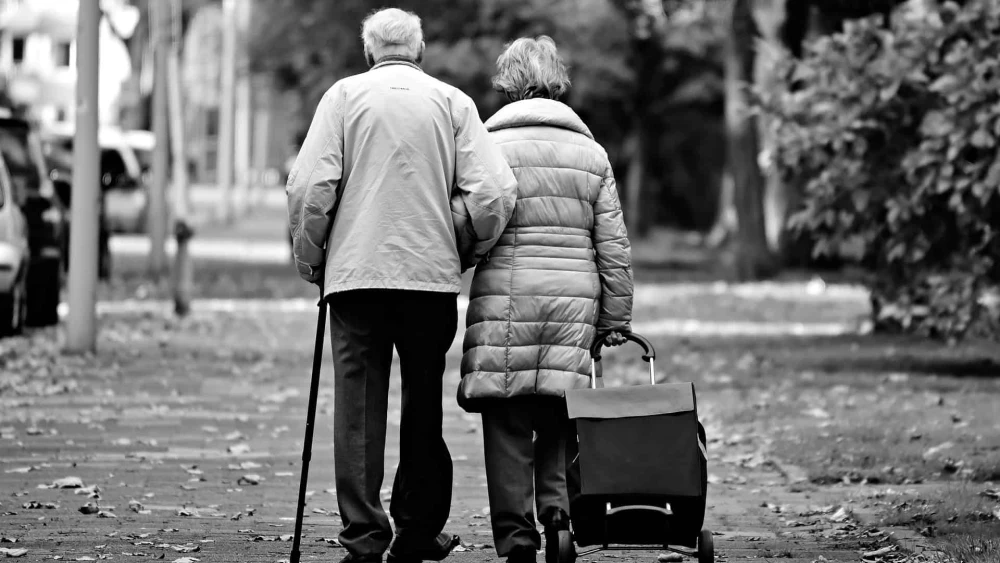

One of the questions I hear most often comes from people who have already spent decades building Jewish life in America. They ask it quietly, usually after a speech or over coffee: “What should I be doing now?”
It is not a question born of fear so much as uncertainty. They have watched antisemitism rise, political alliances shift and institutions struggle to respond. Many feel they have entered unfamiliar territory at a stage in life when they expected to be enjoying grandchildren instead of worrying about the future of the Jewish community.
My answer is always the same: Don’t mistake getting older for becoming less valuable.
In fact, the opposite is true. The American Jewish community possesses an extraordinary resource that it has not fully mobilized—hundreds of thousands of older adults with professional experience, financial stability, deep relationships, historical perspective and time to spare.
That combination may be one of the greatest strategic advantages our community has. Yet too many people believe their role is now limited to attending events, writing checks and hoping younger generations figure things out.
But hope is not a strategy.
The first responsibility for older Jews is to become the family historian. Too many Jewish families know remarkably little about their own story. They know where their grandparents lived but not why they left. They know they came from Europe or the Middle East but cannot explain the journey. They know relatives survived difficult times but have never recorded those memories.
Every older adult should become the keeper of the family’s history. Record interviews, write memoirs, digitize photographs and explain traditions. Tell your grandchildren not only what happened, but why it matters. Families with a strong sense of identity are far more resilient than families whose history disappears with each generation.
The second responsibility is mentorship. The Jewish community spends enormous energy trying to recruit young leaders while overlooking the experienced leaders already sitting in our synagogues, community centers and neighborhoods. Every retired executive, educator, attorney, physician, entrepreneur, military veteran, nonprofit leader and public servant should consider taking one or two younger people under their wing. Not to lecture them, but to invest in them.
Teach them how to lead meetings, negotiate disagreements, build organizations, raise money, think strategically and navigate adversity. Leadership is rarely taught in classrooms. It is usually learned from someone willing to share what experience has taught them.
The third responsibility is civic engagement. Retirement should not become withdrawal from public life. Attend school board meetings. Know your local elected officials. Introduce yourself to your police chief. Build relationships with clergy from other faith communities. Join civic organizations that have nothing to do with Judaism. Democracy functions through relationships, and relationships cannot be built only during moments of crisis. By the time antisemitism reaches your neighborhood, you should already know the people who can help address it.
Today’s older generation is not being asked to build more buildings, but to build stronger people.
Security also deserves attention, but not obsession. Every family should think practically: Does your synagogue have a security plan? Do your children and grandchildren know basic situational awareness? Have you discussed emergency communications? Do your family members know whom to call if something happens?
None of these conversations should be driven by panic. They should be approached the same way we prepare for storms, fires or medical emergencies. Responsible preparation reduces anxiety by replacing uncertainty with a plan.
Philanthropy also deserves a fresh look. Many older Jews have supported the same organizations for decades. Loyalty is admirable but should never replace evaluation. Ask difficult questions: What measurable impact is this organization having? How is success defined? Are younger leaders being developed? Is innovation encouraged? Is duplication being avoided? The most meaningful legacy is not simply giving money. It is investing in organizations capable of producing meaningful results for the next generation.
Perhaps the most overlooked responsibility is becoming an ambassador rather than a defender. Too often, conversations about Judaism begin only after someone says something offensive or uninformed. Instead, invite neighbors for Shabbat dinner. Share Jewish holidays with non-Jewish friends. Speak at local civic groups. Explain Jewish traditions before they become controversial. People are far less likely to believe stereotypes about communities they actually know. Relationships remain one of the strongest antidotes to ignorance.
There is another conversation that families should begin having, even if it feels uncomfortable: What happens if antisemitism continues to increase over the next decade? Every family should think through practical questions without becoming alarmist. Where do your children want to live? What communities offer strong Jewish life? How connected are they to Israel? Have younger family members visited the Jewish state? Do they understand Jewish history well enough to recognize when history begins repeating itself? Preparing for possibilities is not pessimism. It is the same kind of thoughtful planning families routinely do for retirement, healthcare or estate planning.
Finally, refuse to become consumed by the news cycle. Constant outrage is exhausting, and exhaustion leads to disengagement. Stay informed but spend more time building than scrolling. Read history, volunteer, learn Hebrew, support Jewish education and visit Israel. Celebrate Jewish life as enthusiastically as you defend it. A community that defines itself only by the hatred it faces eventually forgets the joy that made it worth preserving in the first place.
Previous generations of American Jews built synagogues, hospitals, schools, community centers, businesses and philanthropic institutions that transformed Jewish life in this country. Today’s older generation is being asked to do something equally important: not to build more buildings, but to build stronger people.
That may prove to be the most enduring legacy of all. Your grandchildren are not counting on you to solve every problem they face. They are counting on you to leave them with stronger roots, wiser counsel, deeper relationships and the confidence that comes from knowing that they are part of a people that has faced difficult chapters before—and always found a way to write the next one.