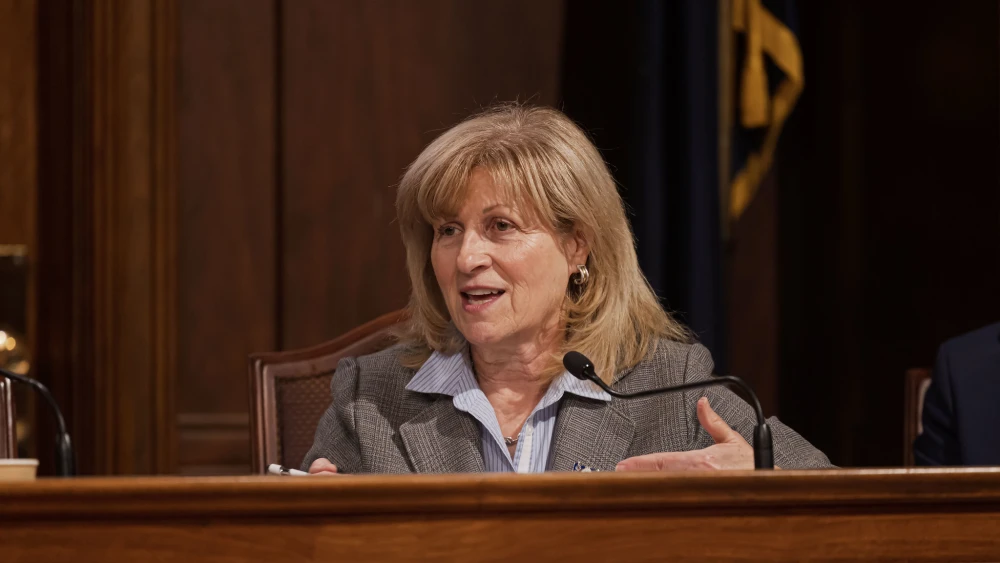
Pennsylvania state senator Judy Schwank thinks that Gov. Josh Shapiro will sign her bill defining antisemitism using the International Holocaust Remembrance Alliance’s working definition if lawmakers get it to his desk.
“If we can get it through both bodies and get it to the governor’s desk, he will sign it,” she told JNS.
Schwank, former dean of agriculture and environmental sciences at Delaware Valley College, told JNS that she introduced the bill knowing that there is not enough time to pass it this session.
But she wanted to “plant the seed and try to get it to grow,” after the state’s attorney general said in September that he would use the IHRA definition in his office. That made “the topsoil a little deeper,” she said.
“I will be reintroducing it,” the Jewish Democratic lawmaker told JNS. “I’m going to keep trying, and even if we can’t get it passed, keeping it in the forefront and talking about it is also important.”
Schwank introduced SB 1489 on Oct. 13. The measure would establish a definition in state statute based on the IHRA working definition. It was referred to the state Senate’s state government committee.
Schwank, who co-chairs the Pennsylvania Jewish Legislative Caucus, said that she prefers legislation to a gubernatorial executive order, because passage of a law would demonstrate lawmakers’ commitment to confronting Jew-hatred.

“This is strictly about antisemitism as we Jews experience it,” she said. “It does not stymie speech.”
Schwank said that adopting the definition would help people who are reporting hate-motivated criminal incidents to law enforcement.
Her push to define antisemitism in state law comes from her involvement as a board member at her Conservative congregation, Kesher Zion Synagogue, in the Reading area.
“We’ve had security guards posted outside the synagogue,” she said. “There was a security guard right outside the sukkah.”
“What message does that send to our kids?” Schwank said. “They’ve grown up with this.”
Schwank grew up in Squirrel Hill, where she attended many events at the Tree of Life Congregation, which a gunman attacked in 2018, killing 11 people. Security increased at her synagogue after the massacre, and again after Oct. 7.
The legislator told JNS that synagogues have benefited from a security funding measure passed in her state, which highlights the importance of passing legislation like hers to protect the Jewish community.
Schwank told JNS that the need to identify Jew-hatred is particularly pressing in areas outside Pennsylvania’s largest Jewish population centers, where authorities may not recognize how an incident affects a small Jewish community.
Her district in Berks County is one such place. Former synagogues have become churches or other buildings, she said, as Jewish communities shrink. “That’s something that’s happening throughout the state,” she told JNS.
Her daughter and two granddaughters moved to Boulder, Colo. “They have armed security guards at their Reform synagogue,” she said.
There has been increased security there after a man attacked people who marched on behalf of Israeli hostages in Boulder in June 2025, killing a Jewish woman and injuring others. The man was allegedly motivated by his hate for Jews and Zionists.
“I believe very strongly that Israel is our homeland. It is the Jewish homeland,” Schwank told JNS.
She said that she wishes the Israeli government had done a better job sharing details about the horrors of Oct. 7 with the world.
“I know that they will need us and all Jews throughout the world to continue to support them in maintaining that homeland for all of us,” she said.