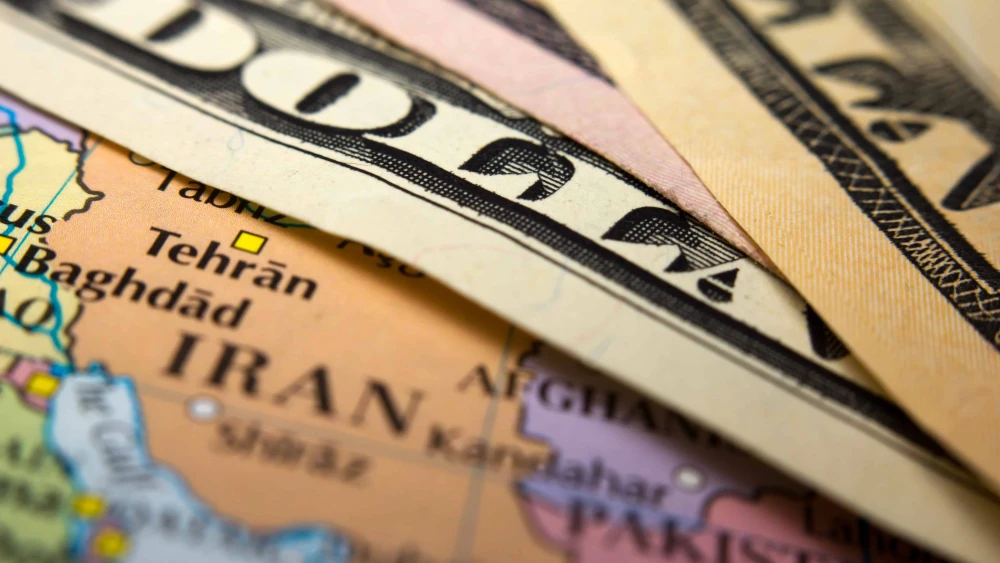
The Trump administration announced several sanctions against the Iranian regime on Thursday, including against banking institutions accused of helping move hundreds of millions of dollars through the financial system and into Tehran.
Iraq-based International Development Bank for Investment and Finance “abused its access to the now-dissolved U.S. dollar wire auction and maintains ties to Iranian government entities and Iran-aligned militia groups in Iraq,” the U.S. Department of the Treasury said.
The bank was intended to supply Iran with American dollars and absorbed the business of neighboring Bank Melli, which recently closed under U.S. sanctions.
The U.S. government said that IDB ownership was transferred from a dual Iranian-Iraqi financier working for the sanctioned Islamic Revolutionary Guard Corps-Qods Force but that the financier continues to hold sway over the bank.
The federal government also said Cuba-based Banco Internacional de Comercio S.A. has provided services to the Iran-based Karafarin Bank, which Washington also sanctioned, since at least 2022.
“The noose is tightening around Iran’s economy, and not even Iran’s so-called allies can save it,” stated Scott Bessent, U.S. treasury secretary.
“The Department of the Treasury will not relent until the Iranian regime’s coffers are empty and every remaining financial lifeline sustaining its war machine has been severed,” he said.
Washington also designated several offshore banks that, it said, help evade U.S. sanctions, including Jazireh International Bank Company and Chabahar International Bank Overseas Company, an offshore bank affiliated with Bank Shahr.
The Treasury Department also hit Dubai-based Iranian national Sayyed Ruhollah Razavi, who it said is “one of the top oil trustees on whom the Iranian regime relies to sell oil and repatriate the revenue.”
Razavi is accused of working closely with a Hezbollah financier and being responsible for “shipping millions of barrels of oil overseas each month on behalf of the National Iranian Oil Company and its subsidiary.”
Oil sales revenue is run through Iran’s shadow banking system, moving funds through Hong Kong to the United Arab Emirates and onto Turkey, “where they are converted to gold and cash and then smuggled on Mahan Air flights to Iran and its terrorist proxies around the world,” the U.S. government said.
The Treasury Department also designated two Iran-based companies Razavi manages, along with several operatives of Farab Sorough Qeshm Company, an affiliate of Iran’s Shahr Bank, and an Iran-based exchange house and a pair of its owners and operators.
Additionally, the Treasury Department issued an alert “asking financial institutions to report potential Iranian regime abuse of religious charity networks, including diversion of religious tithes, or khums.”
Bessent said that the department “will not allow the Iranian regime to continue its long history of abusing religious institutions to line the pockets of its elites and fund terrorism.”
He added that “by identifying and reporting this potential abuse, financial institutions can provide law enforcement with critical information to isolate the Iranian regime and its financial enablers.”
The Treasury Department provided those institutions with a list of indicators of potential Iranian abuse of religious charities, including open support for the regime and its terror proxies, no indication of charitable services and transferring funds with unknown origins.