


U.S. officials traveled to Islamabad on Friday to begin talks with Iran.
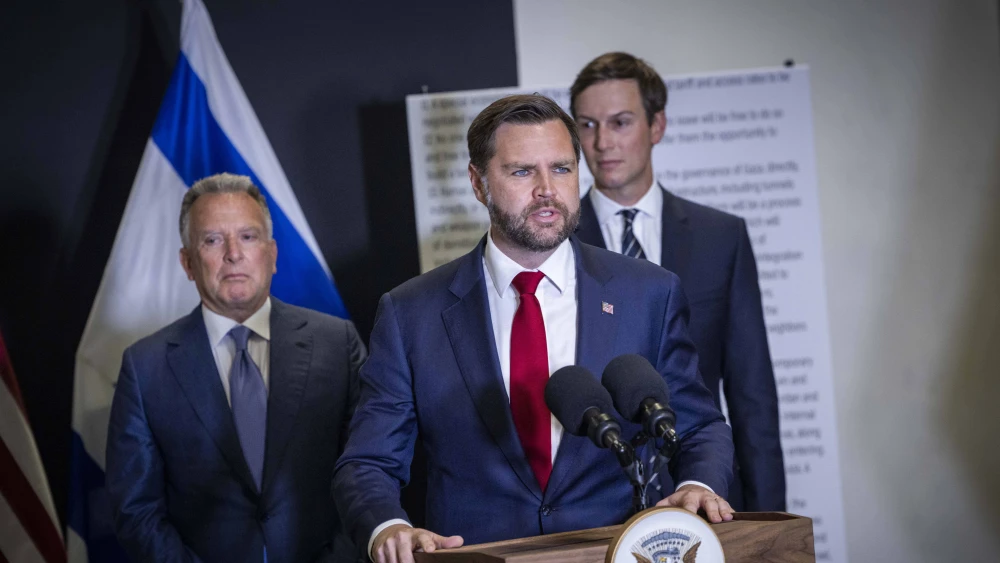
U.S. Vice President JD Vance told reporters on the tarmac at Joint Base Andrews that he thought the outcome of the talks would be “positive.”
“If the Iranians are willing to negotiate in good faith, we’re certainly willing to extend the open hand,” Vance said. “If they’re going to try to play us, then they’re going to find the negotiating team is not that receptive.”
Vance added that U.S. President Donald Trump had given the negotiators “pretty clear guidelines” for what they expect to see from Iran. That negotiating team also includes Middle East envoy Steve Witkoff and the president’s son-in-law, Jared Kushner, who led talks with Iran in Geneva before the United States and Israel began military operations in February.
It’s not clear what format the talks will take. Previous rounds of negotiations with Iran have involved indirect discussions through mediators.
Several disputes between the United States and Iran have already arisen over differences between the U.S. 15-point plan and the Iranian 10-point plan, which the two sides agreed would serve as the basis for negotiations.
Trump described the Iranian proposal as “a workable basis” for negotiations on Tuesday, and Iran then made its demands public on Wednesday, including for the ceasefire with Iran to include a halt of Israeli airstrikes in Lebanon and acceptance of Iran’s “right to nuclear enrichment.”
Announcing the ceasefire agreement on Tuesday, Pakistani Prime Minister Shehbaz Sharif said it included Lebanon, a claim that Trump and other U.S. officials later denied.
Trump suggested on Wednesday that the list of Iranian demands was the work of “fraudsters, charlatans and worse” in the American media.
“There is only one group of meaningful ‘points’ that are acceptable to the United States, and we will be discussing them behind closed doors during these negotiations,” Trump wrote.
The speaker of Iran’s parliament, Mohammad-Bagher Ghalibaf, said on Friday that two of Iran’s demands were preconditions for talks to proceed.
“Two of the measures mutually agreed upon between the parties have yet to be implemented: a ceasefire in Lebanon and the release of Iran’s blocked assets prior to the commencement of negotiations,” Ghalibaf wrote. “These two matters must be fulfilled before negotiations begin.”
Israel is set to hold direct talks with Lebanon in Washington next week, with the Israeli and Lebanese ambassadors to the United States reportedly holding a phone call in the presence of U.S. officials on Friday.
Negotiations between the United States and Iran are expected to begin in Pakistan on Saturday.



