In March 2026, Elyse Cutler saw a screenshot of a petition a parent posted in a WhatsApp group that she manages for Jewish parents of high schoolers. The image suggested that there was an effort to get an anti-Israel referendum on the ballot for the upcoming midterm elections.
“I’d never seen anything like it before,” Cutler, who is based in the Chicago area, told JNS.
The measure asked, “Do you support the right of individuals and organizations, including state contractors, to boycott, divest and sanction Israel?”
A differently worded referendum reached the November ballot. “Should the state of Illinois repeal laws that ban state investment in businesses that boycott the State of Israel?” it asked.
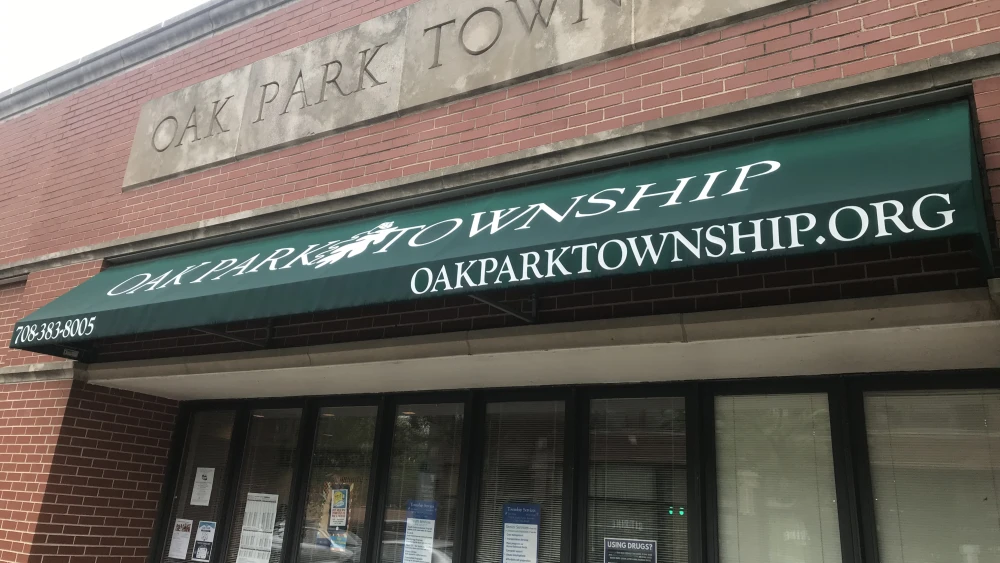
That revised referendum passed in Oak Park, Ill. Of 23,796 votes cast, 14,618 (about 65.45%) voted for it, and 7,751 (about 35%) voted against, the office of the Cook County clerk said.
The group that launched the initiative, Oak Parkers for Free Speech, told JNS that “we will be carrying that message to our elected representatives.”
Cutler, an Oak Park resident for more than 20 years and a leader of the steering committee of Oak Park Neighbors United, a neighborhood group that fights anti-Israel legislation and supports Jews, told JNS that it could have been much worse.
“We expected an 85%-90% passage,” she said.
The referendum was one of several on the ballot across multiple communities and townships throughout Illinois during the November midterms, in which Democrats handily won majorities in the House and the Senate.
Eight anti-Israel measures passed in Illinois. The language varied, but all targeted a 2015 law that restricts investments by Illinois public pension and retirement systems in companies that boycott Israel.
The measures are nonbinding and lack the power to repeal Illinois state law or even require state legislatures to act.
Overwhelming Jewish presence
Dan Goldwin, chief public affairs officer at the Jewish United Fund, Chicago’s Federation, told JNS that the measure that passed in Oak Park was a “second bite of the apple” for anti-Israel organizers due to efforts of the Jewish community.
The revised referendum reached the ballot via a different process after about 70% voted at a township meeting against placing the original question up for a vote.
Under Illinois state law, townships generally hold annual meetings on the second Tuesday of April, when residents can vote whether to place advisory questions on the ballot for the next election.
Mark Segal, another steering committee leader of the Oak Park group and a neighborhood resident for more than 30 years, told JNS that Jewish presence at the meeting was so overwhelming that organizers had to reschedule because of capacity issues.
Jewish community members hoped to replicate that turnout at the rescheduled meeting, he said.
Cutler told JNS that there was a “Jew-ber” arrangement—a combination of “Jew” and ride-share application Uber—for those who couldn’t drive.
Teens active in BBYO offered to babysit for parents who would otherwise be unable to attend the township meeting, and rabbis sent messages to congregants asking them to attend the meeting and halt the referendum. One woman even called and texted more than 100 people in one weekend, JNS was told.
Local media reported that, at the April 28 meeting, 352 people voted against the measure and 134 supported it.
The Illinois Coalition for Human Rights, whose affiliates include local chapters of Jewish Voice for Peace, Democratic Socialists of America and Students for Justice in Palestine, was one of the groups that led the campaign to get the measures on the ballot.
The coalition says high up on its website that it aims to bring HB 2723, the “Illinois Human Rights Advocacy Protection Act,” to a floor vote. Goldwin told JNS that is very unlikely to happen.
“The good news is there is zero sense of panic,” the JUF spokesman told JNS. “Most legislators don’t want this on the docket.”
The Illinois General Assembly is scheduled to convene on Nov. 17 for the start of its fall veto session, according to the state Senate calendar. Goldwin told JNS that he doesn’t expect the measures to even be a topic of discussion. (JNS sought comment from multiple Illinois state senators and the Illinois Coalition for Human Rights.)
Goldwin told JNS that the measures are “a Trojan horse” because the law applies only to state-funded retirement systems and has no effect on general commerce or speech within the state.
‘Attempt to send a message’
Palestine Legal, which is based in Chicago and says it “protects the civil and constitutional rights of people in the U.S. who speak out for Palestinian freedom,” stated that the 2015 law “does not affect your constitutionally-protected right to engage in human rights boycotts or to advocate for boycotts of Israel.”
Goldwin is confident, in part, because major Illinois Jewish groups—including local Anti-Defamation League and StandWithUs chapters and multiple synagogues—“never stopped talking and working” with state legislators on this issue.
Knowing that a repeal is unlikely, Goldwin told JNS that pro-referendum organizers “picked locations they thought they could win.”
There was no boycott ballot measure in the highly Jewish area of Highland Park, he said. “This is an attempt to send a message,” he told JNS. “They’re creating a fight, because they want a fight.”
Segal, of the neighborhood steering committee, told JNS that the community of Oak Park was “a vehicle to help deliver messages to state representatives.”
“This whole thing was being done for an audience of one,” Cutler told JNS.
That “one” is state senator Don Harmon, a Democrat and president of the Illinois Senate, according to Cutler.
John Patterson, a spokesman for Harmon, told JNS that “we look forward to reviewing the results.”
After the measure was defeated the first time, Oak Parkers for Free Speech and other organizers tried to get it on the ballot through a citizen signature petition.
Cutler told JNS that Jewish community members unsuccessfully challenged the referendum’s inclusion on the ballot in court.
“We celebrated. We thought we were done,” Cutler told JNS. “The first day this was argued in court was on erev Rosh Hashanah,” the eve of the High Holiday. “After it failed, we only had seven weeks left to organize,” Cutler said.
The community then created Oak Park Neighbors United, which raised money to fund direct mail, text and social media campaigns. It also hired a marketer.
Over seven weeks, more than 100 volunteers engaged and volunteers were out almost every day during early voting, passing out literature and talking with community members, even to those who were for the referendum’s passage, the Jewish community said.
“The most effective thing we did was having people talk to their neighbors about what was going on and asking them to vote ‘no,’” Cutler told JNS. “We ran it like a political campaign.”
Instead of sharing talking points around Israel, Segal told JNS that the community “chose messaging that was designed to work as well as possible when you’re trying to reach voters.”
“This November, a discriminatory referendum brings a divisive international crisis onto our local ballot, distracting from the issues that actually shape life here at home,” the group’s website states.
This kind of messaging resonated with Goldwin, of the JUF.
“If I was a pro-BDS person and I passed the greatest boycott bill in history, it would have zero impact on affordability,” he told JNS.
The campaign was unsuccessful, but Segal and Cutler said that they were proud of the work they did. “If your community organizes, you can have a really big impact,” Cutler told JNS.
“If 5,000 people heard our messaging and voted ‘no’ that otherwise wouldn’t have, that’s a lot of people in six weeks,” Segal told JNS. “Engaging and organizing on these things is always the right thing.”