The premise is simple, while the reality is immensely complicated.
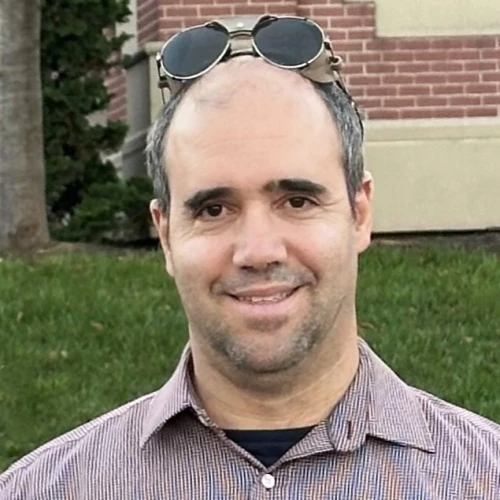
In his new book, The Arab Case for Israel and Other Essays From a Distant Conflict, Hussain Abdul-Hussain argues that Arab societies that have not accepted Israel’s existence and place in the region are ultimately working against their own interests, with their own populations bearing the costs.
Abdul-Hussain, an Iraqi-Lebanese policy analyst and research fellow at the Washington, D.C.-based Foundation for Defense of Democracies, grew up in Baghdad, as well as Beirut and Baalbek, Lebanon. Speaking at book launch events last week, he told attendees that, “If you want to learn about Israel and Lebanon” while north of Israel’s border, “you have Edward Said, (Norman) Finkelstein, or (Noam) Chomsky—you take your pick,” referring to three prominent anti-Israel thinkers.
“I came a long way from being someone who was totally for the destruction of the state of Israel to someone who now advocates” on Israel’s behalf, Abdul-Hussain told JNS, arguing that normalization with Jerusalem should not be seen as a concession.
“Even if any Arab or Palestinian thinks that injustice has befallen them because of the existence of the state of Israel, moving on and forgetting about the injustice is much more to their interest than looking backwards,” he said.
That view has yet to fully take hold across the region, though Abdul-Hussain and others say attitudes are shifting as more people reconsider long-held assumptions.
“He grew up in Lebanon. He grew up in Iraq. He was a reporter over there. None of that is unique,” Cliff May, FDD founder and president, told JNS. “What’s unique is that he decided to dig in and not simply accept the conventional—I don’t want to say wisdom—the conventional disinformation, and make up his mind for himself, and then have the guts, the courage to say, ‘I’m going to talk about this, I’m going to write about this, I’m going to say what I actually think.’”
Abdul-Hussain points to the Abraham Accords as evidence of the benefits of warmer relations with Israel.
“When you sign peace with Israel, and the more your peace with Israel is hot as opposed to cold, the better it is for you, for your economy, for your people,” he said.
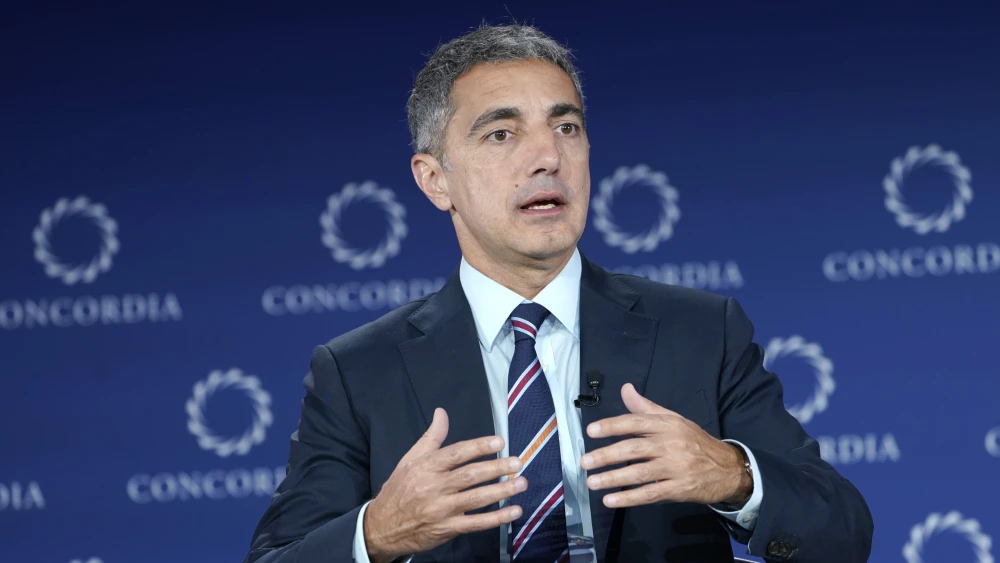
David Schenker, who worked on the accords as assistant secretary of state for Near Eastern Affairs, told JNS that he and Abdul-Hussain reached many of the same conclusions about the Middle East despite coming from very different backgrounds.
“He grew up and was educated as an Arab nationalist,” Schenker told JNS. “He came to appreciate in very many ways what the United States did in Iraq, and it changed his opinion of the region and transformed his opinion of the United States and the importance of democratic liberal values.”
‘Challenged nearly everything’
Abdul-Hussain, who was raised as a Shiite Muslim, left Iraq at age 8 after growing up in a family that strongly opposed Iraqi dictator Saddam Hussein.
“The conspiracy theory in most of the Arab world was that America installed Saddam, that the CIA installed Saddam, to keep the Iraqis and the Arabs behind,” Abdul-Hussain recalled at the book launch.
“So when the superpower came to remove Saddam, I thought, ‘I’m on board.’ We’re removing Saddam, we’re spreading democracy,” he said. “But that’s when most of my leftist friends said, ‘No, now we’re not supporting democracy. Now we’re countering imperialism.’ That was when we parted ways.”
Abdul-Hussain was living in Lebanon when Israel pulled out of the south following the 2006 war.
“I drove to the border with Israel, and I stood there, and I felt that I could touch Israel, and this was the first time that I saw Israelis as families, mothers driving their kids to school, men working the fields,” he told JNS.
“It was a process,” he said. “And it made me really curious to learn about this country that we have been taught to vilify all our lives.”
Listening to Israeli radio transmissions that crossed the border, Abdul-Hussain endeavored to become fluent in Hebrew, a process that took about five years. He said it helped him understand Israelis had no desire to wipe out the Lebanese.
“Through rigorous research, through direct exposure to Arab politics, to Hebrew source material, to the texture of life across the region,” May told JNS that Abdul-Hussain “arrived at a set of conclusions that challenged nearly everything he had been led to believe.”
The book is aimed not only at the Arab world but also at Europeans, Abdul-Hussain said, arguing that some European societies have moved further away from Israel even as some Arab states have moved closer.
“It is to both worlds—the world I grew up in, and the world that my children are growing up in,” Abdul-Hussain told JNS, adding that surveys in Lebanon show the population there supports peace with Israel at higher rates than some European countries.
Lebanese Prime Minister Nawaf Salam recently said that if Lebanon and Israel were ever to establish relations, they would likely resemble the existing peace treaties Israel has with Egypt and Jordan—formal diplomatic ties that have generally been characterized by limited people-to-people engagement and cooperation.
“Let him sign this cold peace and watch the Lebanese turn it to a hot peace,” Abdul-Hussain told JNS. “Leave it to the Lebanese, and they’ll take care of it. I think the mood for peace is on the rise there.”
Abdul-Hussain also points to Israel’s economic performance, technology sector and number of Nobel laureates as evidence of its success.
“It is a successful state by any measure,” Abdul-Hussain told JNS. “So, if you are Lebanon or Syria or any other country, having this state next to you is to your advantage, so start thinking of your interest and stop thinking with your emotions.”