
On Jan. 8, 2026, the respected Israeli journalist Danny Zaken reported on JNS that Saudi Arabia is considering a renewed role in U.S.-led efforts to shape post-ceasefire governance arrangements in Gaza.
According to the report, Riyadh has offered to assist in implementing reforms within the Palestinian Authority that would enable it to participate in a future governing framework—among them, reform of the P.A. school curriculum.
This is a fundamental matter.
Since 2000, I have researched the portrayal of Israel, Jews and peace in P.A. textbooks. My findings are unequivocal: The principles embedded in these books are not fundamentally different from those promoted by Hamas. These same textbooks were used in Gaza for years under Hamas rule.
Their treatment of the conflict rests on three core pillars: rejection of Israel’s right to exist anywhere in the land and denial of the legitimacy of its seven million Jewish citizens; severe demonization of Israel and Jews, often on religious grounds; and the glorification of violent struggle for “liberation,” in which the annihilation of Israel is at times implicitly—and sometimes explicitly—endorsed.
This is not merely a matter of presenting a Palestinian state over the entirety of the land in text and maps while replacing “Israel” with “Zionist occupation.” Jewish cities such as Tel Aviv and others founded since the late 19th century are erased altogether. Jewish history in the land is denied, as is the existence of Jewish holy sites—most notably the Western Wall, the last remnant of the Jewish Temple in Jerusalem. In PA textbooks, the “occupation” does not begin in 1967, but in 1948.
Demonization is pervasive. Jews are depicted as infidels, allies of Satan and enemies of God’s prophets—an especially dangerous message in traditional societies. Students are taught that Jews betrayed Muhammad, that they pose an existential threat to Palestinians, and that their alleged racism, rooted in the concept of a “chosen people,” drives them to massacre Palestinians with genocidal intent.
While the Oslo Accords appear in one or two history textbooks, they are not presented as a foundation for peace. On the contrary, the education promotes jihad and martyrdom (shahada) to liberate the land from “occupying Zionists,” explicitly naming cities inside Israel’s pre-1967 borders—Haifa, Jaffa and Acre—as targets of this struggle. Terrorist attacks, including the 1978 Coastal Road massacre against civilians, are portrayed as integral to the liberation effort, alongside the so-called “right of return.”
Although a song describing the extermination of “the defeated remnants of the foreigners” was later removed from textbooks, it was taught for years, set to music and sung in dozens of classrooms. Whether it has truly disappeared from educational practice remains unclear.
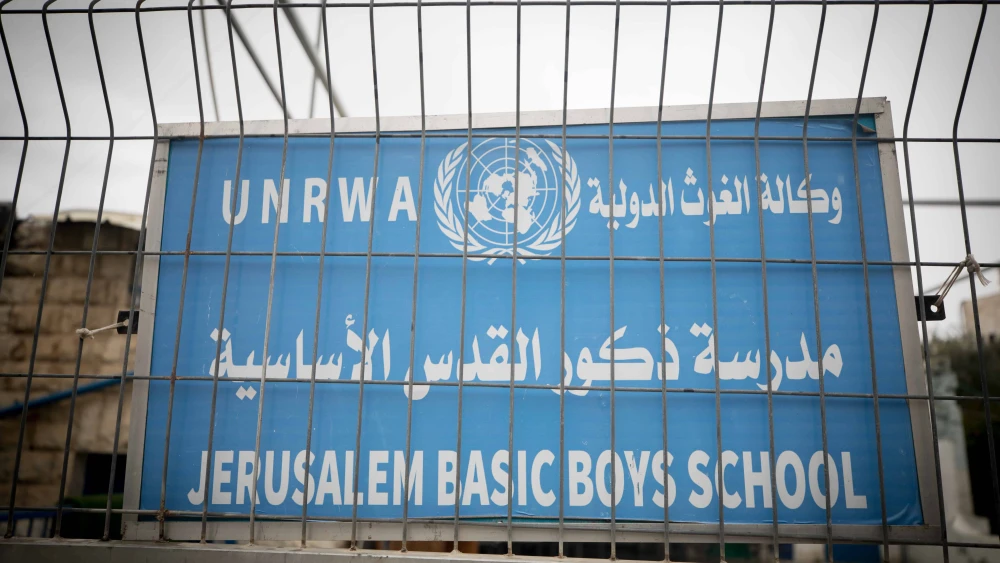
It is essential to stress that P.A. textbooks are mandatory in all schools—public, private and those run by the United Nations Relief and Works Agency (UNRWA)—across Judea and Samaria, Gaza and many schools in eastern Jerusalem.
The content described above remains in use in the current school year. It has not been meaningfully revised since 2020 (textbooks) and 2018 (teachers’ guides), despite repeated reprintings—contrary to repeated claims by Western officials and journalists.
Textbooks reveal how a society seeks to shape the worldview of its next generation. In that sense, the P.A. curriculum contradicts its commitments under the Oslo Accords. The question, then, is what reflects the P.A.’s true intentions: its signed agreements or its textbooks? I am inclined to believe the textbooks.
Even if that judgment were mistaken, as long as the P.A. curriculum remains unchanged, it should not be permitted to assume a role in Gaza. Doing so would preserve the ideological foundations of Hamas’s extremist education.
A fundamental overhaul of P.A. textbooks is therefore essential—at a minimum, in the spirit of Oslo. Saudi Arabia could play a constructive role in advancing such reform.
A reformed curriculum must present peace and coexistence with Israel as Palestinian strategic goals, echoing Yasser Arafat’s letter to Yitzhak Rabin ahead of the Oslo signing—a document that appears in one textbook but is otherwise ignored. The struggle over territory must be framed as exclusively political; any endorsement or glorification of violence, particularly against civilians, must be removed. Concepts such as jihad and martyrdom must be detached from the current conflict and confined to historical study.
Recognition of Israel must be explicit: Israel should appear by name on all political maps within its internationally recognized borders. Jewish cities must be restored to the map. Jewish history and holy sites must be acknowledged, and historical falsifications must cease. All material expressing religious hatred toward Jews—and certainly any suggestion of extermination—must be eliminated.
These are not marginal adjustments. They are the basic contours of genuine educational reform—and an indispensable prerequisite for any future role of the Palestinian Authority in Gaza.