



There is something almost endearing about the Western insistence that Sunni and Shi’ite Islamists cannot possibly cooperate. Fourteen centuries of theological disagreement, we are assured, have rendered their differences insurmountable.
This is a comforting proposition, particularly for those who prefer their enemies neatly arranged into opposing camps. But the men I encountered in Tehran were rather less fastidious.
I remember the visitors who came and went from Nader Talebzadeh’s home. There was tea, coffee, customary courtesies and the quiet business of cultivating relationships. Men from political and religious circles that were supposedly in irreconcilable opposition to Iran’s Shi’ite theology did not seem troubled by any theological inconveniences.
To understand the significance of these encounters, one must first understand Talebzadeh, whose importance has been considerably obscured by the innocent description of him as a filmmaker.
He studied filmmaking at Columbia University in New York before returning to Iran in 1979 as Ayatollah Ruhollah Khomeini’s revolution seized power. Talebzadeh brought with him an understanding of Western media that the new Islamic Republic was eager to exploit. Television, documentary filmmaking and international conferences offered opportunities to shape perceptions of the revolution far beyond Iran’s borders.
Talebzadeh became the regime’s chief propagandist, enjoying extraordinary access to its leadership. He understood how to translate revolutionary ideology into political influence, and he possessed the contacts to make that influence effective.
I have written before about Talebzadeh’s extraordinary position within the Iranian regime. He facilitated my own access to senior figures, and I visited his properties in Tehran and Qom, staying at the latter.
I was told that Hamas-linked militants had been accommodated at his Qom residence. I cannot independently verify their identities or establish whether individual guests underwent military training. What I witnessed was the broader environment in which such relationships were cultivated and supposedly incompatible religious affiliations presented no obstacle to political hospitality.
The history of these relationships reaches back before the revolution.
Hassan al-Banna founded the Muslim Brotherhood in Egypt in 1928, developing an Islamist political movement whose ideas eventually reached Iranian revolutionary circles. Iranian cleric Navvab Safavi, founder of the radical Islamist group Fada’iyan-e Islam, cultivated relationships with Egyptian Islamists, and Egyptian Islamist thinker Sayyid Qutb’s writings entered Persian political discourse in translation. The late Iranian Supreme Leader Ali Khamenei himself participated in that intellectual exchange.
These historical connections are documented in the Encyclopaedia Iranica.
Khomeini’s doctrine of clerical government arose from a distinct Shiite theological tradition. Nevertheless, the Iranian revolutionary movement absorbed ideas circulating within the wider Islamist world, particularly concerning political sovereignty, religious authority and the rejection of secular government.
The resulting relationships were frequently contentious. Iran’s support for Syrian dictator Bashar al-Assad during the Syrian civil war alienated Brotherhood constituencies and strained relations with Hamas.
Sunni Hamas leaders visited Iran repeatedly, while the Islamic Republic provided financial assistance, weapons and military training.
Yet political disagreements seldom prevented Tehran from exploring alternative arrangements.
According to leaked Iranian intelligence cables reported in 2019, representatives of Iran’s Islamic Revolutionary Guard Corps’ Quds Force met Muslim Brotherhood figures in Turkey in April 2014 to discuss possible cooperation. Egypt, Iraq and Yemen reportedly featured in their conversations. No agreement emerged, but the meeting demonstrated a willingness to consider political accommodation across the sectarian divide.
Hamas offers a considerably more advanced example.
Emerging from the Palestinian Muslim Brotherhood, Hamas established extensive relationships with Tehran despite its Sunni origins. Its leaders visited Iran repeatedly, while the Islamic Republic provided financial assistance, weapons and military training.
In October 2023, the U.S. Treasury identified Khaled Qaddoumi as Hamas’s representative in Tehran and named IRGC personnel involved in training Hamas and Palestinian Islamic Jihad.
Their relationship was hardly free of disagreement. But both parties understood the political value of maintaining it. Hamas required resources, while Tehran sought influence within the Palestinian arena and an additional means of confronting Israel.
Al-Qaeda presents an even more revealing example.
The terror group’s ideological hostility toward Shi’ites is well established. Yet senior Al-Qaeda figures spent years on Iranian territory under arrangements ranging from restrictive custody to more permissive accommodation.
In July 2011, the U.S. Treasury identified an Al-Qaeda facilitation network operating from Iran. A subsequent designation in 2012 described arrangements involving the movement of personnel and funds through Iranian territory.
Some operatives were detained; others enjoyed greater freedom. It would be inaccurate to describe every Al-Qaeda figure in Iran as an honored guest. However, the documented arrangements cannot be dismissed merely because they offend our expectations about sectarian hostility.
My encounters with the late IRGC chief Qassem Soleimani offered another perspective. When I met him in Iraq in 2017, I recall him discussing intelligence contacts reaching into ISIS-associated circles and the political leverage such channels could provide.
I cannot independently establish the precise nature of those contacts. They should not be interpreted as proof of an alliance with ISIS, whose forces fought Iran-backed militias. Soleimani understood, however, that intelligence access, political manipulation and military confrontation could operate simultaneously within the same conflict.
One must distinguish between an enemy’s ideological convictions and the opportunities presented by contact with individuals around them.
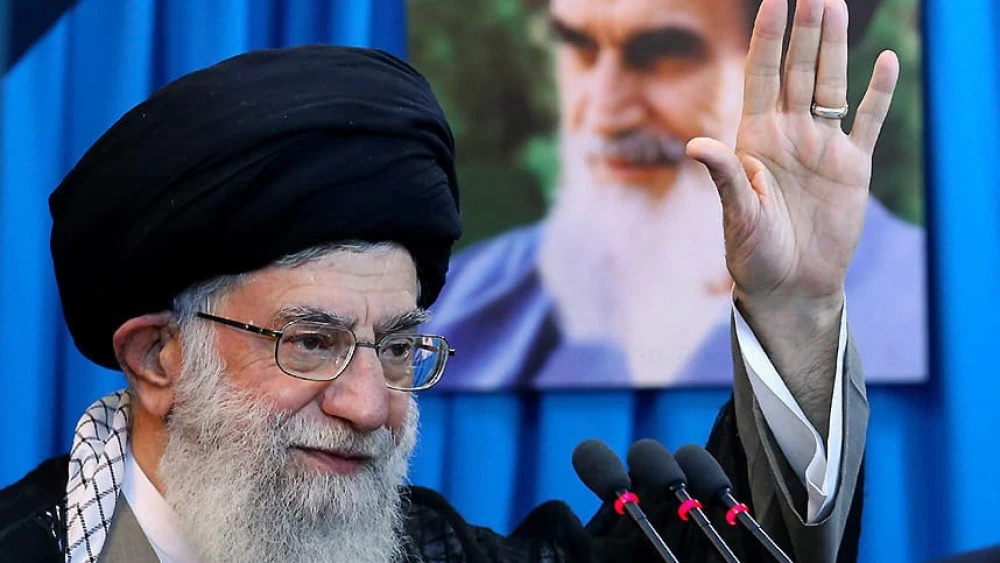
The most revealing expression of Tehran’s wider ambition came at the February 2017 conference in support of the Palestinians, which I attended. Then-Iranian Supreme Leader Ali Khamenei presented “Palestine” as a cause around which Muslims could unite, notwithstanding their theological disagreements. The calculation was unmistakable. Opposition to Israel could furnish a common political language that sectarian doctrine denied.
Al-Qaeda and ISIS are not organizational branches of the Muslim Brotherhood, and their separate ideological histories must be respected. Nor does every meeting establish financial cooperation or operational command. Yet Iran has repeatedly demonstrated its willingness to cultivate relationships across these divisions when circumstances warrant.
For Western policymakers, the important thing is the methods by which influence is acquired. Follow the intermediaries, conference organizers, financial channels, training relationships and informal contacts. Examine what political actors do together, alongside what they profess to believe.
I remember Talebzadeh’s visitors because their presence exposed the limitations of an analysis based almost entirely on theological categories. Tehran has understood for decades that religious antagonism need not stand in the way of a political opportunity. Washington would do well to understand it, too.


