
There is a fundamental difference between a government capable of surviving and a government capable of governing. The ruling Iranian regime increasingly embodies that distinction. For nearly half a century, the Islamic Republic has measured its durability by its ability to outlast war, sanctions, isolation, factional conflict, economic shocks and public anger. A system repeatedly assumed to be nearing its end has found ways to survive. Yet endurance is not competence, and survival is no proof that the regime can govern the society it claims to rule.
The central paradox is impossible to ignore: Institutions meant to provide political clarity, economic order and public confidence appear exhausted, while those defending the ruling system remain formidable. The regime struggles to stabilize the economy, clarify where authority resides and persuade citizens that their lives can improve. Yet when the political establishment is threatened, its machinery of coercion moves efficiently. The Islamic Republic can control a population; what is uncertain is whether it can govern a country.
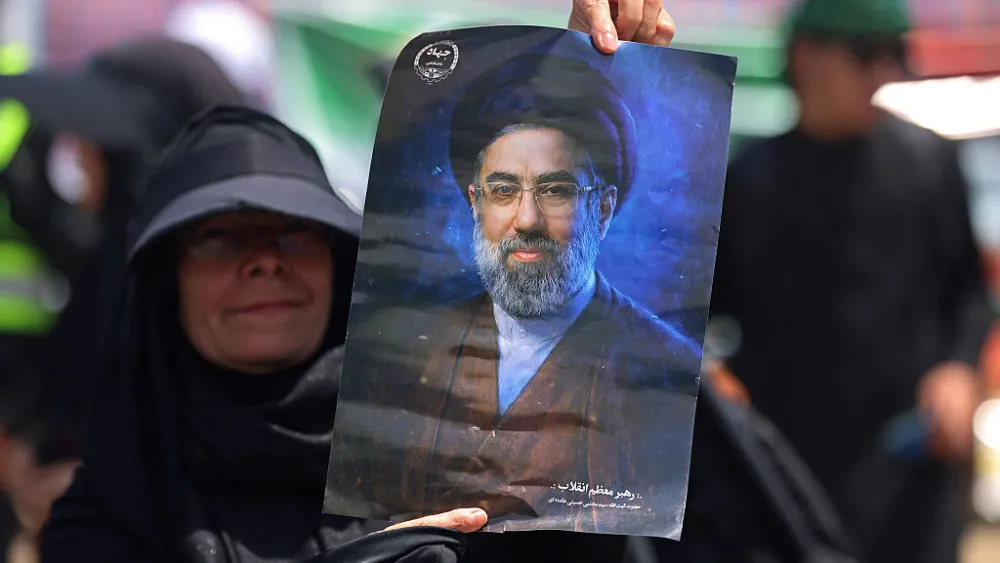
Nothing exposes this contradiction more clearly than the opacity surrounding Iran’s highest office. More than 90 million people confront economic distress, military danger, international isolation and political uncertainty. Yet Iran’s Supreme Leader Mojtaba Khamenei has remained absent from public view since assuming office six months ago. There has been no public appearance, photograph, video address or audible speech from him. His contact with the nation has been limited to written messages delivered through intermediaries.
Iranian officials maintain that he is alive, recovering from wounds suffered during February attacks, meeting senior officials and retaining final authority over consequential decisions. President Masoud Pezeshkian says he met with him for seven hours.
Yet two luxury London penthouses linked to Khamenei have been put up for sale after entering receivership, including a five-bedroom Kensington property bought for 19 million pounds (about $25 million) and now offered for under 12 million pounds (about $16 million) . Tehran has swiftly dismissed reports of this as “completely baseless.”
This may be true. But even if it is, it does not resolve the problem; it reveals it. In a political order where exceptional authority rests with the supreme leader, prolonged absence from public life cannot be treated merely as a matter of security, recovery or political theater. It raises a fundamental question: Who is actually governing Iran?
Who decides between war and diplomacy? Who can authorize binding agreements with foreign governments? Who resolves disputes between the presidency, parliament, Islamic Revolutionary Guard Corps (IRGC), intelligence agencies, clerical networks and economic institutions? Who commands the security apparatus when competing centers of power act in the supreme leader’s name? And when decisions are announced under his authority, how can the public—or even rival regime factions—know who shaped and bears responsibility for them?
The growing influence of the IRGC and the Supreme National Security Council gives these questions particular urgency. Iran may be entering an unusual stage even by its own opaque political standards: a system in which ultimate authority remains theoretically absolute while becoming practically invisible. The constitutional center of power survives in name, but its absence in reality enables unelected institutions to expand while quietly redefining the state’s command structure.
Who is actually governing Iran?
This ambiguity would be dangerous under ordinary conditions. Iran’s circumstances are far from ordinary. Inflation has diminished purchasing power, the rial has been battered, sanctions have deepened structural weaknesses and the burdens of war, isolation and restricted trade fall most heavily on ordinary people. These are not merely statistics; they describe the erosion of savings, salaries, expectations and personal dignity for millions watching their economic future disappear.
Yet the political system’s primary response to instability remains security rather than reform. Institutions responsible for ordinary life appear financially constrained, politically paralyzed or administratively depleted, while those protecting the ruling order remain powerful. The state may fail to restore confidence in the currency, provide transparency or offer a path out of economic decline; but when citizens, journalists, lawyers, dissidents or protesters challenge the political order, the state demonstrates far greater capacity.
That is not governmental strength, but institutional imbalance. A functioning state must sustain economic order, provide basic services, manage political conflict, establish predictable rules and make clear where authority lies. A security apparatus can preserve a political system for decades; it cannot govern a nation.
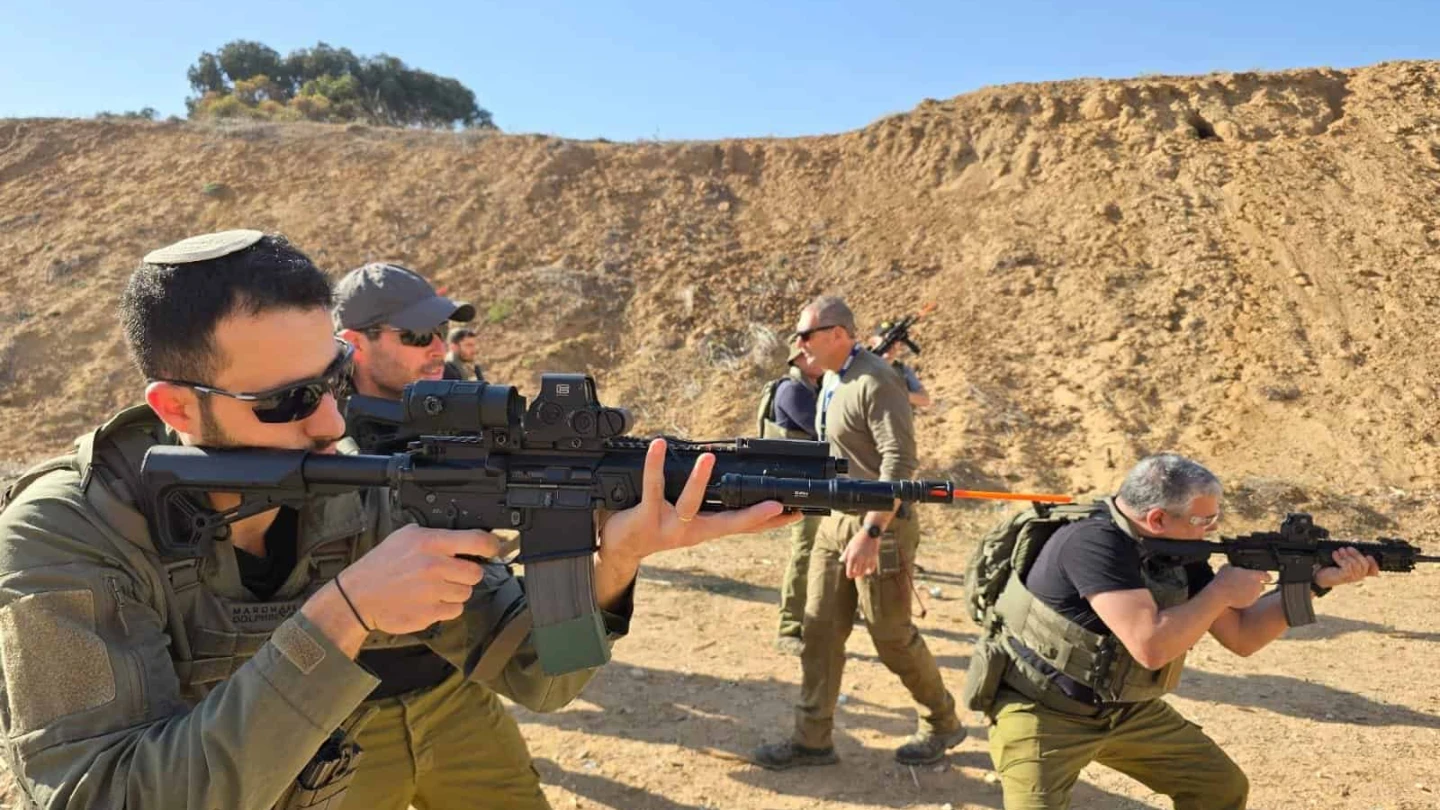
The Islamic Republic’s politically motivated prosecutions, executions, imprisonment, surveillance and intimidation demonstrate its continuing coercive capacity. It can also project power abroad through missiles, armed forces, intelligence networks, proxies and security structures capable of creating instability beyond its borders. The danger is not that the regime has become harmless, but that a state increasingly unable to solve its society’s problems still possesses extensive means to punish that society and threaten others.
Historical comparisons must be made carefully. Iran in 2026 is not Iran of the final decades of the Qajar kingdom at the beginning of the twentieth century. The Islamic Republic possesses a centralized security state, sophisticated intelligence networks, modern communications and military institutions the Qajar state could never have imagined. Yet the late Qajar era warns of the difference between a ruling order’s survival and a functioning state. Economic weakness, foreign pressure, institutional decay, competing centers of authority, and distance between rulers and society created a crisis not merely of legitimacy, but of governability.
Political systems become dangerously fragile when their ability to coerce exceeds their ability to govern. Such a system can endure for years by silencing critics, imprisoning opponents, displaying military force and preserving symbols of authority. What it cannot do is erase the pressures building up in the background.
Foreign governments should therefore resist judging Iran through a single question: Is the Islamic Republic still standing? The absence of collapse is not stability, nor is suppressed dissent evidence of legitimacy, consent or institutional coherence. Repression may conceal weakness, but it cannot repair it. When a government can no longer persuade, it relies on intimidation; when institutions cannot solve problems, security organs contain the consequences.
The more urgent questions are different: Can the Islamic Republic restore economic stability? Can it clarify its chain of authority? Can it manage social pressure without overwhelming reliance on coercion? Can its representatives make binding decisions on war and diplomacy? Above all, can a system built on fear sustain a durable relationship with an alienated population?
No one can predict when an authoritarian order will break. The Islamic Republic may survive this crisis, as it has others. Underestimating its security institutions and instinct for self-preservation would be a serious error. But it is equally mistaken to assume that because the regime can suppress an explosion, it has eliminated the forces that produced the explosion.
Iran does not need another demonstration of the state’s capacity to punish. It needs functioning institutions, economic competence, political accountability and clarity on who exercises power. Iranians need a state that governs their country rather than preserves the political system controlling it.
The question facing Iran—and the region—is whether the Islamic Republic possesses a coherent center of power capable of deciding, implementing and accepting responsibility for its decisions. Repression is not governance; fear is not governance; and the ability to project violence beyond a country’s borders is not proof that the state within those borders still functions.