


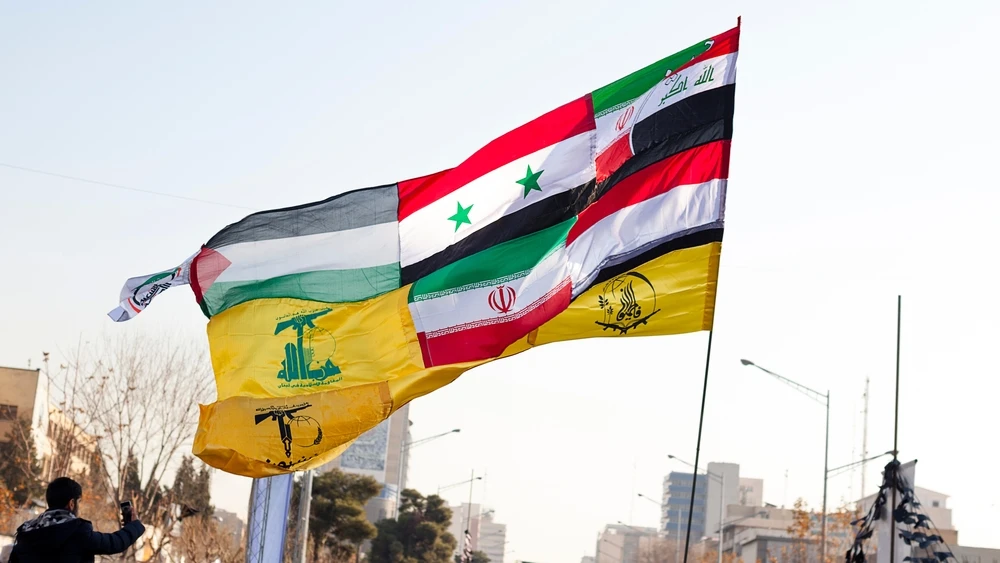

U.S. President Donald Trump may present the new agreement with Iran as a diplomatic success, but the fundamental realities that have defined the Islamic Republic since 1979 remain unchanged. Iran’s nuclear ambitions, proxy network, revolutionary ideology and security apparatus all survived the confrontation intact.
While Washington often measures success through agreements and reduced tensions, Tehran measures success through survival—and by that standard, the regime emerged with its most valuable strategic asset: time. For Israel, the Arab Gulf states and millions of Iranians who oppose clerical rule, the underlying threat and political challenge remain unresolved. The agreement may have postponed a crisis, but it did not solve the problem that produced it.
The Islamic Republic does not behave like a normal state because it is not a normal state. It is a revolutionary system that has survived for nearly five decades by manufacturing crises, exporting instability and turning confrontation into a tool of political survival.
The regime’s strategic doctrine is simple: survival through crisis. Whenever Tehran comes under pressure, it does not seek to reduce tensions; it seeks to widen the battlefield. That is precisely what has unfolded in the aftermath of U.S. strikes against Iranian radar and air-defense installations. Rather than absorbing the blow and stepping back, the regime has moved to expand the crisis into the Persian Gulf and beyond.
For the ruling clerical establishment, retreat is synonymous with weakness. De-escalation risks exposing vulnerability. Compromise can be interpreted as defeat. In the ideological worldview of the Islamic Republic, preserving the image of resistance often matters more than achieving tangible military success. The regime’s objective is therefore not victory. It is to prevent the appearance of losing.
This distinction is critical to understanding Tehran’s behavior. The Islamic Republic does not need to win a conventional war against the United States or Israel. It merely needs to convince its supporters, intimidate its adversaries and demonstrate that it remains capable of creating costs, spreading instability and disrupting the regional order.
The choice of Bahrain, Kuwait, Iraq and the Persian Gulf is no coincidence. Tehran understands that in a direct confrontation with the United States and Israel, it occupies the weaker position. Its answer has always been the same: Expand the battlefield, multiply the actors and raise the costs for everyone involved.
Warnings issued across the Gulf, heightened military alerts, missile interceptions, threats against American installations and the activation of regional air-defense systems are all part of a familiar pattern. The regime is attempting to transform confrontation into a regional crisis.
From a security perspective, the Islamic Republic has long defined its own survival through the insecurity of its neighbors. Stability limits Tehran’s options; instability expands them. Regional calm concentrates pressure on the regime. Regional turmoil disperses that pressure across multiple fronts. This is why, for more than four decades, Tehran has repeatedly relied on terrorism, proxy warfare, threats against international shipping, psychological operations and manufactured crises whenever it has found itself under strategic pressure.
The Islamic regime is attempting to compensate for its military disadvantages by creating political, economic and security costs far beyond its own borders.
What we are witnessing today is a textbook example of conflict regionalization. The regime absorbs a blow, then seeks to spread the consequences throughout the region. Its objective is to change the strategic equation from a confrontation between Iran and the United States into a broader crisis involving Gulf states, regional military bases, energy infrastructure and international shipping routes.
In other words, Tehran is attempting to compensate for its military disadvantages by creating political, economic and security costs far beyond its own borders. The regime may not be able to win the war, but it hopes to make the cost of confronting it appear too high for others to sustain.
The consequences of this strategy extend far beyond the battlefield. Energy markets become volatile, oil prices rise, commercial shipping faces new risks, Gulf governments come under pressure, and Washington finds itself managing multiple crises at once. This is precisely the outcome Tehran seeks. The regime understands that it cannot match American or Israeli military power, but it can complicate the strategic environment and increase the political and economic costs of confrontation.
For decades, the Islamic Republic has cultivated the image of an unstoppable regional power. Yet much of that reputation has rested not on conventional military superiority but on psychological warfare, proxy networks, intimidation and the deliberate creation of uncertainty. The regime’s influence has often depended less on what it can do directly than on what others fear it might do indirectly.
Whenever confronted by a superior military force, Tehran has followed a familiar playbook. Rather than engaging on the principal battlefield, it turns to asymmetric warfare, terrorist proxies, maritime threats, cyber operations and indirect attacks designed to exploit vulnerabilities beyond the immediate conflict zone.
Viewed through this lens, threats against Bahrain, Kuwait or other Persian Gulf states should not be interpreted as demonstrations of confidence. They are signs of strategic limitation. A power confident in its ability to prevail on the main battlefield has little need to expand the battlefield. A regime that widens the conflict is often signaling that it cannot achieve its objectives where the balance of power is being directly tested.
In that sense, the regionalization of conflict is not evidence of strength. It is evidence of a regime attempting to offset military weakness by generating political, economic and psychological pressure across an entire region.
The Islamic Republic still possesses dangerous instruments of coercion: missiles, drones, proxy militias, intelligence networks, cyber capabilities and sabotage operations. Yet possessing the capacity to create disruption is not the same as possessing enduring strategic power. An actor can be highly dangerous without being genuinely strong.
That distinction is essential to understanding Tehran today. The regime remains capable of generating crises, but it has repeatedly failed to translate those crises into lasting political, economic, or strategic gains. It can destabilize a region, but it cannot build one. It can threaten an order, but it cannot create a durable alternative.
More importantly, the regime fears internal erosion far more than external attack. Popular unrest, economic decline, elite infighting, declining legitimacy and growing public discontent pose a greater threat to its survival than any American airstrike or Israeli military operation. The greatest danger facing the Islamic Republic has never come from abroad. It has always come from within.
This reality helps explain one of the regime’s enduring paradoxes: external confrontation often serves its interests. A foreign enemy can be used to rally supporters, justify repression, silence dissent and postpone internal reckoning. War can become a mechanism of survival. Peace can become a threat.
For decades, many policymakers in Washington have misunderstood this aspect of Khomeinist ideology. The assumption has often been that Tehran seeks to avoid conflict at all costs. In reality, the regime does not fear war itself. It fears losing control of war.
The Islamic Republic is not looking for a war it cannot win. It is looking for a conflict it can manage, manipulate, prolong and exploit for political survival. That has been one of the central pillars of its strategy since 1979.
The recent U.S. strikes against Iranian radar systems, air-defense installations and Islamic Revolutionary Guard Corps’ command facilities delivered a clear strategic message. The objective was not occupation, regime collapse or nation-building. It was to demonstrate that critical elements of Iran’s military infrastructure remain vulnerable and that the United States retains the ability to impose significant costs when it chooses to do so.
Yet deterrence alone is unlikely to resolve the underlying problem. Military pressure can constrain the regime’s behavior, but it cannot change the ideological foundations that drive it. A strategy focused solely on managing escalation risks produces the same cycle that has repeated for decades: confrontation, temporary restraint, negotiations and renewed confrontation.
The central challenge is political rather than military. More than sanctions, missiles or airstrikes, the ruling clerical establishment fears the emergence of a sustained and coordinated political will among the United States, Israel and regional partners to alter the balance of power in Tehran.
Viewed through that lens, the Islamic Republic’s behavior becomes easier to understand. The regime is not acting like a confident power preparing for victory. It is acting like a system determined to avoid the appearance of defeat. Every escalation, every threat and every attempt to widen the conflict reflects the same underlying concern: survival.
When these developments are viewed together, a broader reality emerges. The Islamic Republic remains dangerous, but danger should not be mistaken for strength. A regime can possess missiles, proxies and disruptive capabilities while simultaneously suffering from strategic decline, internal fragility and a crisis of legitimacy.
History offers a consistent lesson. Governments that rely on fear, coercion, permanent confrontation and manufactured crises may survive longer than expected, but they rarely escape the consequences of the forces they unleash. In the long run, systems built on instability often become victims of the very instability they helped create.


