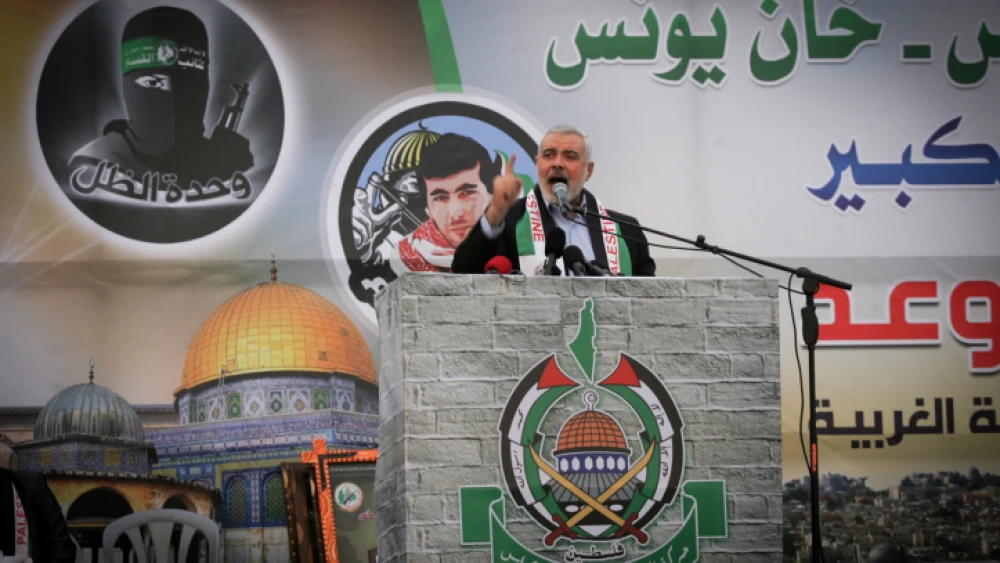

Reports out of the Gaza Strip just keep coming. News of the escalation along Israel’s border and concerns Gaza’s economy is on the brink of collapse have replaced reports a cease-fire with Hamas that would bring quiet to Israel’s southern border and put an end not just the barrage of rockets, but the waves of rioters running toward the fence and the firebomb kites sparking fires in fields in the Gaza periphery was near.
According to reports in the media, Hamas conveyed to Israel a few months ago its desire to engage in negotiations for a long-term hudna or temporary cessation of war. As part of the framework of this cease-fire, Israel and Egypt would end their blockade of the coastal enclave and allow the transfer of funds to rehabilitate the Gazan economy, and Hamas would return the bodies of the two Israeli soldiers and two citizens being held captive by the terrorist group. We have further learned from these media reports that Israel, having refrained from responding to Hamas’s overtures, is the one dragging its feet on the completion of the proposed deal.
The idea of a cease-fire is nothing new. In 2003, Hamas founder Sheikh Ahmed Yassin offered a 10-year hudna in return for Israel’s complete withdrawal to the 1967 borders. The establishment of a Palestinian state on the entirety of territory held by Israel since the 1967 Six-Day War was not enough for the terrorist organization to recognize Israel’s existence—let alone reach a peace deal with it.
It is no coincidence that Hamas uses the term hudna, which is anchored in the Islamic tradition that refers to a temporary cessation of jihad against the infidels when they have the upper hand to allow the Muslims to regroup and prepare for further fighting. Hamas hopes to float the idea of a hudna—of a period of calm or quiet—not just as an expression of its Islamic identity, but also of its lack of willingness to reach a peace deal with or even recognize Israel. At the same time, use of the term emphasizes the group’s commitment to the continued historical struggle against Israel, just not at this specific point in time.
For ideological reasons, Hamas is not interested in engaging in direct negotiations with Israel. As a result, the dialogue has been entrusted to mediators with their own interests, for whom taking Gaza off the agenda in the short term is worth the price of a violent conflict in a few years’ time. After all, the terror tunnels and rockets are not directed at Doha or Cairo.
It is difficult to imagine Hamas—or Hezbollah, which has also maintained relative quiet on the Israel-Lebanon border over the last decade, for that matter—publicly renouncing its opposition to and struggle against Israel. It is difficult to see Hamas imposing such a position on the various factions that operate inside Gaza or abandoning its stockpile of missiles and the military power it has accumulated.
A hudna with Hamas would be a blow to the Palestinian Authority that would send the message to the international community that any financial investment in Gaza should henceforth go through the sovereign and legitimate ruler of Gaza: Hamas.
In an interview with Lebanon’s Al Mayadeen television station just last week, Yahya Sinwar, Hamas’s leader in Gaza, praised the terrorist organization’s ties to Hezbollah, which he said were better than ever, as well as Hamas’ growing ties with Iran’s Revolutionary Guard and Quds Force commander and Iran’s man in the region, Maj. Gen. Qassem Soleimani.
An unofficial and shaky hudna has been in place between Hamas and Israel ever since 2014’s “Operation Protective Edge.” Israel’s policy is to ensure the border remains quiet, even if that means allowing Hamas to remain in power in Gaza.
Israel can and should continue with this policy, and reinforce the mutual understandings as pertains to the quiet on the border. As evidence of this understanding, it should be noted that even during the riots along the border, Hamas avoided launching rockets at Israel. Israel must promote projects that bypass Hamas and will help stabilize the economic situation in Gaza. After all, we know nothing can ever come of a hudna.
Eyal Zisser is a lecturer in the Middle East History Department at Tel Aviv University.