


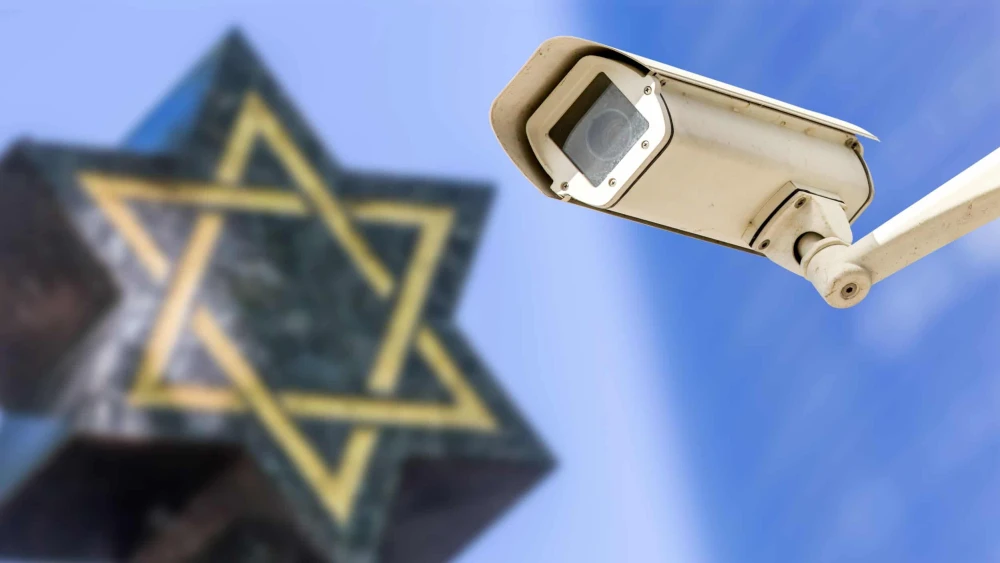
New York Gov. Kathy Hochul announced on Tuesday that state police will increase patrols around synagogues and other Jewish institutions during the High Holidays, as the state prepares for heightened security amid a rise in antisemitic hate crimes.
State troopers will conduct high-visibility patrols in Jewish communities and at religious institutions and have begun outreach to religious leaders, according to the governor’s office. They will coordinate with local and federal law enforcement, as well as the Anti-Defamation League, Community Security Initiative and Secure Community Network.
The increased security comes as New York prepares to distribute a record $70 million to 290 nonprofit organizations vulnerable to hate crimes and attacks. The grants, administered through the state’s Securing Communities Against Hate Crimes program, will help organizations strengthen physical security and cybersecurity. Each organization can receive up to $250,000 for measures including alarms, panic buttons, access controls, fencing, shatter-resistant glass, cybersecurity upgrades and security training.
New York City organizations received the largest share of the latest funding, with 147 grants totaling nearly $35.8 million. The mid-Hudson region received 99 grants totaling nearly $24.2 million, while Long Island received 25 grants totaling about $6 million.
“Keeping New Yorkers safe is my top priority—and even as we’ve driven violent crime to historic lows, any increase in hate crimes is absolutely unacceptable,” Hochul stated. “As Jewish New Yorkers prepare for the High Holidays, we’re continuing our record investments to protect sensitive sites and surging state police resources to keep communities safe across our state.”
The announcement comes as hate crimes in New York City have continued to rise. According to NYPD data cited by the governor’s office, 425 hate crimes were reported through Aug. 30, a 16% increase from 367 during the same period last year.
Anti-Jewish hate crimes rose 8%, from 212 to 229, accounting for 53.9% of confirmed hate crimes in the city during the period. Outside New York City, preliminary data from the first quarter of 2026 also showed a 16% increase in reported hate crimes, with anti-Jewish crimes the most frequently reported category.
“The need for a record level of security funding to protect Jews during the High Holidays underscores the troubling reality that antisemitism and threats against Jewish communities remain persistent and real,” Eric Goldstein, CEO of the UJA-Federation of New York, stated.
The American Zionist Movement said the funding allotment would help upgrade systems and strengthen cybersecurity infrastructure.
“At a time when Jewish institutions and organizations continue to face heightened threats, this critical support will help ensure that AZM can continue its work safely and securely,” the organization stated.
The state has distributed more than $201 million through the Securing Communities Against Hate Crimes program since Hochul took office, funding 2,035 projects, according to her office.


