


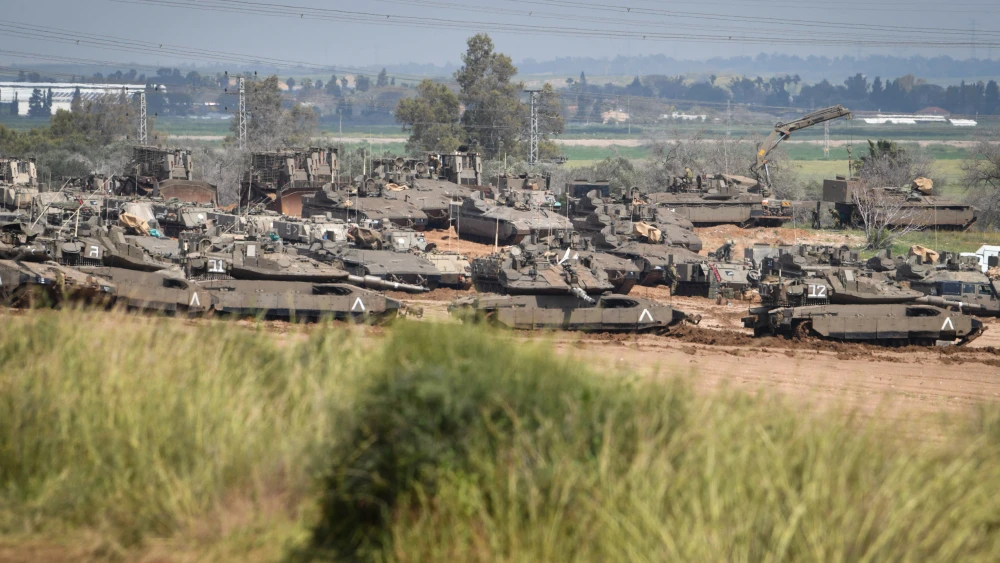

The four terrorists who were shot and killed Saturday morning trying to cross the Gaza border aimed to carry out a “quality attack” that could have dragged Israel and Hamas into a broad conflict neither wants.
Hamas’s claim that the terrorists were trained within its ranks but were expelled for becoming too radicalized sounds rather dubious. And yet, it’s doubtful Hamas was behind the attempted attack.
After all, Hamas has numerous means of pressuring Israel, from incendiary balloons to border riots. A grandiose terror attack would more likely than not only complicate matters for it.
This also apparently pertains to the murder of Dvir Sorek last week in Gush Etzion. The suspects in that case are members of Hamas or affiliated with it, but the organization’s leaders in Gaza remember very well how the abduction and murder of three Israeli teenagers five years ago led Israel to launch “Operation Protective Edge,” and therefore are wary of direct involvement in terrorist attacks in Judea and Samaria capable of triggering a clash with Israel.
Sorek’s murder can perhaps be attributed to a localized initiative without the knowledge of Hamas headquarters, but the foiled attack on the Gaza border on Saturday was a planned operation with guiding hands who decided to give it the green light.
In the past, such attacks were carried out by Palestinian Islamic Jihad, Hamas’s junior partner in the Gaza Strip. Islamic Jihad’s headquarters is in Damascus, Syria, but it is managed by Iran’s Islamic Revolutionary Guard Corps, which has often ordered the group to execute attacks against Israel from the Syrian Golan Heights, Lebanon and Gaza. The purpose of these attacks is to embroil Israel in a conflagration that will deflect Jerusalem’s attention away from Iran’s efforts to establish a military presence in Syria.
This time, however, Islamic Jihad also hasn’t claimed responsibility, and Israel hasn’t rushed to point an accusatory finger at the group. Under these circumstances, the primary suspects are radical Salafist groups operating in Gaza, often with help from the Islamic State group in the Sinai Peninsula.
Hamas fights these recalcitrant jihadist groups when it identifies a threat to its rule, but in other cases—when they aim their aggression at Israel or help ISIS battle the Egyptian army in Sinai—Hamas turns a blind eye.
Hence, Israel’s message to Hamas following Saturday’s failed attack that while it doesn’t blame Hamas directly, as the sovereign entity in Gaza it bears sole responsibility for preserving quiet along the border.
Eyal Zisser is a lecturer in the Middle East History Department at Tel Aviv University.
This article first appeared in Israel Hayom.


