



With Hezbollah and Hamas largely neutralized as instruments of the Islamic Republic of Iran’s projection of power, Iran now relies on the Shi’ite Houthis of Yemen and the Popular Mobilization Forces (PMF) Shi’ite militia of Iraq. Both groups are fiercely loyal to the Islamic Republic, although the Houthis seem to, on rare occasions, assert an independent streak. The PMF is comprised of numerous militias, many of which are backed by Tehran.
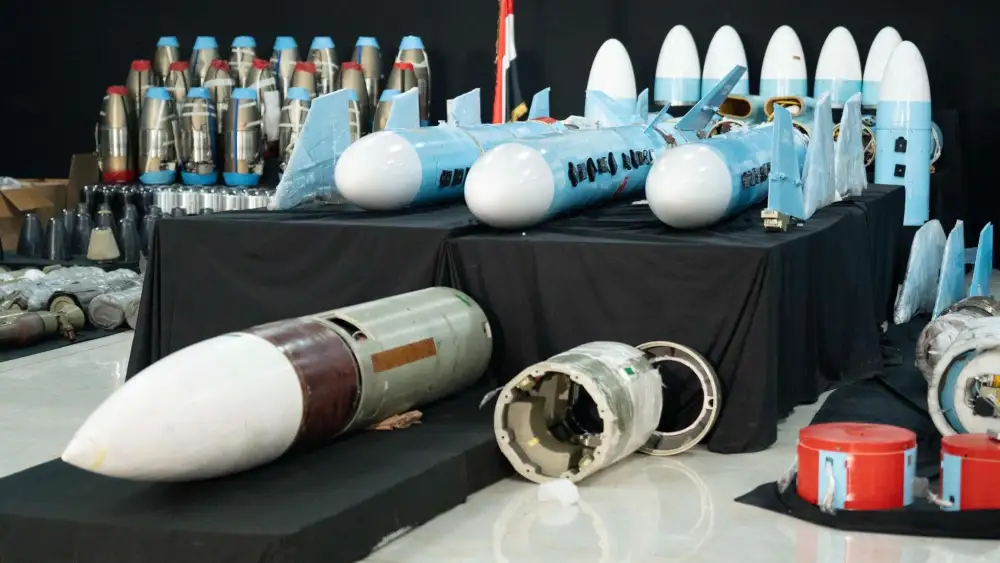
The Houthis, using Iranian-supplied ballistic missiles and drones, have been able to inflict serious damage on the oil-producing facilities of Saudi Arabia and the United Arab Emirates. The Houthis have also been successful in firing missiles at Israel’s port of Eilat, a distance of approximately 1,200 miles.
They have declared a maritime blockade on Saudi Arabia and recently seized territory around the Bab al-Mandab strait—the Red Sea chokepoint and vital export route for Saudi oil. This move was coordinated with Iran, coming on the heels of Iran having blockaded the Gulf’s Strait of Hormuz.
Actions taken by the Houthis have led to serious disruptions of Red Sea traffic, a key route connecting Asia with Europe via Egypt’s Suez Canal, as well as attacks on ships during Israel’s war with Hamas in Gaza. Their actions have had a major impact on the Egyptian economy, which depends on revenue via the Suez. Without ships exiting safely to the Red Sea, traffic at the Suez Canal declined sharply.
The Houthis are a Zaydi Shia Islamist political and military movement in Yemen, controlling much of the northwestern region, including the capital Sana’a. Backed by Iran, they have declared themselves to be part of the Iranian-led “axis of resistance” against Israel, America and the wider West, along with armed groups such as Hamas and Lebanon’s Hezbollah movement.
Formally known as Ansar Allah (Partisans of God), the group emerged in the 1990s and takes its name from the movement’s late founder, Hussein al-Houthi. His brother, Abdul Malik al-Houthi, has been its de facto leader since 2004.
Ansar Allah, or the Houthis, are a fanatical offshoot of Shi’ite-Islam. They are known for their attacks while riding white Toyota trucks, almost identical to the Sunni-Muslim Islamic State of ISIS (Da’esh in Arabic), which controlled large tracts of Iraq and Syria and was headquartered in Raqqa, Syria. Like ISIS, the Houthis have developed rapid movements and military initiatives that enabled them to capture northwestern Yemen, including Sana’a.
To halt advances by the Houthis and prevent any future threats to maritime commerce—and ultimately, to defeat them—Washington, Riyadh, Abu Dhabi and Jerusalem need to bring together a reliable ground force that possesses religious motivation equal to the terror operatives, and couple that with Western and Saudi aerial support.
The defeat of the Islamic State was not achieved solely by aerial operations. The success was largely due to the ground forces led by the highly motivated Kurdish-led Syrian Democratic Forces. Clearly, there is no Western power that will risk ground forces on Yemeni soil; therefore, there will have to be an Arab Muslim force.
The Houthis are cooperating with the Iranian proxy group, Iraqi Popular Mobilization Forces (PMF). The two groups share a joint War Room in Baghdad and have provided the Iraqis with targets. The information enabled the PMF to target the Saudi’s Red Sea refinery at Yanbu with a drone attack.
While the closure of the Bab el-Mandeb is aimed principally at the Saudis, Israel and America are impacted as well. If Saudi oil cannot reach world markets, the cost of fueling cars in Western countries and the United States goes up, resulting in pressure on U.S. President Donald Trump to stop the war against Iran. Hence, the primary beneficiary is Iran and its regime.
The Houthis capabilities were recently on display as they rode 1,550 miles along the shores of the Red Sea and defeated the forces of the Saudi-supported and recognized government of Yemen, based in Aden. The government forces fled, leaving behind the road to Bab el-Mandeb open to the Houthis.
The problem in Yemen is that the anti-Houthi forces have not been united. The Saudis support the internationally recognized Presidential Leadership Council (PLC) while the UAE has been supporting the Southern Transitional Council (STC), whose forces have been more successful against the Houthis in the past.
As of October, the STC has been dissolved and the PLC, with Saudi military support, has been unable to defeat the Houthis. Earlier this month, PLC forces claimed to have retaken the Bab el-Mandeb Strait, although this claim has been contradicted by the Houthis.
Again, to defeat them, there must be a determined, well-trained Arab force as fanatical as the Houthis. Israel can provide intelligence to the Saudis and pinpoint the Houthis underground production facilities, where they store and assemble missiles and drones. The United States could set up a naval blockade to prevent the Iranians from shipping arms to the Houthis and foil Iran’s banking transactions that provide funds to the Houthis.
The demise of the Islamic Republic of Iran would go a long way in stripping Houthi terrorists of access to arms and cash. An offensive War Room capable of developing a comprehensive strategy to defeat the Houthis must be created. Seasoned generals need to combine precision military operations, economic and financial isolation, regional security cooperation, and political and governance reforms to undercut their operational capacity.
Success depends on sustained, coordinated efforts that address both the Houthis’ military capabilities and the socio-economic conditions that sustain their influence in Yemen.


