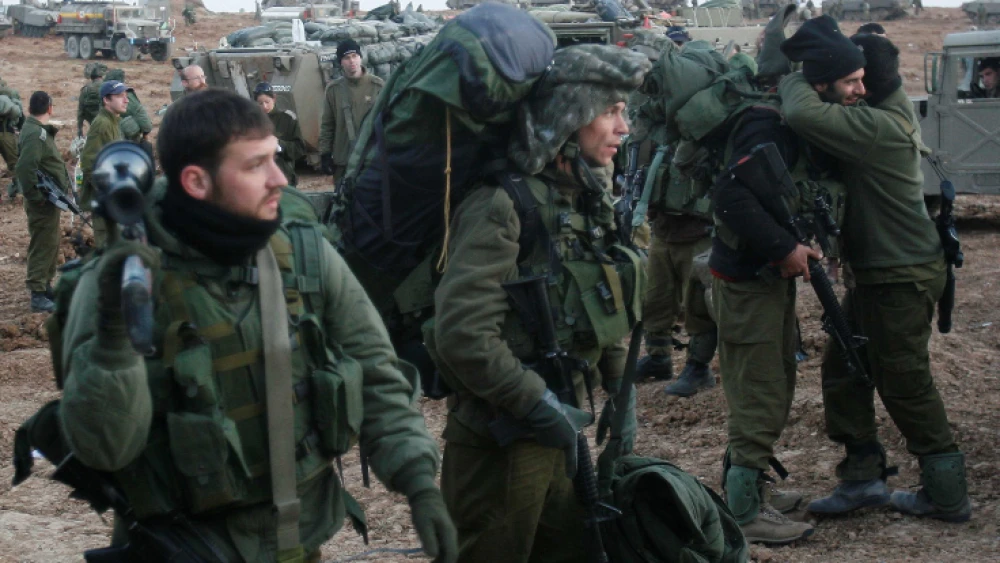

Many are of the opinion that Israel faces no existential threats today, and certainly none as serious as that it faced during the 1973 Yom Kippur War. However, a quick analysis of our enemies’ military and missile capabilities shows that the Jewish state might one day be caught off guard by a barrage unlike any it has experienced before.
Imagine reading this piece with 4,000 missiles on their way towards major Israeli cities and strategic military points. At the very least, we can say that that initial strike would be serious, causing hundreds of casualties and massive damage. We can talk about intelligence and preemptive strikes, but if there is one thing we learned during the Yom Kippur War, it is to never say never.
The enemy possesses such capabilities, and therefore the question is not whether such an attack could happen but how long it would take to eliminate the threat if it does.
In the past 30 years, the Israel Defense Forces has built up its air defense, which provides a partial response, and significant aerial attack and ground maneuver capabilities.
I don’t need to tell you that the Israeli Air Force is one of the most advanced in the world. Let us instead talk about the IDF’s ground maneuverability and, most importantly, its reserve forces.
After the 2006 Second Lebanon War, the IDF invested heavily in training its reservists. However, much of the training back then was designed to prepare for an escalation following an Israeli attack on the nuclear reactor in Syria. Billions were invested in training, improving infrastructure and purchasing equipment.
Since then, however, the reserve duty has been moved to the back burner. Training has plummeted and units have been disbanded. The reserve service has become a great financial burden and in an effort to cut costs, the IDF has all but ceased calling up reservists for routine duty.
According to a seven-year study I conducted, most reservists believe they are not being mobilized often enough. In their opinion, the threats to Israel’s security warranted more reserve training.
To put it into perspective: In the 1980s a reservist spent an average of 50 days a year in training, but in 2021, that number has shrunk to just 10.
We must ask ourselves one big question: How prepared is a reserve unit whose soldiers have met so infrequently in the last decade to protect our country against an existential threat?
Col. (res.) Ronen Itsik is a former commander in the IDF Armored Corps and author of “A Man in a Tank.”
This article first appeared in Israel Hayom.