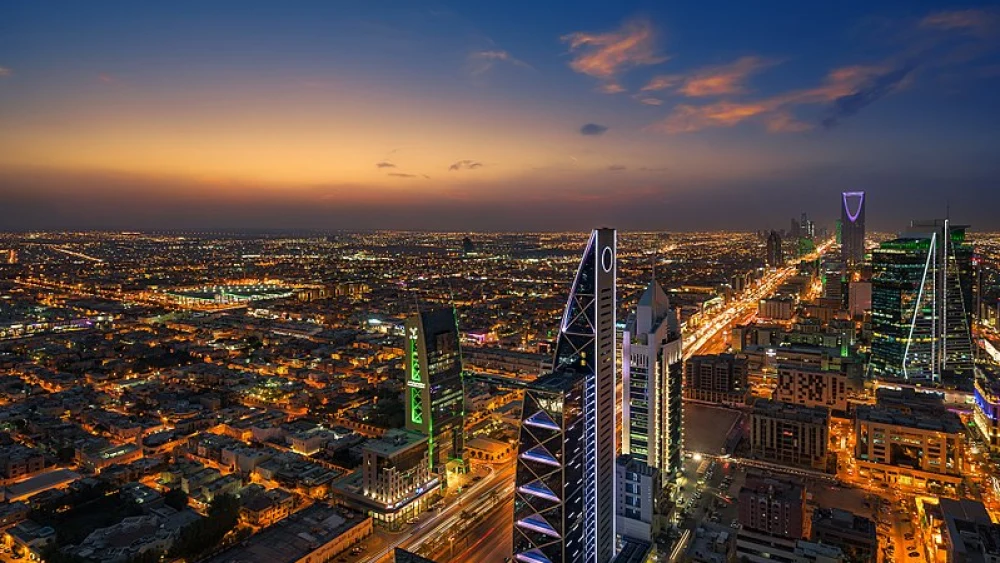
I recently took a trip to Saudi Arabia with the Conference of Presidents of Major American Jewish Organizations. I came away from the visit with the belief that the country is undergoing a rapid modernization process.
Historically, Saudi Arabia has been a “frenemy” of the United States. It bought huge amounts of U.S. weaponry and helped keep oil prices under control, but also allowed the ultra-fundamentalist Wahhabi Muslim clerics to spread the message of radical Islam worldwide.
During the past five years, however, the Saudi government, led by 35-year-old Crown Prince Mohammed bin Salman (MBS), is tipping the kingdom more toward friend than enemy.
Why is Saudi Arabia making these changes? There are several reasons:
1) Seventy percent of the population is below 30, and is demanding change.
2) The price of oil is unpredictable, and Saudi Arabia realizes it must diversify its economy.
3) Iran represents an existential threat to the kingdom, and it requires U.S. and even Israeli assistance to protect itself.
4) Innovation is driving small nations like Israel and Singapore. Saudi Arabia also must learn to become innovative, to catch up with the modern world. It has already made some significant changes to unleash the creative spirit of its people.
During the past 50 years, Saudi Arabia has raised its literacy rate from 5 percent to 99 percent, cut infant mortality from 30 percent to 1 percent and steadily raised the average lifespan. The kingdom initiated particularly dramatic changes over the past five years, vowing to “reclaim Islam”; disbanding the religious police; firing 3,000 hate-inciting imams; allowing Western-style music concerts; allowing women attend sports events and to drive; and, very recently, opening up the country to tourism.
Very notably, MBS announced the creation of a new city-state in northwest Saudi Arabia, near its border with Jordan. An estimated $500 billion investment will create an advanced city in a new free economic zone called NEOM (new future). The city will be based on nine economic centers that will serve innovative worldwide markets. This determination to modernize appears unstoppable, but much more change is needed for Saudi Arabia to be successful.
Going forward, my recommendations would be for the kingdom to:
1) Directly re-educate its youth to become more tolerant of other faiths;
2) Allow Christian churches, and even Jewish synagogues, to be built;
3) Stop funding mosques, schools and universities worldwide;
4) Create direct diplomatic relations with Israel;
5) Stop tying foreign-policy progress regarding Israel to the intransigent Palestinian Authority.
Change of such magnitude is obviously difficult to accomplish overnight. However, these changes are crucial to the kingdom’s success and ability to thrive in a competitive world market. And MBS knows that he must make the best of the narrow window of opportunity that he has managed to open.
Ken Abramowitz is the president and founder of SaveTheWest.