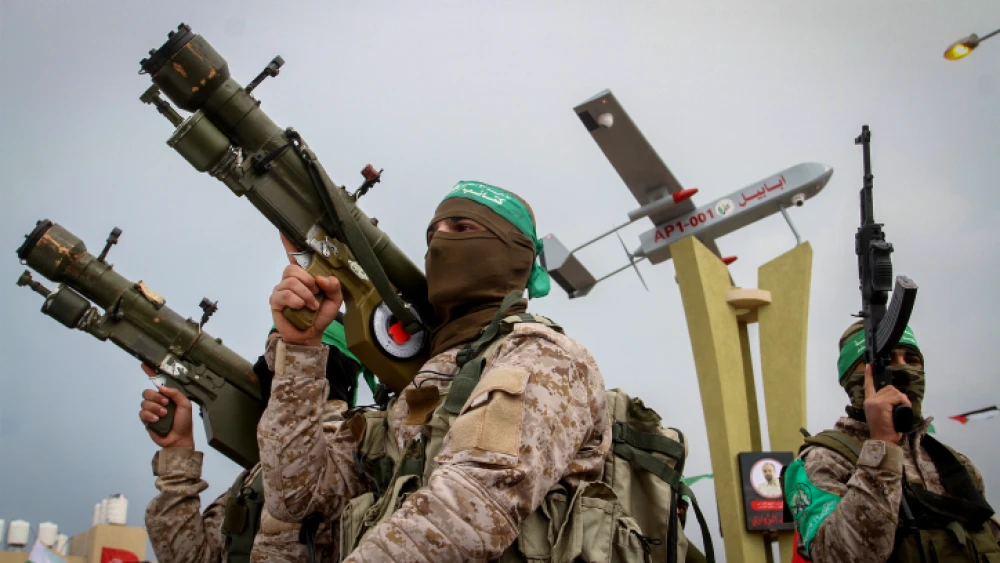
In street terms, Hamas blinked first. Although the Egyptians were behind the scenes trying calm the situation in the Gaza Strip, no formal understandings between the sides were reached, and the shooting was stopped by Hamas, after which Israel responded in kind.
As early as Tuesday evening, Hamas sent messages that if Israel stopped firing, the shooting from Gaza would stop. Israeli decision-makers chose to press on with the predetermined response plan and attack Hamas military infrastructure after more than 100 rockets and mortar shells were fired at Israel throughout the day. As midnight approached, Palestinian Islamic Jihad falsely claimed a cease-fire agreement had been secured; at 4 a.m., Hamas released a similar statement, which was also inaccurate. As the sun rose Wednesday morning, the armed Palestinian groups voluntarily stopped shooting, which in turn was met with quiet from the Israeli side.
This chain of events indicates that Israel still holds effective deterrence power over Gaza and that Hamas hasn’t yet strategically opted for a course of escalation (and consequently, war). In the final balance of Tuesday’s fighting, the organization apparently concluded it currently has more to lose than gain, but this is far from the bottom line.
When Hamas finally dusted itself off in the aftermath of the Israeli attacks on Tuesday, it saw that nothing fundamental had actually changed in Gaza: the despair, the humanitarian crisis, the lack of diplomatic prospects—all these are still rampant in Gaza and are still Hamas’s responsibility.
With no solutions on the horizon, Hamas will soon have to drain the people’s anger again. This will occur soon, on Tuesday, June 5, know to Palestinians as “Naksa Day” (referring to the “setback” of the 1967 Six-Day War), which could spark more mass border demonstrations. This cycle will repeat at an increasing frequency if Hamas continues allowing terrorist activity along the fence, similar to recent weeks. Such a situation, where Israel defense Forces’ soldiers and nearby communities come under attack, will unquestionably lead to more incidents and ultimately another escalation of hostilities.
Past experience teaches us that the next round will begin where the previous one ended. After four years of quiet, something came unhinged within the Palestinian groups, and that something won’t go back into place. This doesn’t mean that Israel’s deterrence has been eroded, but complete border quiet, such as existed since “Operation Protective Edge” in 2014, will cease to be the case. If a formal cease-fire agreement isn’t reached, we can expect increasingly frequent and potent rounds of fighting.
Israeli officials know this and want to postpone the inevitable as much as possible. The way to achieve this is through “hudna” (the Arabic term for a temporary truce), which will alleviate the Gaza headache for a few more years. This will allow Israel to focus on the main objectives—the campaign to prevent an Iranian presence in Syria and mitigate its influence in Lebanon.
Since quiet on the southern front will also require Israeli concessions, the cabinet will soon need to make a clear strategic choice and rank Israel’s priorities. Devoid of a practical solution for the Gaza problem, it appears the answer is clear-cut. Along the way, the sides could still exchange more military blows, and despite Wednesday’s seeming return to tranquility, this could unfold very quickly.
Yoav Limor is a veteran Israeli journalist and columnist for Israel Hayom.