
Who should have the final word when a democracy’s institutions disagree about the limits of their own authority? Israel’s judicial debate poses that question with unusual force. Yet too often, the argument is reduced to a choice between defending democracy and attacking it. That framing makes serious examination of judicial power almost impossible.
As an Israeli attorney now living in Florida, I believe criticism of the judiciary can come from a commitment to democracy and the rule of law. Courts must protect individuals against unlawful government action. But their indispensable role does not place the scope of their authority beyond debate. Judicial independence and judicial supremacy are different propositions.
My concern is that Israel’s constitutional development has given judges an increasingly decisive role in defining the boundaries of political decision-making, without an adequately settled democratic agreement about the boundaries of judicial power itself. Citizens deserve to understand that development, question it and participate in deciding what should follow.
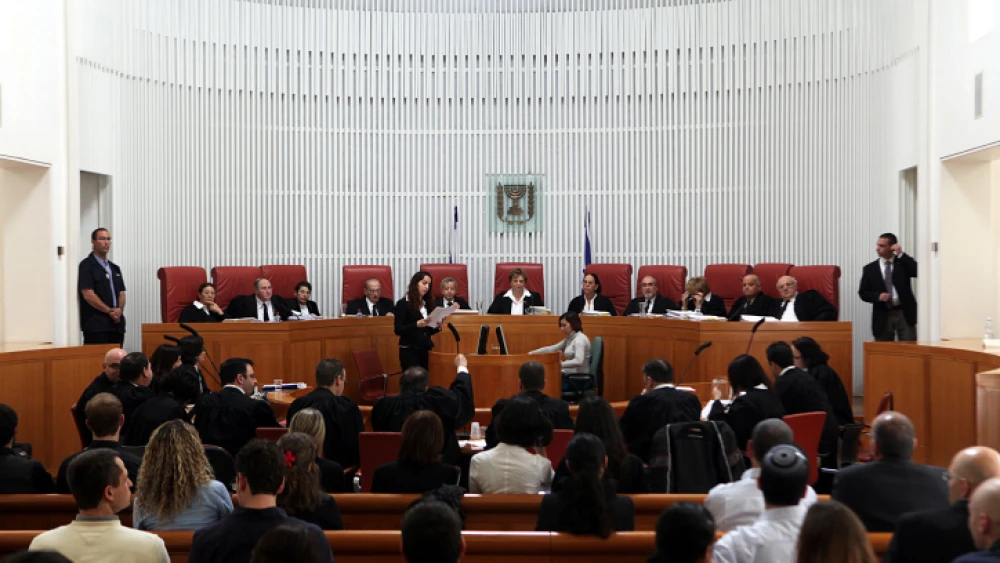
Consider two milestones. In the 1995 United Mizrahi Bank judgment, the Supreme Court recognized the superior constitutional status of Basic Laws and the power to review ordinary legislation against them. The case helped establish the framework associated with Israel’s constitutional revolution. The disputed legislation itself was upheld. That distinction matters: The significance of a judgment can lie in the authority it establishes, even when it does not invalidate the law before it.
On Jan. 1, 2024, the court went further. Twelve of the 15 justices recognized the authority to review Basic Laws in exceptional circumstances, and eight voted to invalidate the amendment that barred reasonableness review of decisions by the government and the prime minister. The court’s stated justification was protection of Israel’s core democratic character.
These decisions raise a question that cannot be answered merely by praising or condemning a particular government. If Basic Laws provide a constitutional foundation for reviewing ordinary legislation, who authorizes and defines judicial review of the Basic Laws themselves? Supporters of the court have an answer: even constitution-making power must have limits. But identifying a need for limits does not, by itself, settle who should define and enforce them.
The strongest argument for expansive judicial protection deserves a fair hearing. An elected majority can misuse its power. It can weaken safeguards, disadvantage minorities or manipulate institutional rules for its own benefit. Elections alone cannot guarantee liberty. A democracy must preserve meaningful protection for people who lose political contests, including citizens whose beliefs or identities make them unpopular.
I accept that warning. It does not follow, however, that every expansion of judicial authority strengthens democracy. Courts also exercise power through interpretation, and interpretation can involve contested judgments about values and public policy. Professional expertise deserves respect; it cannot substitute for explaining the legal source and limits of the authority being exercised.
It does not follow that every expansion of judicial authority strengthens democracy.
The issue is especially important when a legal dispute concerns how a government weighs competing public interests. Preventing corruption, enforcing statutory duties and protecting rights are essential judicial functions. Choosing among lawful policy alternatives ordinarily belongs to those entrusted with governing. The boundary can be difficult to draw. That is precisely why citizens need clearer rules, rather than assurances that the right people will exercise discretion wisely.
Accountability does not require judges to campaign for popularity or fear dismissal over an unpopular ruling. It requires institutions to operate within identifiable mandates. A citizen should be able to ask what rule authorized a decision, what standard constrained it and what lawful process exists to change that standard. An institution’s good intentions are not an adequate constitutional safeguard.
This also demands consistency from supporters of reform. A government cannot credibly demand limits on judges while seeking unlimited freedom for itself. Reform should protect the public when today’s opposition becomes tomorrow’s governing coalition. Rules designed around one leader, one prosecution or one immediate political victory will deepen the legitimacy problem rather than resolve it.
A durable settlement should therefore define the status of Basic Laws, the process for adopting and amending them, and the grounds and procedures for judicial review. Fundamental rights should receive explicit protection. Constitutional rules should be harder to change than ordinary policies, through a process capable of earning support beyond a temporary governing majority. Judicial authority should be stated clearly enough that its limits do not depend primarily on judicial self-restraint.
Such a settlement would involve difficult choices. Which decisions require a broader majority? Which rights are protected, and how are conflicts between them resolved? What remedies should courts have when government acts unlawfully? These are public constitutional questions. Lawyers should help citizens understand the choices, not imply that the public is unqualified to participate in making them.
For American readers, the relevance is not that Israel’s institutions are identical to their own. They are not. The relevance lies in a common temptation: to judge institutions by whether they produce the outcomes we favor. People who welcome a powerful court today may resent it tomorrow. The better test is whether they would accept the same allocation of authority when their political opponents benefit from it.
My book, Is Israel a Democracy? grew out of concern about the distance between formal democratic participation and effective influence over public decisions. The question in its title is an invitation to examine how power actually works. Taking Israel’s democracy seriously means allowing scrutiny of every institution that exercises authority in its name.
The goal should be a state in which government can govern, courts can enforce the law and citizens can identify who is responsible for consequential decisions. No branch should be permitted to define its own power without meaningful constraint. Israel’s democratic future depends on protecting rights while ensuring that the people remain the source of political authority. Both commitments must survive, especially when they become inconvenient to those in power.