Religion
News about Judaism, faith and other religious issues around the world

As tension again spikes between the Iranian-backed proxy and Israel, observers flag key milestones in the evolution of the most heavily armed terror entity, and its leader, Hassan Nasrallah.

Hassan Iquioussen “has for years spread insidious ideas that are nothing less than incitement to hatred, discrimination and violence.”

He is gathering research for his next book on Israeli security threats, traveling along Israel’s often tense borders with Gaza, Syria and Lebanon. Details of his trip, including visits to the Temple Mount, the Al-Aqsa mosque compound and the Western Wall have made waves on social media.

“In this regard, no one can blame the Islamic Republic of Iran,” said Nasser Kanaani, spokesman for Iran’s Foreign Ministry. “We believe that the insults made and the support he received was an insult against followers of all religions.”

Sources say it is “clear” that at some point before the attack, Hadi Matar had been in contact with “people either directly involved with or adjacent to the” IRGC Quds Force.
A “fatwa” (religious edict) was placed on the author by Iran in the late 1980s; it has since been upgraded to a $3.3 million bounty.
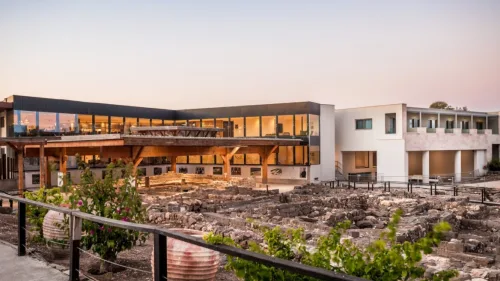
The complex houses a new hotel and an active archeological site where visitors can have a first-century Galilee experience in the 21st century.
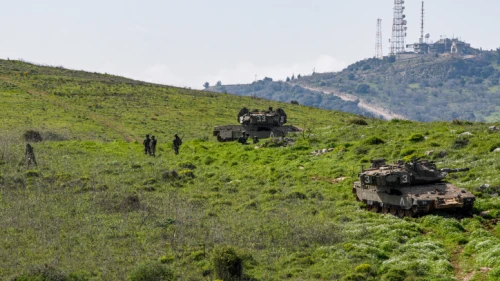
Mohammad Raad, Hezbollah’s parliamentary bloc leader, called the archbishop’s delivery of cash and medicine a “national betrayal.”

The program “20th Hour—Money Power, Islam and a Just Order” featured speakers who dabbled in tropes debasing Zionism and the Jews.

He told JNS that the Jordanian Waqf does not want non-Muslim visitors “to feel safe” on the Temple Mount.
Mixing the new with the old gives this Israeli Druze town a “glocal” feel that visitors love.

“We tell Israel’s story 365 days a year,” says co-executive director Shari Dollinger.