
As U.S. President Donald Trump sits down in Beijing with Chinese President Xi Jinping, the agenda will no doubt be crowded with matters of immense geopolitical consequence.
Trade, tariffs, Taiwan, Iran, artificial intelligence and military competition will all compete for attention, as they should. The United States and China are the world’s two most powerful countries, and the relationship between them will help shape the course of this century.
But amid the strategic calculations and diplomatic choreography, there is one small matter that deserves a place on the president’s list: the plight of the Chinese Jews of Kaifeng.
They are few in number—just a few hundred people, barely a speck on China’s vast demographic landscape. And yet their story stretches back more than a millennium, linking the Jewish people and Chinese civilization in a way that is both remarkable and deeply moving.
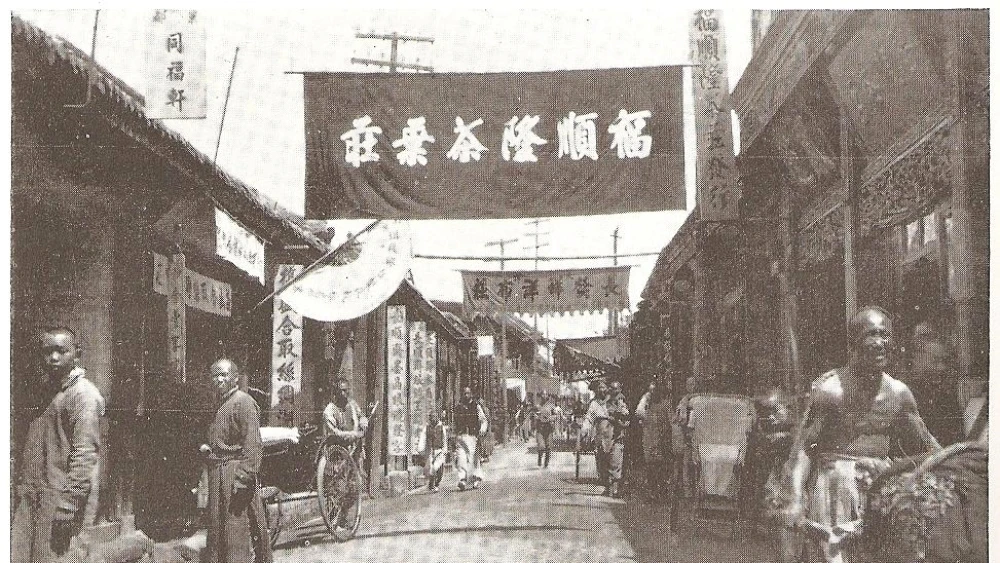
Located in China’s central Henan province along the banks of the Yellow River, Kaifeng was once one of the great imperial capitals of China, serving as the seat of several dynasties, most notably during the Northern Song Dynasty from 960 to 1127. It was a thriving commercial and cultural hub, drawing merchants and travelers from across Asia, including Jewish traders who likely arrived from Persia or Iraq by way of the Silk Road.
In 1163, the Jewish community built a synagogue in Kaifeng, which was renovated and rebuilt over the centuries. At their height during the Ming Dynasty, the Jews of Kaifeng may have numbered as many as 5,000 souls. But tragedy struck in the mid-19th century, when devastating floods inundated the city and destroyed the synagogue, accelerating the community’s decline.
Over time, assimilation, intermarriage and isolation took their toll. After the community’s last rabbi died in the 19th century, Jewish knowledge faded. But memory did not. Families in Kaifeng continued to preserve surnames, customs and a stubborn awareness that they were descendants of Israel.
That alone should be a source of pride for China. Here is a community that testifies to China’s ancient openness to trade, culture and religion. The Kaifeng Jews are not a threat to Chinese sovereignty. They are not subversives. They are a living bridge between China and the Jewish people.
And yet in recent years, Beijing has treated them as though they were something to be feared.
Jewish study activities have been restricted. Local police reportedly compelled community members to remove mezuzahs from the doorposts of their homes. Jews in Kaifeng have been barred from gathering publicly to celebrate the Sabbath and Jewish festivals. Foreign Jewish visitors have faced obstacles, while public signs of Jewish heritage in Kaifeng have reportedly been removed or obscured.
Community members have been pressured, monitored and discouraged from reconnecting with the faith of their ancestors.
One is compelled to ask: What exactly does the Chinese Communist Party fear from a few hundred Jews in Kaifeng?
Surely, a nation of more than a billion people can tolerate a tiny group seeking to learn about Shabbat, Hebrew, Jewish history and the holidays of their forefathers. Surely, a civilization as old and proud as China’s does not need to suppress a handful of people lighting Chanukah candles or studying Torah.
That is precisely why Trump should raise the issue with Xi.
Not with bombast. Not as a public humiliation. But firmly, clearly and directly.
The message should be simple: America respects China’s history and sovereignty, but religious heritage is not a crime. The Jews of Kaifeng should be permitted to study their tradition, gather peacefully, receive visitors and maintain contact with the wider Jewish world.
This is not a demand for regime change. It is not an attempt to interfere in China’s internal politics. It is a modest request rooted in decency, history and religious freedom.
Indeed, raising the issue would serve American interests as well. The United States has long stood, at its best, for the right of people to worship freely and preserve their identity. If Washington can raise the plight of dissidents, Christians, Uyghurs, Tibetans and others, then surely it can also speak up for the descendants of Kaifeng’s Jews.
For Trump, the issue also offers a chance to demonstrate moral clarity at little diplomatic cost. No trade deal will collapse because the president asks Xi to show leniency to a tiny Jewish community. No strategic dialogue will be derailed because he appeals to China’s own historic legacy of tolerance.
On the contrary, it would remind Beijing that great powers are judged not only by the size of their economies or armies, but by how they treat the small and vulnerable.
The Kaifeng Jews have endured the erosion of memory, the loss of institutions and the weight of isolation. Yet some still yearn to reconnect with the people and faith of their ancestors. That yearning should be cherished, not crushed.
When Trump meets Xi, he should speak not only of markets and missiles, but of memory. He should remind China that the Jews of Kaifeng are not an embarrassment to be hidden, but a treasure to be protected.
A great nation should not fear a small Jewish community. It should have the confidence to let it live.