


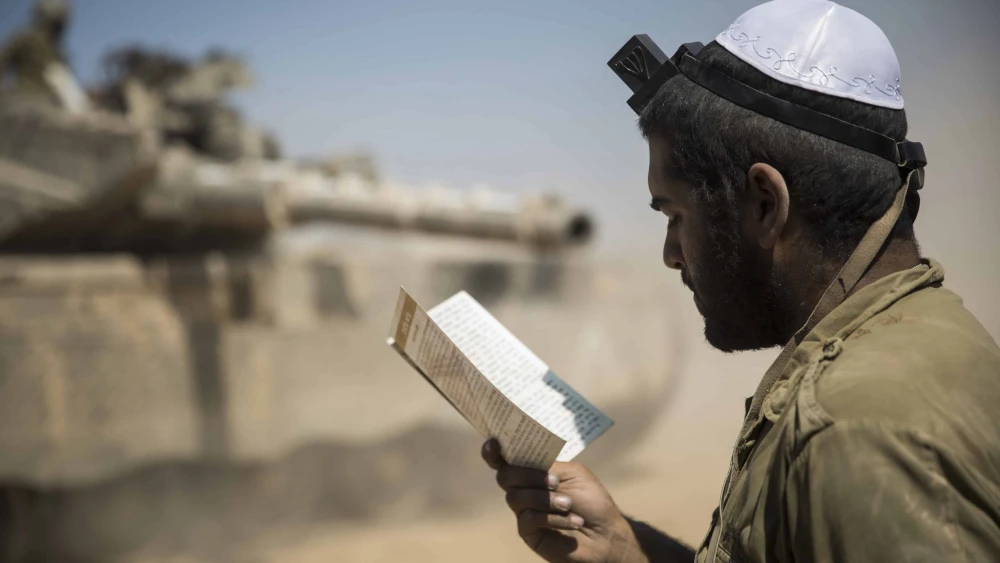
Israel’s Religious Zionist towns, many of which are located in Judea and Samaria, were leaders in the average number of days of military reserve duty served per resident last year, according to an analysis of Israel Defense Forces data published by Israel National News on Sunday.
The study covers the first three months of the war sparked by the Hamas-led terrorist attacks in southern Israel on Oct. 7, 2023. It is based on official military data obtained through a freedom of information request, the outlet noted.
Moshav Ramat Magshimim in the Golan Heights, founded in 1968 as the first religious community in the area, led the list, with an average of 53.94 days spent in the reserves per resident in 2023.
The top 10 also included Beit Hagai in the Hebron Hills of Judea (51.33), Rehelim in Samaria (51.16), Susya in Judea (50.11), nearby Shim’a (46.2) and Otniel (42.12), Nov in the Golan (41.89), Yakir (41.83) and Elon Moreh (41.23) in Samaria, and Hoshaya in the Jezreel Valley (40.51).
“The purpose is not to harm any city, town or sector [of the population], but to present the data so that they can serve as a basis for a proper discussion of the partnership of the various sectors in contributing to the state, and to give the credit that is due to the reservists and the environment surrounding them,” said researcher Yishai Klein.
The INN study only includes towns where all residents combined served a total of at least 15,000 days in the reserves in 2023.
Klein noted that previous studies, primarily two articles published by Israel’s Ynet and Haaretz news outlets, only focused on big cities and disregarded the military contributions of smaller towns and communities, which he said often “have a more distinct population profile.”
Using the Ynet data, Klein said that the predominantly religious Judea city of Efrat comes in first, with 23.75 average reserve days per resident.
Israel’s Religious Zionist sector is also disproportionately represented in IDF combat units, resulting in inordinately high numbers of soldiers from this community having been killed or wounded during the war.
In August, a mental-health officer attached to the military’s Alexandroni Brigade was dismissed for calling religious Zionist troops “death eaters.”


