Saudi Arabia

“Our Middle East: An Insider’s View” with hosts Dan Diker and Khaled Abu Toameh and guest Harold Rhode, Ep. 4

Riyadh’s distrust of Washington was a key calculation in the maneuver, according to Tel Aviv University professor Eyal Zisser.

Saudi Arabia blocks Israeli delegation from attending UN awards ceremony
Circassians from Kfar Kama were denied entry visas into the Gulf kingdom to attend an event honoring their Lower Galilee village.

Hours before Riyadh and Tehran renew relations, a congressional subcommittee strategized on advancing the Abraham Accords.
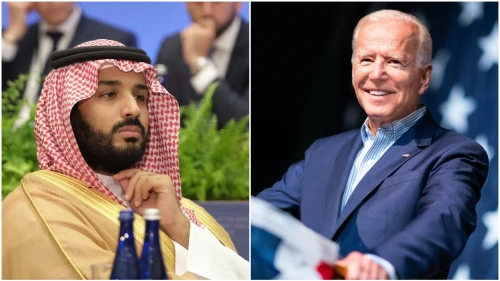
“A Wall Street Journal” report also notes Riyadh wants Washington to help build out its civilian nuclear program; both demands are viewed as “daunting obstacles” in political circles.

Such a peace would bring the “effective end of the Israeli-Arab conflict,” said the prime minister.
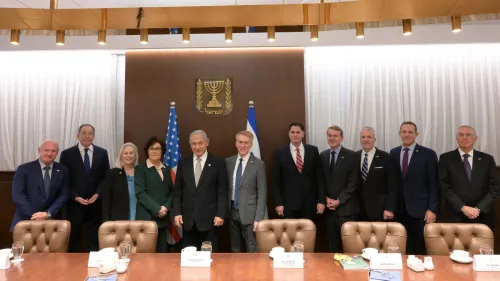
The U.S. lawmakers also met with Israeli Defense Minister Yoav Gallant, who stressed the need to maintain the Jewish state’s military superiority to combat the Iranian threat.
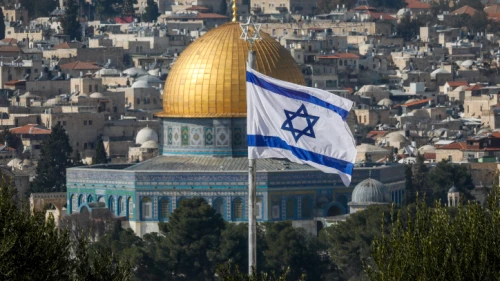
The Saudis called Itamar Ben-Gvir’s a “provocative action” and urged Israel “to act responsibly.” They also warned that such visits could “cause an escalation in the region.”
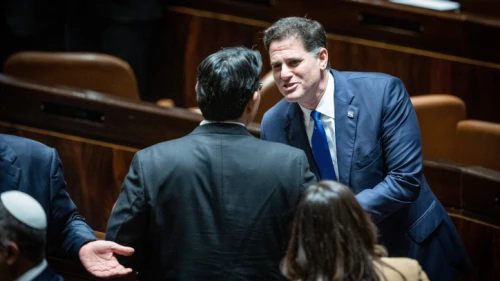
A conversation with Ron Dermer provides a blueprint for Israel’s strategy
Israel’s new minister of strategic affairs spoke with JNS about a potential Israeli-Saudi peace deal and the part Washington can play.
While peace with Riyadh is a top priority for Israel’s incoming government, there are many significant barriers in the way, despite the common interests the two nations share with regard to Iran, experts tell JNS.

Beijing unable to supplant the US as the bulwark of the Gulf states, expert says
David Schenker discusses the Abraham Accords, F-35s jets and Huawei at the Jewish Policy Center

“If we have peace with Saudi Arabia, we are effectively going to bring an end to the Arab-Israeli conflict,” Benjamin Netanyahu said.