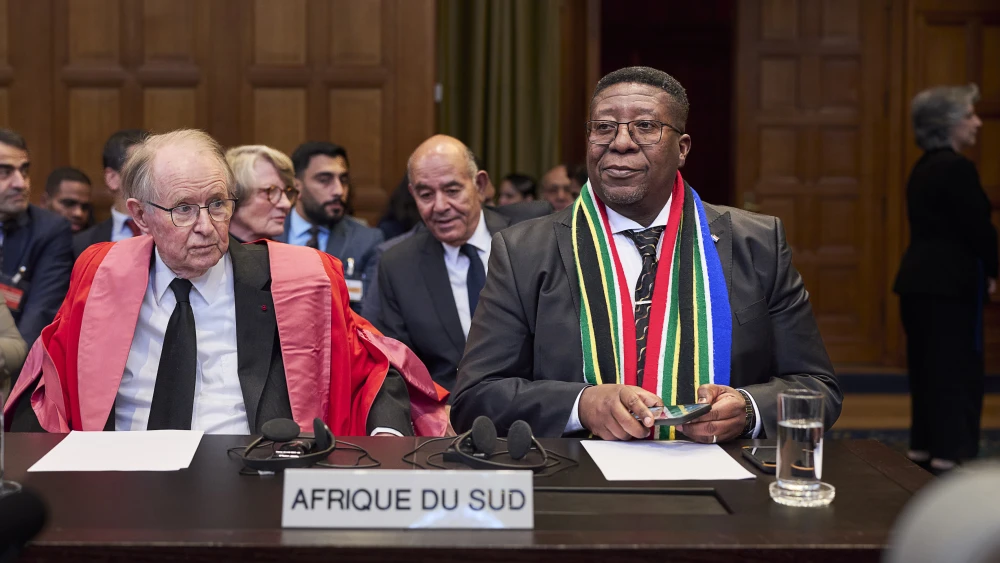
South Africa is attempting to extend the deadline for presenting evidence against Israel at the International Court of Justice in The Hague because it is unable to prove its allegations of genocide, Kan News reported on Tuesday.
The move comes some nine months after the country submitted a suit against the Jewish state over the Israel Defense Forces’ conduct in the war against the Hamas terror group in Gaza, claiming that the IDF is committing genocide.
South Africa is required to submit its evidence on Oct. 28, but is trying to extend the deadline by several months in the hope that evidence proving their genocide accusations will come from other places.
Kan noted how unusual the tactic is, as plaintiffs generally want to expedite the proceedings, and the defendant, in this case Israel, wants to slow it down.
Axios reported on Monday about an Israeli campaign to exact a heavy price in the diplomatic arena for South Africa’s ICJ suit, with the Israeli Foreign Ministry in recent weeks engaged in a diplomatic effort to prevent South Africa from moving forward with the case, including sending a classified cable to the Israeli embassy in Washington and all Israeli consulates in the United States.
“We are asking you to immediately work with lawmakers on the federal and state level, with governors and Jewish organizations to put pressure on South Africa to change its policy towards Israel and to make clear that continuing their current actions like supporting Hamas and pushing anti-Israeli moves in international courts will come with a heavy price,” the cable read.