Hours after China brokered a surprise deal between Iran and Saudi Arabia, a reporter asked U.S. President Joe Biden what he thought about the two countries, which come out of rival Islamic branches that have competed for centuries over guardianship of the faith, re-establishing diplomatic relations.
“The better the relations between Israel and their Arab neighbors, the better for everybody,” he said.
Critics ridiculed the president’s non sequitur, but Biden’s statement raises the question of what impact the deal—and importantly, China’s involvement as a fixer—might have on Jerusalem’s relations with its Arab neighbors following the Abraham Accords.
“China is not working for or against Israel’s interest,” Howard Shatz, a senior economist at Rand Corporation told JNS. “This is a good agreement in China’s interest and a mixed bag for Israel.”
Less tension between Iran and its neighbors may mean neighboring Arab states, like Saudi Arabia, have less incentive to work with Israel. But the United Arab Emirates maintains ties with Iran even after signing the Abraham Accords, and significant disagreements between Saudi Arabia and Iran are unlikely to resolve anytime soon, said Shatz.
“Time will tell,” he stated.
China is in a singular position to broker an agreement like the one between Iran and Saudi Arabia, due to its close ties with both parties, Middle East experts say.
“All signs indicate that China is strategically, not sporadically, deepening its engagement in Persian Gulf economies,” Behnam Ben Taleblu, a senior fellow at the Foundation for Defense of Democracies, told JNS.
“Few countries can manage the rivalry between Tehran and Riyadh today, and Beijing’s ability to walk that tightrope is driven largely by the fact that it is Saudi Arabia’s and Iran’s most important trade partner, thanks to Beijing’s reliance on hydrocarbons from the region to power its economy,” he explained.
Shatz agreed, saying “the most important part of this development is that China brokered the agreement. The United States could not have served as a broker because it does not have relations with Iran, whereas China does. Both Saudi Arabia and Iran look at China as an integral part of their future.”
Shatz and Taleblu believe the deal signals a decrease in tensions between Iran and Saudi Arabia. They also noted that it remains to be seen whether China’s ascendancy on the world stage as a peace broker is good for the Jewish state.
‘Improve his standing at home’
Meir Javedanfar, a lecturer at Reichman University in Herzliya who teaches diplomatic and security studies of Iran, said China made a calculated move to further its own interests and is likely to use the deal as leverage in its dealings with Moscow and Washington.
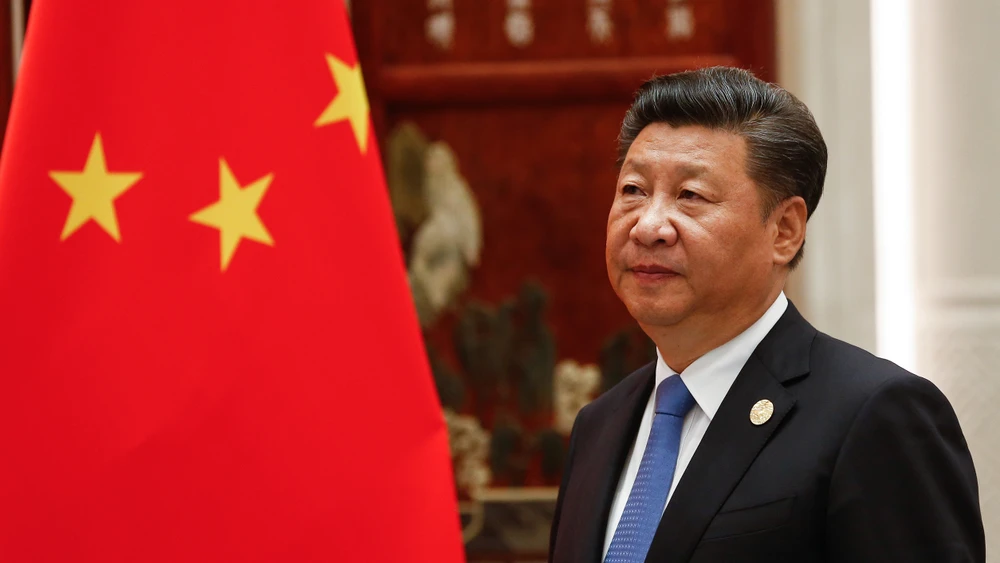
China’s President Xi Jinping secured a third term, which is unprecedented since Mao Zedong, Javedanfar told JNS.
“With this deal, Xi Jinping hopes that it will improve his standing at home and portray him as a global player,” said Javedanfar.
He noted that the Chinese president is now visiting Russian President Vladimir Putin, and wants to project Chinese power and influence not only in the Middle East and Russia—since Russia depends on Chinese buyers for its oil and gas exports—but also in its dealings with America.