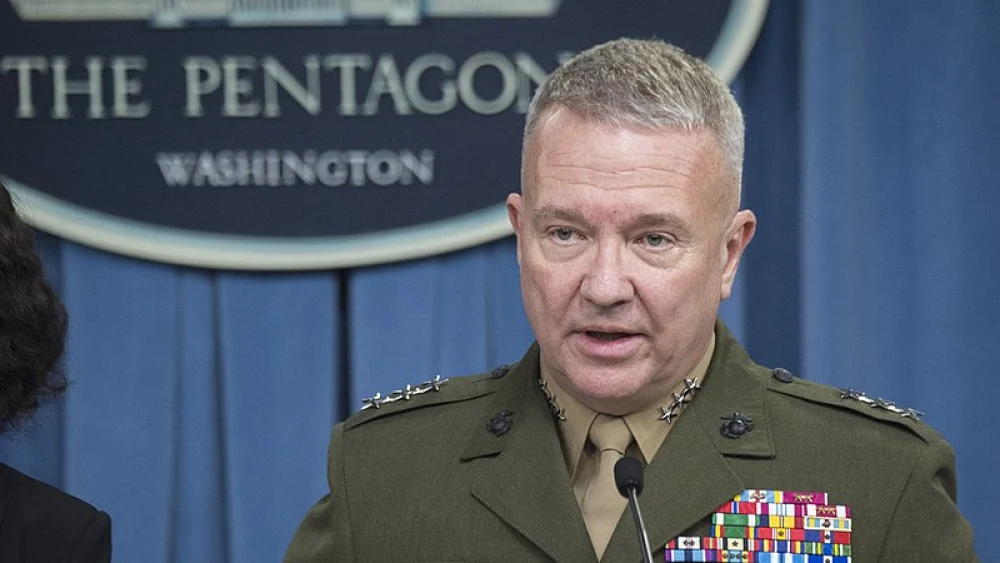
The elimination of Iranian Maj. Gen. Qasem Soleimani by the United States earlier this year has had “significant effect” in deterring the Iranian threat, though the Islamic Republic remains the greatest threat in the Middle East, according to Gen. Kenneth McKenzie, head of the U.S. Central Command.
Regarding Soleimani, who was killed in a U.S. airstrike on Jan. 3 at Baghdad International Airport, “I think that has had a significant effect in establishing and reestablishing a rough form of deterrence in the theater,” McKenzie told the Middle East Institute during a virtual event on Wednesday.
Since Soleimani’s death, Iran has been “having to recalculate what we’ll do and not do” in that the regime has “seen we have the capability and the will to respond,” said McKenzie.
Nonetheless, he said, Iran “actively stokes instability,” including in Syria and Yemen, through arming proxy forces in those places such as, respectively, Hezbollah and the Houthis.
Additionally, McKenzie expressed support for continuing U.S. funding for the Lebanese Armed Forces, even though he admitted that it’s an imperfect choice.
Congressional Republicans and the State of Israel are among those who have expressed concerns that U.S. taxpayer funds for the Lebanese Armed Forces have gone towards the U.S.-designated terrorist group and Iranian proxy Hezbollah, which has been documented to work with the LAF. The U.S. State and Defense Departments have been for continuing the aid, while many in the White House advocate halting it.
Moreover, McKenzie said that the Taliban has not met the conditions in the deal reached earlier this year between the United States to allow for a complete U.S. withdrawal in early 2021.
“The Taliban need to keep their part of the bargain,” McKenzie said. “… Conditions on the ground will dictate if we go below that [8,600 troops]. If conditions on the ground are not permissive, my advice would be not to continue that reduction.”
There has been numerous cases of violence by the Taliban in Afghanistan since the February deal.
Other topics McKenzie discussed included Russia and China exerting its power in the Middle East, how coronavirus has affected the region and how ISIS remains an issue.