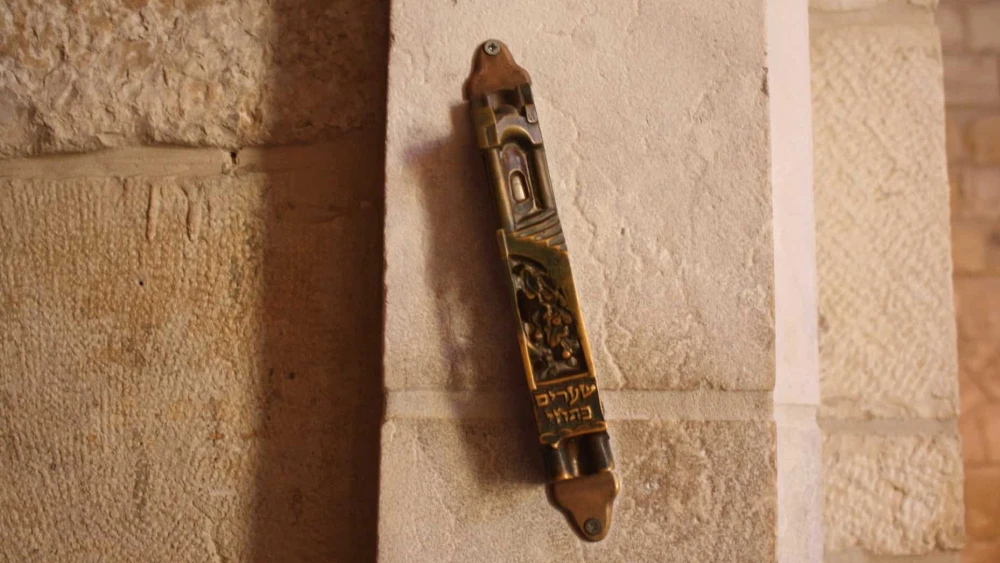
Mezuzahs were ripped from apartment doorposts in a residential building in Toronto, where Holocaust survivors live, for the second time within a month. Earlier in December, Canadian media reported the removal and theft of about 100 mezuzahs from another residential building in the city.
For elderly residents, the incident represents a direct blow to their sense of safety within the most personal and private space of all: their home.

Nate Leipciger, 97, a survivor of Auschwitz-Birkenau and Dachau, said that although he was not at home at the time of the incident, he feels a deep sense of fear against the backdrop of other antisemitic events that have occurred recently around the world, including the deadly attack at Bondi Beach in Australia earlier this month on the first night of Chanukah.
“It’s a different time, but the hatred is the same. And, living in Canada, I thought we were safe from this,” he said.
Local police have opened an investigation into the incident as a hate crime. At this stage, no information has been released regarding suspects or an official motive.
Leipciger has dedicated his life to bearing witness and leading youth delegations from Canada to the March of the Living, for which he received the Order of Canada in June. To date, he has participated in the annual March of the Living 21 times, and this year, he plans to attend the march on Holocaust Remembrance Day, April 14, for the 22nd time. Each year, he delivers his testimony inside the barracks where he was imprisoned during the Holocaust at Birkenau, sharing his story with thousands of students from Canada.
During the 2024 march, he lit the “Torch Against Antisemitism” at the closing ceremony in Auschwitz-Birkenau on Yom Hashoah.
He said: “I stood on this ramp [where Dr. Mengele made his infamous selections] 81 years ago. Every day could have been my death. My family’s ashes are spread all over this land. Remember: Jewish rights are also human rights. … Stand up against antisemitism, and fight hate and falsehood wherever you are!”
Judy Weissenberg Cohen, a 96-year-old Holocaust survivor who also participated in several March of the Living trips and lives in the same building, insisted that “they have to bring in legislation that effectively, really effectively, can curb this kind of hatred.”
In an interview with the Toronto Sun following the act of vandalism, Leipciger stated: “If this had happened in the 1960s or 1970s, this type of climate would induce me to leave Canada and go back to live in the security of Israel, to avoid antisemitism. It’s the exposure to our children that’s what bothers me the most, the idea instilled in our young people that being Jewish is wrong.”
He said what bothers him the most are those, particularly younger Canadians, who become scared enough to conceal or even dismiss their Jewish heritage as a liability rather than a source of strength. “That bothers me more than anything else—more than even my personal security. It is the fact that my great-grandchildren are exposed to hatred and feel there’s something wrong with them, that maybe they should hide their Jewishness,” he said. “Don’t hide your symbols, stand up to whoever it is, because they want you to cower and hide your identity, because that’s what they need.”
Scott Saunders, CEO of the International March of the Living, lamented the situation, saying, “I think of all that Nate endured in the Holocaust. Now, as he approaches his 98th year, it’s unthinkable that he has to worry about antisemites desecrating Jewish symbols in the very building in which he lives, along with other Holocaust survivors, in his adopted country of Canada.”
He added that, like Leipciger, in April 2026, “we will march proudly with some 100 Holocaust survivors and thousands of young students from around the globe—against antisemitism and all forms of intolerance and discrimination, and in support of humanity and justice. We will never let the forces of hatred and evil win!”