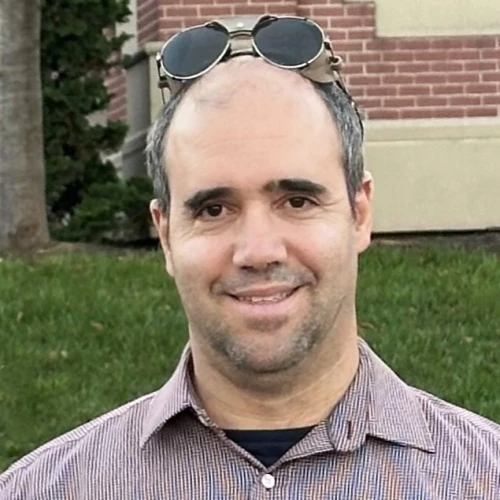
When I accepted the role of president of the Israel Tennis & Education Centers Foundation (ITECF), I knew I was stepping into something bigger than a title. I was joining a mission that has been changing lives across Israel for nearly 50 years.
With 24 locations around the country, we’re not just teaching tennis; we’re helping children grow into confident, resilient adults who can help shape a stronger, more united Israel.
We are about children. We are about Israel. And we are about hope.
To continue delivering on that promise, especially at a time like this, we need to evolve—not only in our programs, but in how we bring people into our story.
Too often, philanthropy follows a familiar pattern: You’re invited to a gala because you invited someone to yours. A gift is given because a favor is owed. The relationship becomes about the transaction, not the mission. But that model doesn’t reflect the energy or purpose of what we do at Israel Tennis & Education Centers (ITEC).
Our work is too meaningful to be reduced to a transaction. We have something far too powerful and relevant to be shaped by obligation-based giving. It’s not a product. It’s a purpose.
We bring together Jewish, Arab, Druze, Christian and immigrant children and give them something they rarely get in today’s world: a space to belong. They learn, they play, they lead. And over time, they come to see one another not through the lens of difference, but through shared experiences. Sport is the platform, but what we’re really building is character, connection and community.
When people experience that—when they see it for themselves, meet the children and hear the stories—they don’t feel like donors. They feel like partners. That’s the shift we’re creating.
I believe in building support through storytelling and experience. That’s why our events look and feel different. They’re not about formality. They’re about connection.
At a recent women’s luncheon in New York, we hosted 140 dynamic women at the Diagrid Club. The setting was beautiful. Our keynote speaker, Nili Lotan, brought wisdom and strength. But what stayed with people long after they left were the voices of our children: their courage, their hope and their determination.
That’s how people fall in love with ITEC. Not because they’re asked to give, but because they discover a sense of belonging and want to be part of what we’re building.
This approach is also resonating with a new wave of supporters—people who aren’t looking for a transactional relationship, but a meaningful connection to Israel’s future. They want to see impact, feel purpose and know their support is making a difference in real people’s lives.
My goals for ITEC are rooted in that belief. I want to build awareness of our mission. I want to modernize how we engage supporters so it reflects our values: openness, authenticity and inclusion. Most of all, I want to create long-term relationships built not just on what someone can give, but on what we can build together.
We are not asking for charity. We are inviting people into a story that matters—a story still being written by thousands of children across Israel who are growing up stronger, kinder and more connected because of what we do.
That is the future I believe in. And I know that when people see it, they’ll believe in it, too.