By Tania Shalom Michaelian
One of the single greatest threats facing the Jewish people today, according to Ben M. Freeman, is what he coins “internalized anti-Jewishness.” Sitting down to talk about his second book in a trilogy about Jewish pride, Freeman told Jewish National Fund-USA’s IsraelCast host Steven Shalowitz that the only way to counter this “pandemic” is to work on Jewish pride—to “do Jewish.”
A native of Glasgow, Scotland, Freeman describes “internalized anti-Jewishness” as a means of using non-Jewish ideas and perceptions of our people to define our own Jewish identity.
“In the Diaspora, we are a minority,” he said. “The majority has an idea of what an ‘acceptable’ Jew should look like, and we absorb that.”
As a result, “we as a people begin the process of internalized anti-Jewishness. We diminish ourselves by saying things such as, ‘I’m Jewish but … .’ In more extreme cases, we deny our own Jewishness or convert to another religion.”
Freeman also identifies a third and more intense form of internalized anti-Jewishness—when Jews deploy their Jewishness as a weapon to wound other Jews. He puts anti-Zionist Jews in this category.
“The only people who get to define Jewish identity are Jews,” he said. “Non-Jews should not be creating categories of ‘good Jews’ and ‘bad Jews.’ ”
Freeman said that it is a myth that there was ever a “Golden Age” for American Jewry. “There were times when we were treated less badly and more badly,” he said. “The bar should never be that low. We should be accepted. We should be respected. We should be able to be Jewish in a way that we want to be, not follow the lead of the wider world.”
In his first book, Jewish Pride: Rebuilding a People, Freeman uses his own experiences with LGBTQ+ pride to write about educating, inspiring and empowering Jewish people to reject the shame of antisemitism imposed on them by the non-Jewish world.
Head, heart and hands
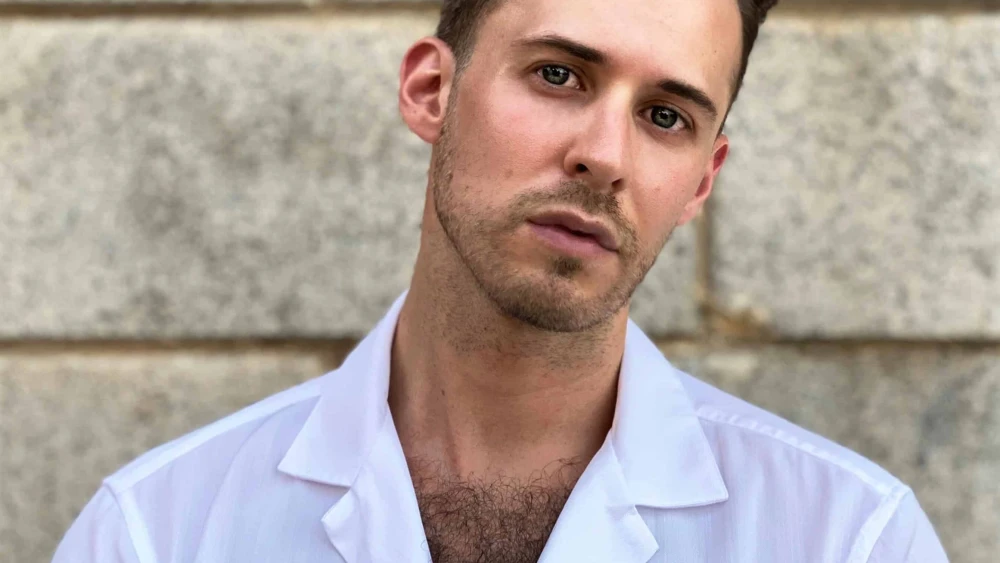
If the first title is the “what” of the trilogy, the second, Reclaiming Our Story: The Pursuit of Jewish Pride, elaborates on the “how.” Freeman encourages us to recognize that it is not our fault that Jews, as a people, have developed internalized anti-Jewishness, but that they have a responsibility to counter it by being proud Jews.
He told Shalowitz that there are things that we, as Jews, can actively do to try and develop Jewish pride. “Do Jewish,” he said simply. “Do it with your head, your heart and your hands.”
The “head” part is recognizing and internalizing that we are an indigenous people with a history and narrative going back thousands of years. Jews should be flying that flag high and embracing this fact, he noted. It is also the subject of his third book in the trilogy, still in the pipeline.
The “heart” is feeling the power of connection with our people. “There is profound beauty of our connection as Jews,” he said.
The “hands” is perhaps the easiest but most effective way of “doing Jewish.” He told Shalowitz that every Jew should find something that resonates with him or her to claim that identity.
“You can be a proud Jews and have many other identities,” he said. “But we’re not checking our Jewishness at the door. To say we’re proudly Jewish isn’t to label ourselves in a negative way.”
“Every Jew has a responsibility to find their action to identify as a Jew,” he concluded. “All Jews are part of this people. But they all have a responsibility that we continue as a people. We can choose to be part of something beautiful.”