In Jewish communities worldwide, a new kind of Israeli emissary has been arriving with stories too personal to rehearse and too powerful to ignore.
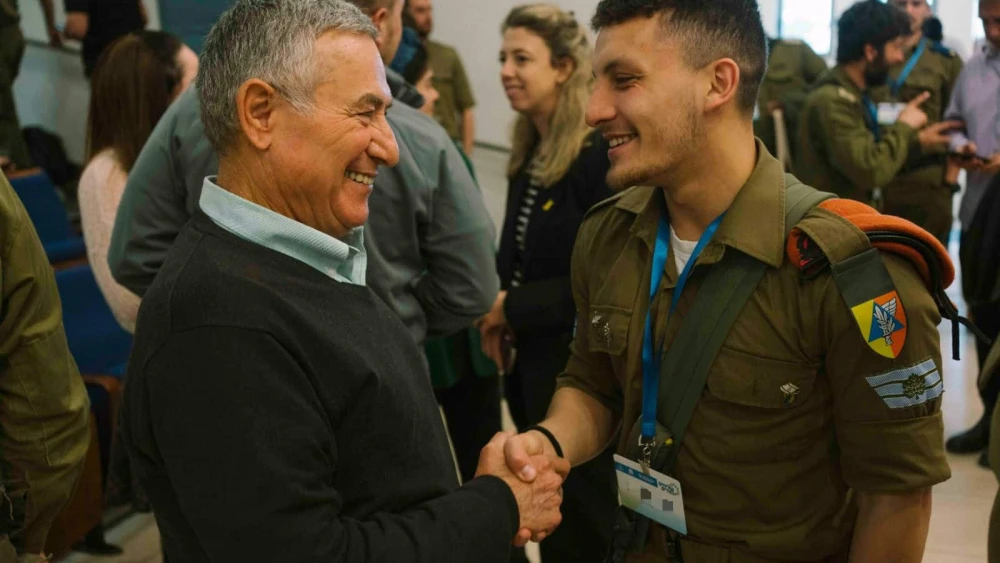
They are part of Shlichim in Uniform—Israeli soldiers, many fresh from reserve duty or active combat, who have been sent abroad by The Jewish Agency for Israel to meet Jewish communities face-to-face in the aftermath of October 7 and the ongoing war. But unlike traditional emissaries who spend months or years overseas, these visitors come carrying something more immediate: the lived experience of a nation at war.
During the third year of the Shlichim in Uniform initiative, The Jewish Agency has brought 130 soldiers to 74 Jewish communities across dozens of countries, reaching more than 60,000 people worldwide. They came to tell human stories—about courage, grief, resilience and the bonds that connect Jews across continents.
This year, Shlichim in Uniform has placed a special emphasis on supporting Israel’s wounded heroes and the extraordinary network of medical professionals, caregivers and organizations working tirelessly to save lives and assist injured soldiers and their families. Many of those who sustained severe injuries demonstrated remarkable resilience by returning to service despite their hardships.
“The Shlichim in Uniform delegation expresses more than anything the spirit and pride of us as a people,” said Maj. Gen. (res.) Doron Almog, chairman of the Executive at The Jewish Agency for Israel. “Our male and female soldiers go out to Jewish communities around the world and bring with them the beating heart of the State of Israel—the human face of courage, responsibility and hope. It is a painful, moving, unifying and healing encounter. An encounter that rebuilds the sense of mutual responsibility, which is the foundation of our existence.”
He added, “Despite immense challenges—including the suspension of flights to and from Israel, and an ongoing multi-front war—the IDF, together with The Jewish Agency and its partners, continues to rise to the national mission of strengthening unity and bringing hearts together.”
For many across world Jewry, the encounters transform headlines into something deeply personal. At synagogues, schools, community centers and memorial ceremonies, audiences listen as soldiers describe the chaos of October 7, the agonizing uncertainty of wartime service and the extraordinary acts of heroism they witnessed among ordinary Israelis. Some share stories of rescuing civilians under fire. Others speak about friends lost in battle or the emotional challenge of returning to civilian life.
At a synagogue in Budapest recently, the Shlichim in Uniform program sent Noam—a Nahal reconnaissance soldier wounded in an incident that killed five fellow troops and wounded seven others—to share his story of resilience and recovery.
“This is not my story or the team’s story,” Noam said. “It is the story of the State of Israel, of the Jewish people around the world. The best example of that is this synagogue and this community, which has grown and developed and it moves me so much to see it. That is the spirit of the Jewish people.”
The Shlichim in Uniform initiative comes at a moment of heightened strain for global Jewish communities. Since October 7 and throughout a prolonged period of regional conflict, many Jews outside Israel have reported feeling isolated, vulnerable or disconnected amid rising antisemitism and polarization. In that environment, the soldiers’ presence has offered a sense of grounding: direct human connection.
Rather than encountering Israel solely through social media clips or televised debates, communities meet Israelis in person—young men and women only a few years older than many university students in the audience, speaking candidly about fear, responsibility and hope.
The emissaries themselves represent the diversity of Israeli society. According to The Jewish Agency, participants have come from cities, kibbutzim, development towns, religious communities and secular backgrounds alike. That diversity has helped broaden conversations about what Israeli identity looks like in wartime and beyond.
For younger Jews especially, the encounters appear to have left a lasting mark. The Shlichim arrive as peers—sharing music playlists, discussing interrupted university studies or talking about the difficulty of leaving younger siblings behind while returning to reserve duty.
The program also reflects a broader evolution in the role of Shlichut—the longstanding Jewish Agency initiative of Israeli emissaries serving Jewish communities worldwide. Programs like Shlichim in Uniform continue to place authentic storytelling at the center of Jewish connection. For communities searching for connection during a fractured moment in Jewish history, the conversations organized by Shlichim in Uniform have become far more than speaking engagements. They have become reminders that even across oceans, the Jewish story remains deeply shared.