Newsletter
Newsletter Support JNS

IAEA head tells Iran ‘no way around’ giving inspectors access to nuclear facilities

“If the international community through us is not seeing clearly how many centrifuges or what is the capacity that they may have ... what you have is a very blurred image,” Rafael Grossi said in an interview.

Rafael Grossi
IAEA Director-General Rafael Grossi at an IAEA Board of Governors meeting in Vienna, Sept. 14, 2020. Photo by Dean Calma/IAEA via Wikimedia Commons.

Rafael Grossi, the head of the International Atomic Energy Agency (AEA), said on Tuesday that restrictions Iran has put on its inspectors do not allow for an accurate portrayal of Tehran’s nuclear program.

“If the international community through us, through the IAEA, is not seeing clearly how many centrifuges or what is the capacity that they may have ... what you have is a very blurred image,” Grossi told the Associated Press in an interview.

“It will give you the illusion of the real image. But not the real image. This is why this is so important,” he said.

He also noted that because of the advances made by Iran since the 2015 nuclear deal fell apart, a renewed deal would have to be altered significantly.

“The reality is that we are dealing with a very different Iran—2022 is so different from 2015 that there will have to be adjustments that take into consideration these new realities so our inspectors can inspect whatever the countries agree at the political table,” explained Rossi.

Meanwhile, Iran’s civilian nuclear-program chief rejected access to the agency’s inspectors at a centrifuge assembly plant in Karaj.
“Anti-Zionism can be a framework for justifying anti-Jewish hostility,” Rafaela Dancygier, of Princeton University, told the N.J. Advisory Committee to the U.S. Commission on Civil Rights.
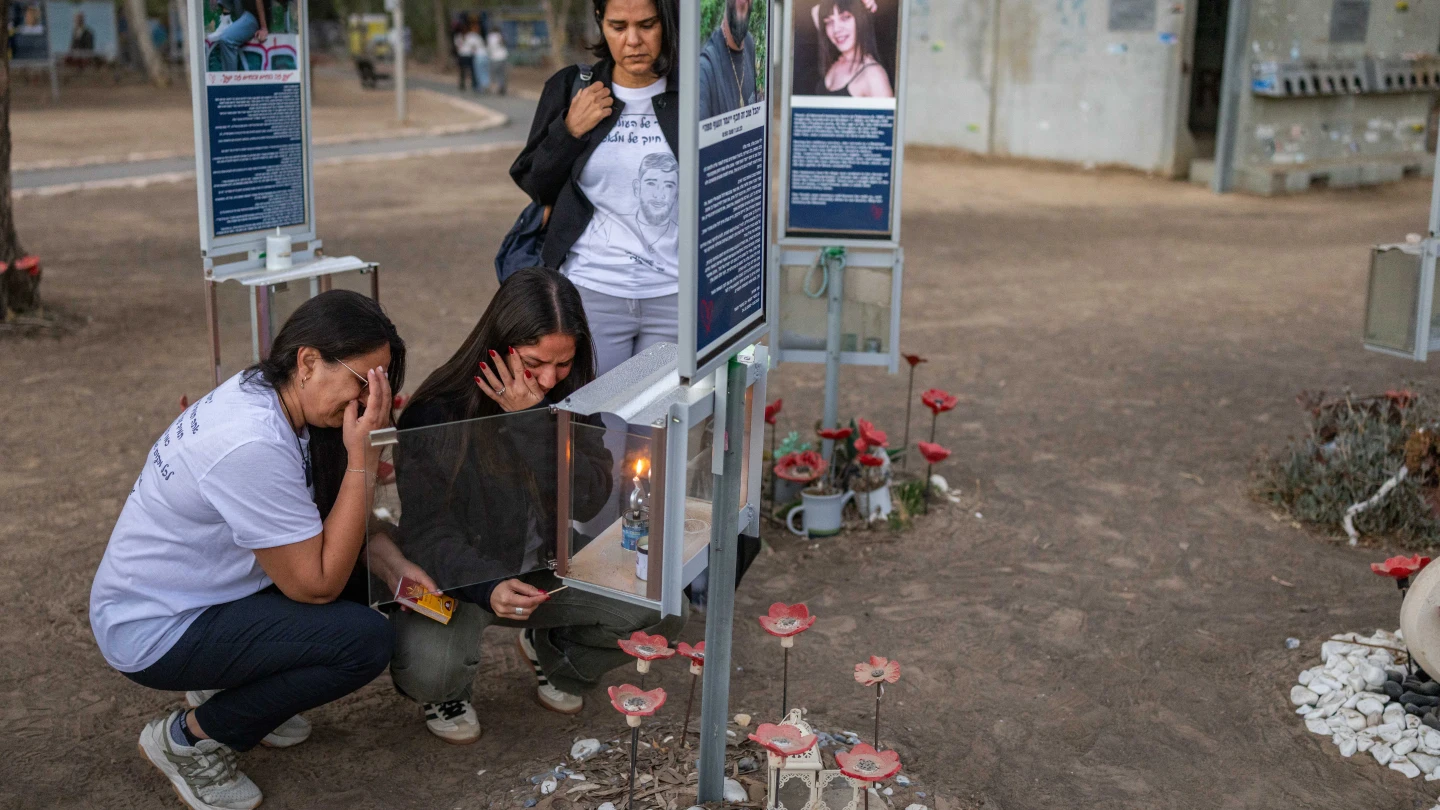
A board member at the Orthodox synagogue told the FBI that members began attending services less frequently after Kevin Charles Pyles allegedly targeted the synagogue in separate July and August 2025 incidents.
The Senate rejected a resolution calling for the removal of U.S. forces from the war against Iran after U.S. President Donald Trump hammered Senate Republicans for approving a similar measure the day before.
“When someone uses the N-word on campus, no one thinks about free speech. No one talks about, ‘Let’s understand what they’re thinking. Let’s have a discussion,’” Rep. Randy Fine said. “But somehow when it came to Jews, everyone wanted to rediscover the idea of free speech.”
“Leadership should be responding with moral clarity, not suggesting that the act of teaching about the Holocaust has somehow ‘missed the mark,’” said Kurt Schwartz, CEO of CAMERA.
The judges said the sanctions, which the United States imposed in response to the Hague-based court’s targeting of Israel, are unlawful.
Benny Gantz, JNS editor-in-chief Jonathan S. Tobin, Gilad Erdan, Mosab Hassan Yousef, Nissim Black and leading voices in security, diplomacy, media, law and Jewish communal affairs headline the summit’s third day in Jerusalem.